The Plastics Industry in Oldham
Plastics manufacturing arrived in Oldham as the borough's traditional industries contracted, and it grew rapidly because the transferable skills were already present. Toolmaking, machine maintenance, process control and production management all mattered as much to moulding as they had to textile machinery, and the available industrial premises suited the space and power requirements of moulding and extrusion equipment.
Today the borough hosts a diverse plastics cluster. Injection moulders produce components for automotive, electrical, medical and consumer applications. Extruders make profiles, tubing and sheet. Vacuum forming and fabrication specialists handle larger, lower-volume parts. Recyclers and compounders process waste material back into usable feedstock. Together they form a supply chain capable of taking a product from concept through tooling to volume production without leaving Greater Manchester.
Understanding Plastics Processing Methods
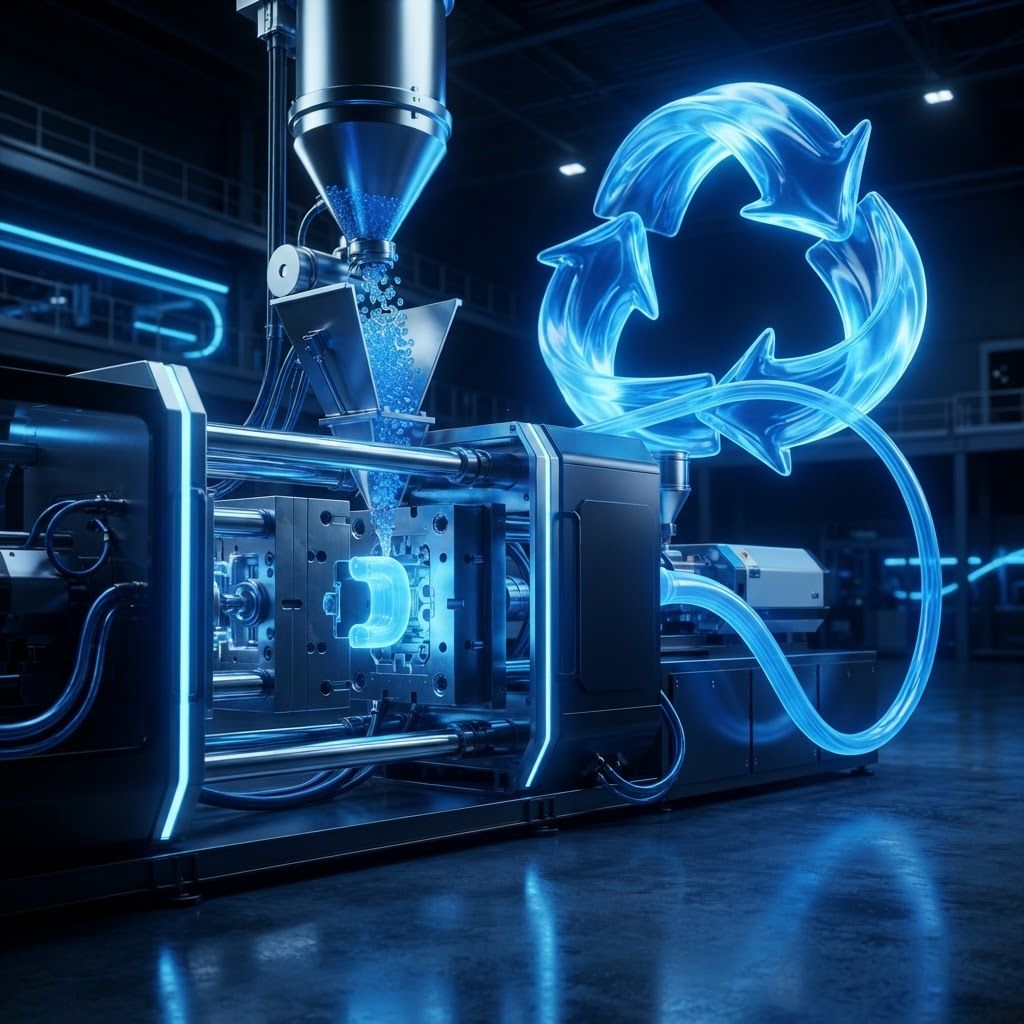
Choosing the right process is often more consequential than choosing the supplier, so a basic grasp helps. Injection moulding forces molten polymer into a steel tool, producing dimensionally precise parts at high volume with excellent repeatability, but requiring significant tooling investment. It suits volumes from thousands upwards.
Extrusion pushes polymer continuously through a die to make pipes, profiles, sheet and film. Tooling is far cheaper than injection moulds, making it viable at lower volumes for suitable geometries. Vacuum and pressure forming draws heated sheet over a mould, ideal for large, relatively simple shapes at low to medium volume with modest tooling cost. Rotational moulding produces large hollow items. Fabrication cuts, bends, welds and bonds sheet material for one-off and low-volume work.
The Top 10 Plastic Manufacturers in Oldham
1. Pennine Injection Moulding
One of the most capable moulders in the area, Pennine Injection Moulding runs a range of machine tonnages supporting parts from small precision components to substantial housings. It offers full project management from design for manufacture review through tooling to production, with process monitoring on every machine. Its documentation and traceability standards support customers in regulated sectors.
2. Crompton Extrusions
Producing rigid and flexible profiles, tubing and sheet, Crompton Extrusions serves construction, electrical and industrial customers. Its in-house die making allows rapid development of new profiles, and it handles co-extrusion for parts requiring different materials or colours in one section. Dimensional consistency over long production runs is a particular strength.
3. Medlock Medical Plastics
Operating to the stringent requirements of medical device manufacture, Medlock Medical Plastics moulds components in cleanroom conditions with validated processes and full material traceability. Its quality management system meets medical device standards, and it supports customers through design validation and regulatory documentation. This is demanding work that relatively few moulders are equipped to undertake.
4. Oldham Vacuum Forming
Specialising in thermoformed parts, this company produces machine guards, trays, covers, packaging and point-of-sale items. Vacuum forming's low tooling cost makes it economic for volumes that would never justify an injection mould, and the firm's pattern making and trimming capability handles complex shapes. It is often the right answer for large parts in modest quantities.
5. Chadderton Plastic Fabrication
Working from sheet and rod material, Chadderton Plastic Fabrication cuts, machines, bends, welds and bonds acrylic, polycarbonate and engineering plastics into finished items. Its output includes tanks, enclosures, screens, ducting and machine components. For one-off and low-volume requirements, fabrication avoids tooling entirely, and the company's craftsmanship in polishing and welded joints is well regarded.
6. Hollinwood Polymer Recycling
This company collects, sorts, washes, granulates and compounds plastic waste into reusable feedstock. It processes both post-industrial waste from manufacturers and post-consumer material, supplying recycled polymer back into production. As recycled content requirements tighten, its role in the local supply chain has grown substantially, and it also helps manufacturers close the loop on their own production scrap.
7. Werneth Toolmaking for Plastics
Producing injection moulds, extrusion dies and forming tools, Werneth Toolmaking for Plastics supports moulders and product developers. Mould design fundamentally determines part quality, cycle time and tool life, and the company's design input frequently improves outcomes before any steel is cut. It also undertakes tool repair, modification and refurbishment, extending the life of existing assets.
8. Failsworth Rotational Moulding
Specialising in large hollow parts, this manufacturer produces tanks, containers, bins, floats and equipment housings. Rotational moulding offers uniform wall thickness and seamless construction in sizes that other processes struggle to match, with relatively inexpensive tooling. Its products serve water management, agriculture, materials handling and leisure markets.
9. Royton Technical Compounds
Royton Technical Compounds formulates and supplies polymer compounds with specific performance characteristics, including flame retardancy, UV stability, conductivity, colour and reinforcement. It works with moulders and extruders who need material properties beyond standard grades, and supports customers in qualifying recycled and bio-based alternatives against existing specifications.
10. Saddleworth Precision Machining of Plastics
Machining engineering plastics requires different technique from metal, and this company specialises in turned and milled components from materials such as acetal, nylon, and high-performance polymers. Its parts serve food processing, semiconductor, medical and general engineering applications where low volumes, tight tolerances or material properties rule out moulding.
Trends Reshaping the Plastics Sector
Sustainability dominates the agenda. Recycled content requirements, packaging taxes, design for recyclability and material reduction are all reshaping specifications. Manufacturers who can process recycled feedstock reliably, and who understand how recyclate behaves differently from virgin polymer, hold a clear advantage. Mono-material design, avoiding hard-to-separate combinations, is becoming standard practice in packaging.
Material substitution is accelerating alongside this. Bio-based polymers, compostable grades and alternatives to problematic additives are all under active evaluation, though performance qualification remains challenging. Companies with laboratory capability to test and validate substitutions are better placed to guide customers.
Reshoring has brought genuine opportunity. Tooling and moulding placed overseas often proved difficult to manage when problems arose, and shipping costs eroded the savings. Local moulders offering shorter lead times, easier communication and the ability to attend site have recovered work on that basis.
Digital process control continues to advance. In-mould sensing, automated inspection and data logging improve consistency and reduce scrap, and customers increasingly expect process data as evidence of control rather than relying on final inspection alone.
How to Choose a Plastics Manufacturing Partner
Start with the process, not the supplier. Discuss your part with someone who can advise honestly on whether moulding, forming, extrusion or fabrication suits your geometry and volume, because the wrong process choice cannot be recovered by good execution.
Engage early on design for manufacture. Wall thickness, draft angles, radii, gate positions and material selection all affect cost and quality profoundly, and changes are cheap on a drawing but expensive in hardened steel. Suppliers who review your design critically before quoting are doing you a favour.
Clarify tooling ownership, storage and maintenance responsibility in writing. Ask about material sourcing, including how they handle grade substitutions and recycled content. For regulated applications, verify quality accreditation directly. Finally, discuss capacity honestly against your forecast, including what happens if demand doubles.
Final Thoughts
Oldham's plastics manufacturers cover the full breadth of the industry, from cleanroom medical moulding and precision machining through extrusion, thermoforming, rotational moulding and fabrication, supported by toolmakers, compounders and recyclers. That completeness means most projects can be delivered within the borough. Success comes from selecting the right process for your part, engaging suppliers early enough to influence design, and favouring partners investing seriously in the recycled and sustainable materials that will define the sector's next decade.
Want your brand featured in front of decision-makers? Publish a guest post or get a link insertion in our guides through AAMAX's guest post and link insertion service.
Helpful Links
 SponsoredAAMAX — Full-Service Digital Agency
Write for Us
Share your expertise with our readers. We welcome guest contributions from industry specialists.
Pitch your idea