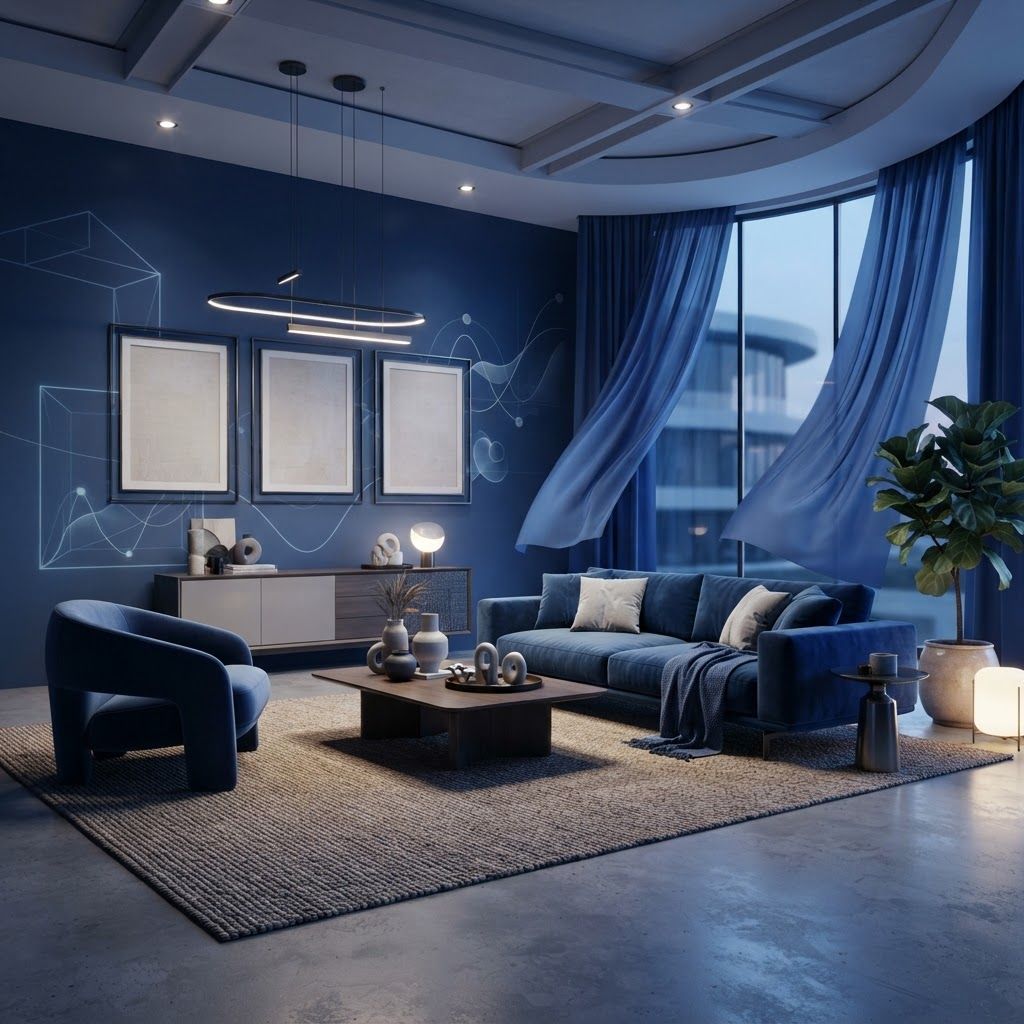
A Distinctive Regional Decor Sensibility
East Devon has developed a recognisable approach to interiors, shaped by its light, landscape and craft traditions. The quality of coastal light in Exmouth, Budleigh Salterton and Sidmouth is clear and bright, which suits pale walls, natural textures and restrained palettes. Inland, the deeper shadows of cob cottages and stone farmhouses favour warmer, more saturated tones and heavier textiles.
The district also retains a genuine maker culture. Potters, weavers, furniture makers and textile designers work across the Otter and Axe valleys and the Blackdown Hills, and independent retailers in the market towns curate their work alongside carefully chosen imports. The result is an interiors scene where locally made pieces are readily available rather than aspirational.
Materials That Define the Local Aesthetic
Several materials recur across well-executed East Devon interiors. Locally quarried stone, notably Beer stone with its pale creamy tone, appears in fireplaces, hearths and worktops. Devon slate provides darker contrast for flooring and surfaces.
Timber is central, with oak, ash and elm from local woodland used in furniture and joinery. Wool features heavily in rugs, throws and upholstery, reflecting the county's textile history. Clay and ceramics from regional potters supply lighting, vessels and tableware, while linen and natural-fibre fabrics suit both period and contemporary rooms.
Colour palettes tend toward the environment: chalky whites and off-whites, muted sea greens and blues, soft ochres, warm greys and the deep greens of hedgerow and woodland. These read particularly well against lime plaster and traditional finishes.
Ten Home Decor Brands and Retailers in East Devon
Otter Valley Interiors curates furniture, lighting and accessories with an emphasis on natural materials and locally made pieces.
Sidmouth Coastal Home specialises in a light, coastal-influenced aesthetic with linens, ceramics and painted furniture.
Devon Wool Company produces rugs, throws and cushions in British wool, drawing on regional textile tradition.
Beer Stone Studio works with local stone for fireplaces, hearths, surfaces and decorative pieces.
Exmouth Lighting & Living focuses on lighting design alongside mirrors, glassware and decorative accessories.
Blackdown Ceramics is a pottery studio producing tableware, vases and lamp bases in stoneware and glazed earthenware.
Honiton Antiques & Interiors combines antique furniture with contemporary accessories, reflecting the town's long-standing antiques trade.
Axe Valley Furniture Makers builds bespoke solid timber furniture including tables, dressers and beds.
Budleigh Fabric House supplies upholstery and curtain fabrics, with a strong selection of linens, wools and heritage prints.
East Devon Reclaimed deals in reclaimed timber, salvaged architectural fittings and repurposed materials for character interiors.
Building a Coherent Scheme
The most common interiors mistake is accumulating individually appealing items that do not relate to one another. A coherent scheme starts with constraint rather than choice.
Begin with the fixed elements. In East Devon this often means an existing stone fireplace, exposed beams, a flagstone floor or a particular window aspect. These set the tone and cannot be changed easily, so the scheme should work with them.
Limit the palette deliberately. A restrained selection of three to five colours, comprising a dominant neutral, a secondary tone and one or two accents, produces far more resolved rooms than a wider range. Repeat each colour in at least two places so it reads as intentional.
Vary texture rather than colour to create interest. Wool against linen, rough stone against smooth plaster, matt ceramic against polished timber. In a restrained palette, texture does the work that colour would otherwise do, and the result feels calmer.
Finally, consider scale. Period cottages with low ceilings suit lower-slung furniture and smaller-scale patterns, while Victorian villas with high ceilings can carry substantial pieces and larger repeats. Furniture that fits the room's proportions matters more than its individual quality.
Fabric Selection for Period Homes
Textiles in older East Devon properties have practical as well as aesthetic functions. Heavy interlined curtains materially reduce heat loss through single-glazed sash windows, and in listed properties where replacement glazing is not permitted this is one of the few effective interventions available.
Natural fibres generally suit traditional interiors better than synthetics, both visually and because they manage humidity more sympathetically in breathable buildings. Wool is durable and naturally flame resistant. Linen suits coastal light and relaxes attractively with age. Cotton is versatile and economical.
Consider durability honestly. Upholstery in a family room needs a fabric with a suitable rub-test rating, and pale linen on a frequently used sofa will disappoint. Loose covers that can be laundered are a practical compromise where a particular fabric is desired.
Mixing Antique and Contemporary
East Devon interiors frequently succeed by combining old and new, and Honiton's antiques trade makes this readily achievable. The technique is to establish a common thread so the mix reads as curation rather than accumulation.
Effective threads include a consistent timber tone across pieces of different ages, a shared colour running through upholstery and accessories, or a consistent level of formality. A single antique piece in an otherwise contemporary room reads as deliberate; several unrelated antiques scattered among modern furniture tends to read as unresolved.
Reclaimed materials work similarly. A reclaimed timber shelf or salvaged door adds patina and character, but the surrounding detailing should be clean and considered so the reclaimed element becomes a feature rather than a fault.
Sourcing Locally and Sustainably
Buying from regional makers has advantages beyond provenance. Pieces can often be adjusted in dimension, finish or fabric to suit a specific room, which is frequently impossible with mass-produced furniture. Repair and refinishing are also more straightforward when the maker is nearby.
Sustainability considerations increasingly influence decor choices. Solid timber furniture from certified sources lasts generations and can be refinished. Wool is renewable and biodegradable. Reclaimed materials avoid new extraction entirely. Choosing fewer, better pieces over frequent replacement is both the more economical and the lower-impact approach.
Final Thoughts
Home decor in East Devon works best when it takes cues from its surroundings: the coastal light, the local stone and timber, and the district's living craft tradition. Start from the fixed features of the room, constrain the palette, build interest through texture, and choose fewer well-made pieces rather than many disposable ones. The independent makers and retailers across the district make this approach genuinely practical rather than merely aspirational.
Want your brand featured in front of decision-makers? Publish a guest post or get a link insertion in our guides through AAMAX's guest post and link insertion service.
Helpful Links
 SponsoredAAMAX — Full-Service Digital Agency
Write for Us
Share your expertise with our readers. We welcome guest contributions from industry specialists.
Pitch your idea