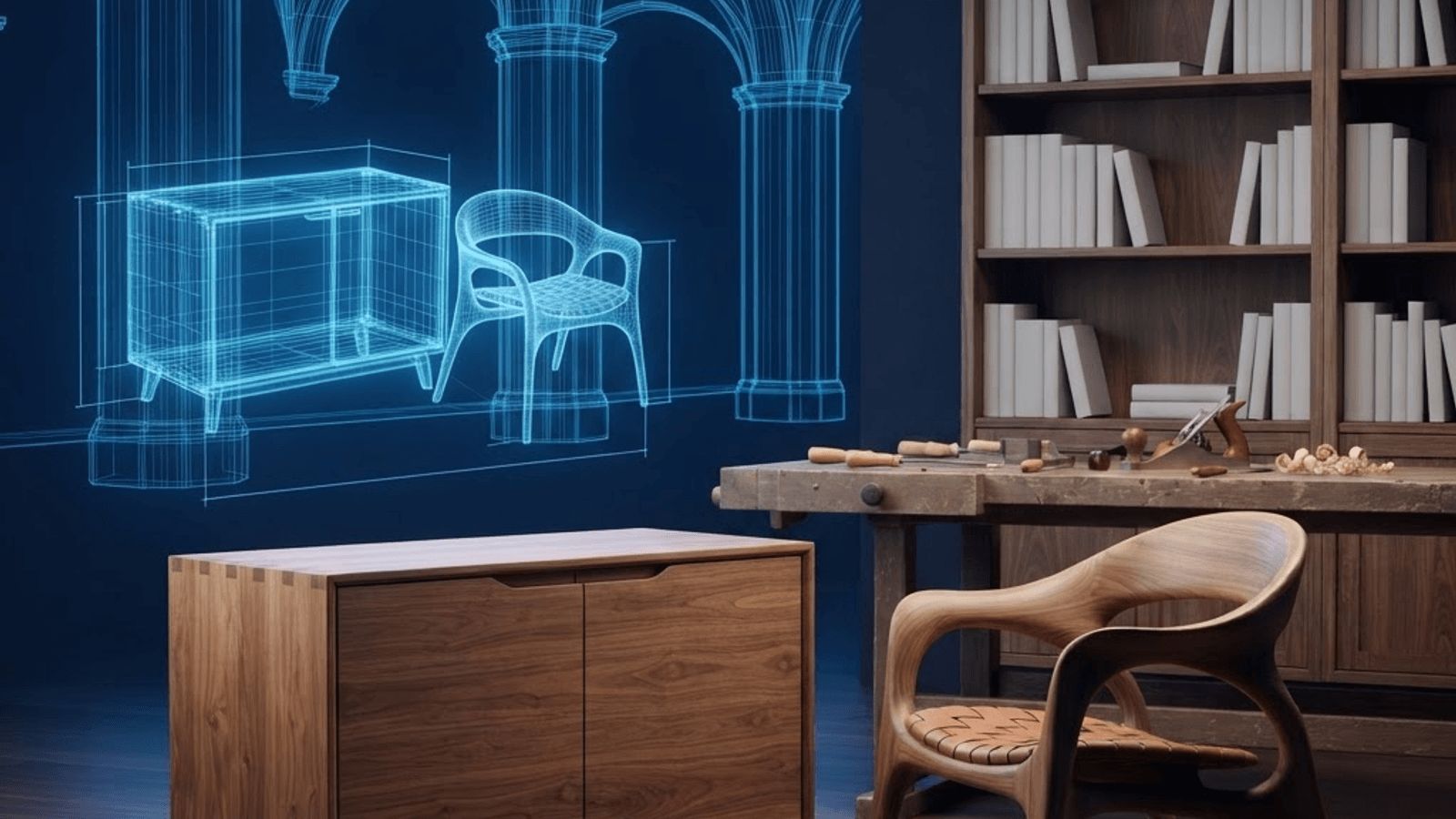
Furniture making around Cambridge has a distinctive character shaped by the buildings it furnishes. The city contains an unusual concentration of historic properties, college interiors, listed buildings and modern research facilities, and each demands a different approach. As a result, the local industry is oriented towards bespoke and contract work rather than mass production, with a strong tradition of fine cabinetmaking alongside modern fitted joinery and specialist laboratory furniture.
The Furniture Sector in Cambridge
Demand divides broadly into four categories. Residential bespoke work involves fitted kitchens, wardrobes, libraries and studies, frequently in period properties where irregular walls and conservation requirements make standard products unsuitable. Institutional work covers college furniture, libraries, dining halls and study rooms, often requiring durability, traditional detailing and consistency with existing interiors.
Commercial contract furniture serves offices, technology campuses and hospitality venues, where lead times and specification compliance matter. Finally, laboratory and technical furniture is a significant local market, requiring chemical-resistant surfaces, appropriate services integration and compliance with safety standards.
What Local Furniture Makers Provide
Typical services include bespoke cabinetmaking and freestanding furniture, fitted kitchens and utility joinery, library and study furniture, conservation and heritage restoration, laboratory benching and fume cupboard casework, office and contract furniture supply, upholstery and soft seating, and design services covering measured survey through to installation.
Ten Furniture Businesses Connected to Cambridge
1. Cambridge Bespoke Furniture makers
Several established workshops in and around the city produce handmade furniture to commission, working principally in solid hardwoods and specialising in pieces designed for specific rooms and requirements.
2. Kitchen Coordination and fitted furniture specialists
Local fitted furniture businesses design and manufacture kitchens, wardrobes and studies for Cambridge homes, with particular experience handling the irregular geometry of Victorian and Edwardian properties.
3. Cambridge Cabinet Makers
Traditional cabinetmaking workshops in the region undertake fine furniture and joinery commissions, including library shelving, panelling and reproduction pieces for heritage interiors.
4. Peter Loveday and Cambridgeshire furniture designers
Independent designer-makers based in the county produce contemporary studio furniture, combining hand craftsmanship with modern design language for private and gallery clients.
5. Anglia Office Furniture suppliers
Contract furniture businesses serving the eastern region supply and install office and workplace furniture for the city's technology and professional services occupiers, handling large fit-out projects.
6. Laboratory furniture and benching manufacturers
Given the density of research facilities, specialist manufacturers supply laboratory casework, benching and technical furniture engineered for chemical resistance and services integration.
7. Heritage joinery and conservation workshops
Workshops specialising in conservation undertake repair and replication of historic furniture and fixed joinery for colleges, churches and listed buildings across the city.
8. Upholstery workshops in Cambridge
Traditional upholsterers restore antique seating and produce bespoke soft furniture, working with heritage textiles as well as modern contract fabrics for institutional clients.
9. Sustainable and reclaimed timber furniture makers
A growing number of regional makers work with reclaimed and locally sourced timber, producing furniture with documented provenance and low embodied carbon for environmentally conscious clients.
10. Fenland furniture and joinery manufacturers
Larger joinery manufacturers north of Cambridge provide production capacity for contract projects, combining machine-based manufacturing with hand finishing for schools, healthcare and residential developments.
Trends in Furniture Manufacturing
Sustainability has become a genuine purchasing criterion rather than a marketing claim. Certified timber, low-emission finishes, repairable construction and end-of-life recyclability increasingly feature in specifications, particularly for institutional and commercial projects where environmental reporting is required.
Digital fabrication has changed how bespoke furniture is produced. Computer-controlled machining allows precise, repeatable components to be cut from measured survey data, reducing waste and improving fit while leaving hand skills for assembly and finishing. Three-dimensional visualisation has also improved client confidence before commitment.
Workplace furniture has shifted markedly towards flexibility, with height-adjustable desks, acoustic screening and reconfigurable layouts responding to hybrid working patterns. In residential work, demand for integrated storage and home working spaces has remained strong, reflecting lasting changes in how homes are used.
How to Choose a Furniture Manufacturer
Match the maker to the project type, as fine cabinetmaking and contract fit-out require quite different organisations. Visit the workshop where possible and examine finished work rather than photographs, paying attention to joint quality, drawer construction and finish consistency. Confirm timber species, board materials and finish specifications in writing, along with a measured survey before manufacture begins. Discuss lead times honestly and establish payment stages. For heritage work, verify conservation experience and appropriate materials knowledge. For laboratory or commercial projects, confirm compliance with relevant standards and installation arrangements.
Final Thoughts
Furniture making in Cambridge remains a craft-led industry adapted to unusually varied demands, from college libraries and Victorian kitchens to research laboratories and modern offices. The businesses above illustrate the range of capability available locally, and for anyone furnishing a distinctive space, commissioning work from a regional maker frequently produces a better and longer-lasting result than buying standard products.
Want your brand featured in front of decision-makers? Publish a guest post or get a link insertion in our guides through AAMAX's guest post and link insertion service.
Helpful Links
 SponsoredAAMAX — Full-Service Digital Agency
Write for Us
Share your expertise with our readers. We welcome guest contributions from industry specialists.
Pitch your idea