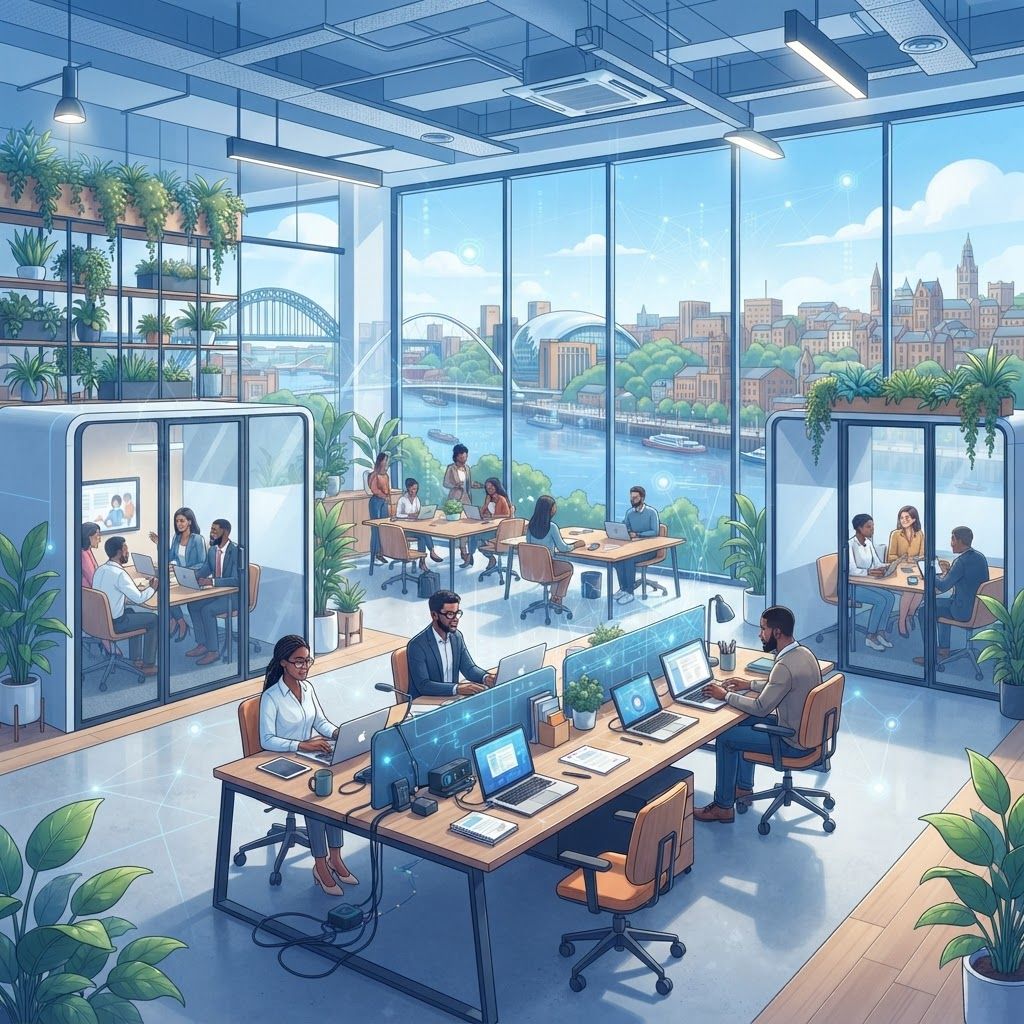
Why Co-working Has Taken Hold in South Tyneside
South Tyneside sits at an unusual advantage in the flexible workspace conversation. It is close enough to Newcastle and Sunderland to plug into a wider regional economy, yet far enough from city-centre rents to offer desks at a fraction of the cost. Add fast Metro links, a growing digital and creative freelance base, and a coastline that makes lunch breaks genuinely enjoyable, and the appeal becomes obvious. Over the past few years the borough has moved from having a handful of business centres to hosting a spread of genuine co-working environments, from council-supported enterprise hubs to independently run studios above high street shopfronts.
The shift has been driven by three trends. First, hybrid working has permanently reduced the need for full-time leases while increasing demand for professional space two or three days a week. Second, the North East has seen sustained growth in small digital agencies, software contractors, e-commerce sellers and independent consultants who need meeting facilities without a corporate overhead. Third, regeneration funding along the South Shields waterfront and town centre has created modern, energy-efficient buildings that suit shared occupancy far better than the older office stock they replaced.
The Ten Best Co-working Spaces in the Borough
1. Business and Enterprise Centre, South Shields. Operated within the borough's business support ecosystem, this centre is the natural first stop for early-stage founders. It combines small private studios with hot desking, on-site reception, meeting rooms and access to business advisers. Its strength is the wraparound support: tenants often arrive as sole traders and leave as employers.
2. The Word Business and Study Spaces, South Shields. The borough's landmark national centre for the written word doubles as one of its most attractive drop-in work environments. Quiet study zones, free public wifi, bookable rooms and a dramatic riverside setting make it ideal for freelancers who want a professional atmosphere without a membership commitment.
3. Hebburn Central Meeting and Work Suites. This modern community hub blends leisure, library and business facilities under one roof. The bookable suites are popular with trainers, therapists, tutors and community organisations who need clean, accessible rooms with parking and step-free access.
4. Jarrow Business Centre. A long-standing provider of small-unit workspace serving trades, light manufacturing and service businesses. It appeals to operators who need a desk alongside storage or workshop capacity, a combination genuine co-working buildings rarely offer.
5. Tyne Dock Enterprise Park Workspaces. Positioned close to the river and the port, this cluster of managed units suits logistics consultants, surveyors and marine services professionals. Flexible licences, secure access and generous loading provision are the differentiators.
6. Cookson Hub Creative Studios, South Shields. Independent studio-style desks aimed at photographers, designers, videographers and makers. Shared kit, natural light and a collaborative culture make it a strong fit for creative practitioners who dislike corporate office environments.
7. Coast Road Serviced Offices. A more traditional serviced provider offering private lockable offices with the option of shared lounge and meeting facilities. Attractive to small professional firms in accountancy, recruitment and legal services that need privacy but not a long lease.
8. Boldon Business Park Flexible Suites. Sitting on the borough boundary with strong road access to the A19 and A184, these suites are favoured by sales teams, field-service businesses and companies serving the wider North East. Parking is plentiful, which remains a decisive factor for many.
9. Customs House Creative Meeting Rooms, South Shields. The borough's historic arts venue rents characterful rooms that work beautifully for workshops, board meetings and away days. Choosing a cultural venue over a generic office sends a distinctive signal to clients.
10. Independent Cafe Work Clubs across South Shields and Whitburn. Not a single provider but a recognised part of the ecosystem. Several independent coffee houses along Ocean Road and the seafront have adapted to remote workers with reliable connectivity, power sockets and informal weekday work clubs. For solo freelancers on tight budgets this remains a legitimate first rung.
How to Choose the Right Space
Start with honest usage patterns. If you will attend two days a week, a flexible day pass almost always beats a monthly membership. If you host clients regularly, prioritise meeting room quality and the impression the entrance makes, not the size of your own desk. If your work is deadline-driven and requires deep focus, test the acoustics during a busy midweek afternoon rather than a quiet Friday morning.
Connectivity deserves scrutiny. Ask for actual upload speeds rather than headline download figures, particularly if you deliver video calls, upload large design files or run remote development environments. Equally, check contract flexibility. The whole point of co-working is agility, so notice periods longer than one month undermine the value proposition for most micro-businesses.
Costs and Value in a Regional Context
South Tyneside remains meaningfully cheaper than Newcastle city centre, and dramatically cheaper than comparable space in Leeds or Manchester. Day passes typically sit at the lower end of the national range, and small private offices are often achievable for the price of a single hot desk in a major city. For bootstrapped businesses this difference can extend runway by months.
Value, though, is not only about price. The best local spaces earn their fee through introductions, referrals and informal mentoring. Several South Tyneside operators run regular networking mornings, funding clinics and skills sessions, and members consistently report that these connections generate more revenue than the desk itself costs.
What to Expect Next
Three developments look likely. Sustainability credentials will become a selling point as tenants face their own reporting obligations, favouring newer buildings with efficient heating and smart lighting. Sector-specific hubs will emerge, particularly around clean energy, offshore services and digital health, reflecting the wider Tyneside industrial base. And hybrid membership models that bundle desks with childcare-friendly hours, wellbeing facilities and training will differentiate the leaders from the merely functional.
For anyone working independently in the borough, the practical advice is simple. Trial at least three spaces, attend one community event at each, and judge them on the conversations you have rather than the coffee you drink. In South Tyneside, the network is usually the product.
Want your brand featured in front of decision-makers? Publish a guest post or get a link insertion in our guides through AAMAX's guest post and link insertion service.
Helpful Links
 SponsoredAAMAX — Full-Service Digital Agency
Write for Us
Share your expertise with our readers. We welcome guest contributions from industry specialists.
Pitch your idea