A Specialist Automotive Sector, Not a Mass Production One
Aberdeen does not build cars on an assembly line, and understanding what it does build is essential to understanding the sector. The city's automotive industry is a specialist manufacturing and engineering ecosystem centred on vehicle conversion, bodybuilding, commercial fleet engineering and increasingly electric drivetrain integration.
The reason is demand. The energy industry requires vehicles that ordinary manufacturers do not supply: mobile workshops, offshore-compliant crew transport, specialist lifting and access vehicles, hazardous-area service units, mobile laboratories and equipment carriers. Aberdeenshire's agricultural and fishing sectors add further requirements for refrigerated transport, livestock haulage and heavy-duty trailers. Add public sector fleets for refuse, gritting and social care transport, and there is a substantial market for engineered vehicle solutions.
What Specialist Vehicle Manufacturing Involves
Vehicle conversion is a regulated engineering discipline rather than a modification hobby. Converters must maintain type approval compliance, ensuring the finished vehicle meets safety, lighting, braking and weight distribution requirements. Payload calculation and axle loading must be verified, as an incorrectly converted vehicle can be unlawful to operate.
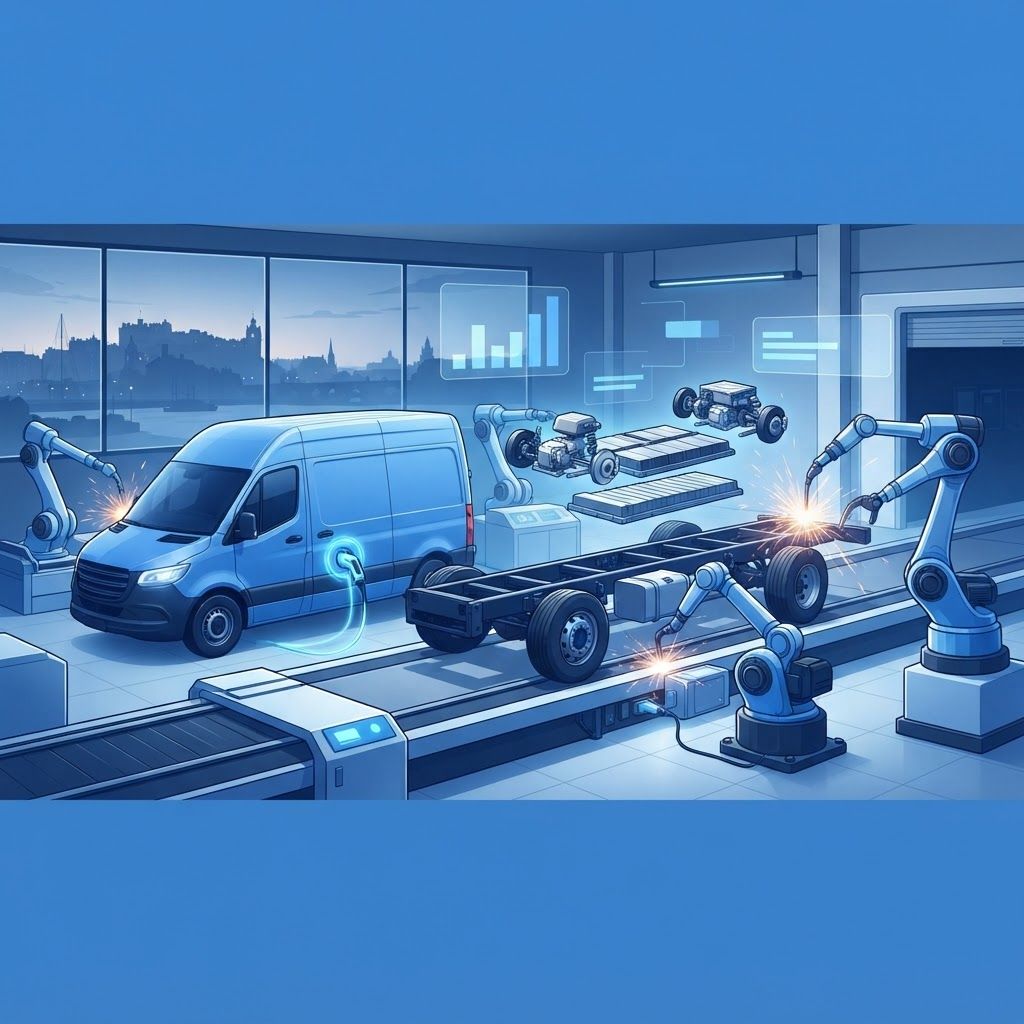
Bodybuilding involves chassis-cab conversion into tippers, dropsides, box bodies, curtainsiders and specialist units. Ancillary engineering covers hydraulic systems, cranes, tail lifts, power take-off systems and electrical integration. Increasingly, converters also handle electric and hybrid drivetrain integration, high-voltage battery installation and auxiliary power for equipment operation without engine idling.
Quality markers include recognised approval schemes, weld and structural certification, documented load testing, and aftercare covering warranty, servicing and inspection. Design capability is a genuine differentiator, since the best converters engineer solutions rather than adapt existing patterns.
The Ten Leading Automotive Manufacturers
1. Granite Commercial Vehicles. The most substantial bodybuilder in the region, producing tippers, dropsides, box bodies and specialist service units with in-house design, fabrication and paint facilities.
2. North Sea Vehicle Engineering. Specialists in offshore and industrial support vehicles, including mobile workshops, hazardous-area compliant units, equipment carriers and site welfare vehicles.
3. Deeside Electric Fleet Systems. Focused on electric and hybrid conversion, high-voltage battery integration, auxiliary power systems and depot charging infrastructure for commercial fleets.
4. Harbour Trailer Manufacturing. Produces heavy-duty trailers, low loaders, plant transporters and marine equipment carriers engineered for coastal and offshore logistics duties.
5. Silver City Refrigerated Transport. Builds temperature-controlled bodies and insulated units for seafood, food processing and pharmaceutical distribution, with validated temperature monitoring.
6. Bon Accord Access and Lifting Vehicles. Manufactures and integrates vehicle-mounted access platforms, cranes and lifting equipment, with load testing and statutory inspection services.
7. Rosemount Passenger Conversions. Handles minibus, welfare and wheelchair-accessible vehicle conversions for care providers, community transport and school services, with accessibility compliance certification.
8. Kincorth Agricultural Vehicle Works. Serves the rural economy with livestock bodies, grain trailers, sprayer mounting, implement fabrication and heavy repair for farm machinery.
9. Bridge of Don Vehicle Electronics. Integrates telematics, camera and reversing systems, weighing equipment, beacon and lighting packages, and fleet management hardware into new and existing vehicles.
10. Union Street Custom Fabrication. A smaller engineering shop undertaking bespoke one-off vehicle projects, prototype builds, racking systems and structural repair for unusual specifications.
Trends Driving the Sector
Fleet electrification is the dominant force. Municipal and corporate fleets face emissions targets, low emission zone requirements and cost pressures that favour battery electric vans and trucks. This creates significant conversion and integration work, because standard electric chassis often need auxiliary power engineering to run equipment without draining traction batteries, and depot charging must be designed alongside vehicle procurement.
Telematics and safety technology form the second theme. Direct vision requirements, camera monitoring, driver assistance systems and detailed fleet analytics are increasingly specified, and integrating them correctly at build stage is far cheaper than retrofitting.
Third, lightweighting is gaining attention. Electric vehicles carry heavy batteries that reduce payload, so aluminium and composite body construction is being adopted to recover capacity. Fourth, lifecycle thinking is spreading, with fleets valuing refurbishment and body transfer onto new chassis over full replacement, extending asset life and reducing embodied carbon.
Choosing a Vehicle Manufacturing Partner
Start with the operational duty cycle. Payload, daily mileage, terrain, equipment power requirements and duty frequency should drive specification, not the other way round. Many costly mistakes arise from selecting a chassis before confirming what the completed vehicle must carry.
Confirm regulatory compliance explicitly, including type approval route, plated weights, axle loading calculations and any accessibility or hazardous-area certification required. Request documentation rather than assurances, as operators bear responsibility for vehicle legality.
Ask about lead times realistically, since chassis availability rather than conversion capacity is often the constraint. Discuss aftercare, including warranty scope, servicing of ancillary equipment, statutory inspection of lifting gear and parts availability. Finally, involve the drivers and technicians who will use the vehicle in the design review. Practical feedback on access, storage and ergonomics consistently produces better outcomes than specification written from a desk, and Aberdeen's converters are well accustomed to that collaborative approach.
Want your brand featured in front of decision-makers? Publish a guest post or get a link insertion in our guides through AAMAX's guest post and link insertion service.
Helpful Links
 SponsoredAAMAX — Full-Service Digital Agency
Write for Us
Share your expertise with our readers. We welcome guest contributions from industry specialists.
Pitch your idea