A Borough With a Distinctive Design Challenge
Interior design in Barking and Dagenham is shaped by an unusually varied housing stock. The Becontree Estate, one of the largest public housing developments ever built, gave the borough thousands of interwar homes with generous gardens but compact internal rooms. Alongside them sit post-war maisonettes, converted commercial buildings, and a rapidly growing cluster of contemporary apartments around Barking Riverside and Barking town centre.
Each of these property types demands a different design approach. A 1930s terrace often benefits from opening up the rear, improving natural light and rationalising circulation. A new-build apartment usually has excellent glazing but limited storage and awkward structural constraints. A converted warehouse space may offer volume and character while presenting acoustic and thermal challenges. Good local design studios understand these patterns intimately, which is why choosing a firm with genuine borough experience tends to produce better outcomes than importing a studio unfamiliar with the housing stock.
What Interior Design Firms Actually Deliver
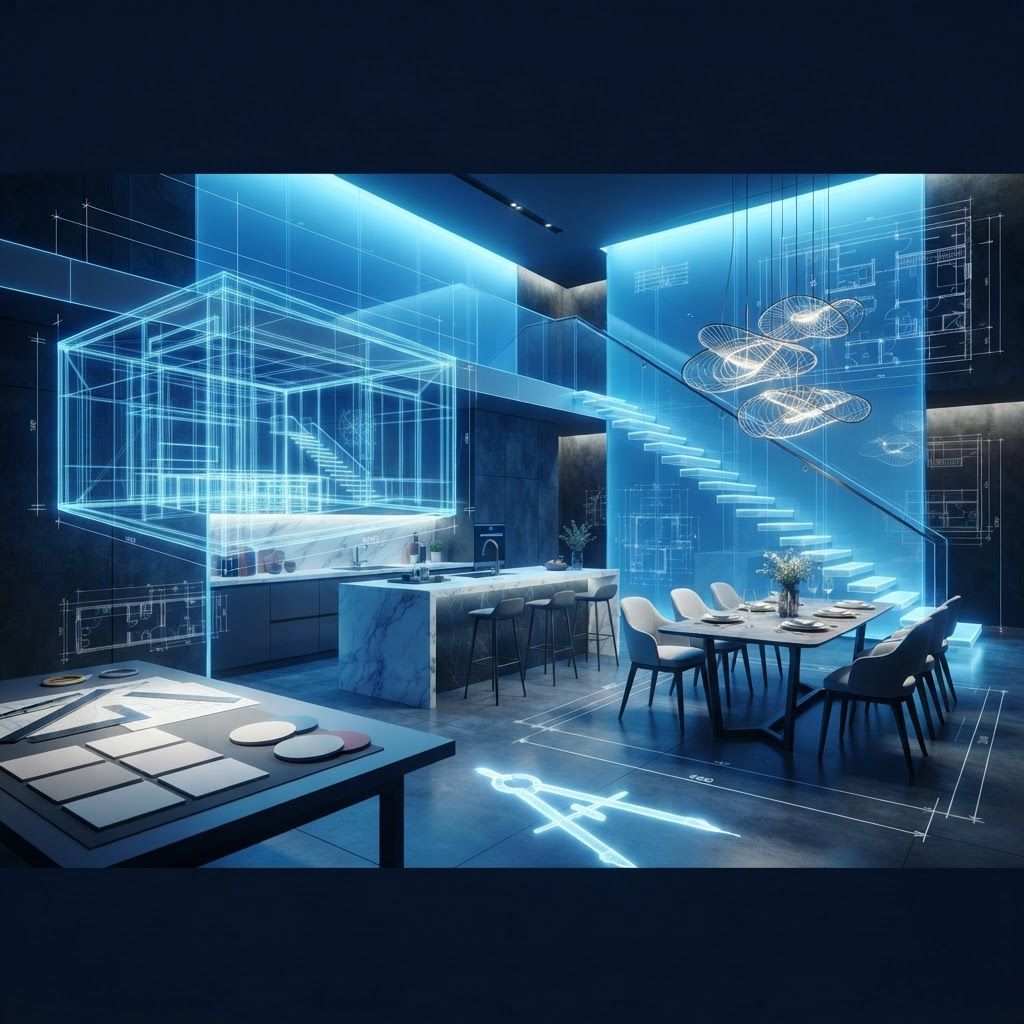
Interior design is frequently misunderstood as furniture selection. In practice, a full service typically begins with a brief and survey, moves through spatial planning and concept development, then progresses to detailed design covering joinery, lighting, electrical layouts, finishes and specification. Only after that does furniture, fixtures and equipment selection take place, followed by procurement and installation.
The most valuable stage is often the earliest. Spatial planning decisions, such as where a kitchen island sits or whether a wall is removed, have a far greater impact on how a home feels than the choice of cushion fabric. Firms that invest time in this stage tend to deliver homes that work well years later. Many studios also coordinate with architects, structural engineers and building control, particularly on projects involving extensions or significant alterations, and can manage contractors on the client's behalf.
Top 10 Interior Design Firms in Barking and Dagenham
1. Riverside Design Studio works predominantly on contemporary apartments in the borough's newer developments. The team is known for clever integrated storage, considered lighting schemes and material palettes that make modest floor areas feel calm rather than cluttered.
2. Becontree Interior Architecture specialises in interwar and post-war family homes, with a strong track record in rear extensions, loft conversions and reconfigured ground floors. Their drawings are detailed and construction-ready, which contractors consistently appreciate.
3. Dagenham Design House offers a full turnkey service from concept through to installation, appealing to clients who want a single accountable point of contact. They are particularly experienced in whole-house renovations where phasing and budget control matter.
4. East London Interiors Collective is a multi-disciplinary studio combining interior design, furniture design and bespoke joinery. Their in-house making capability suits projects requiring fitted solutions for irregular spaces, such as alcove shelving and under-stair storage.
5. Thames View Design Consultancy focuses on residential developers and build-to-rent operators, producing scalable interior specifications for multiple units. Their work balances visual appeal with the durability and maintenance realities of rental accommodation.
6. Barking Studio for Interiors takes a colour-led approach, working with richer palettes and layered textures for clients who want more personality than a neutral scheme provides. They are often chosen for period properties with strong original features.
7. Chadwell Commercial Interiors concentrates on workplace, retail and hospitality projects rather than homes. With co-working, healthcare and independent food businesses expanding locally, their commercial expertise covers regulatory requirements, accessibility and wayfinding.
8. Goresbrook Home Design Partners provides a consultancy-led service for clients managing their own build. Clients receive a design package, specification and shopping list, then implement it independently, which suits confident homeowners on tighter budgets.
9. Marks Gate Interior Practice emphasises sustainable specification, favouring low-emission finishes, responsibly sourced timber and reclaimed pieces where possible. They also advise on fabric-first improvements such as insulation and ventilation strategy alongside aesthetic work.
10. Rippleside Studio Interiors is a smaller practice offering a highly personal service, typically handling a limited number of projects at a time. Clients tend to value the continuity of working directly with the lead designer from first meeting to final handover.
How to Choose the Right Studio
Begin by defining the scope honestly. A single-room refresh, a kitchen replacement and a full house renovation with structural work are entirely different projects requiring different levels of service. Being clear about scope helps studios quote accurately and prevents mismatched expectations.
Review portfolios for evidence of range as well as quality. A studio with a single recognisable house style may be perfect if that style matches your taste, but less suitable if you want something distinct. Ask how many projects the designer runs concurrently, who will attend site visits, and how variations and additional costs are handled once work begins.
Fee structures vary. Some studios charge a fixed design fee, others charge hourly, and some work on a percentage of construction value. Each model is legitimate, but they behave differently as a project evolves. Establish what is included, particularly site visits, contractor coordination, procurement administration and revisions, and get it in writing.
Design Trends Influencing the Borough
Several trends are visible locally. Multifunctional rooms remain a priority, with home offices frequently integrated into bedrooms, landings and even garden buildings. Broken-plan layouts have gained ground over fully open plan, as households recognise the value of acoustic separation and heating efficiency. Storage-led design continues to dominate briefs in apartments, where every centimetre counts.
Material choices are shifting too. Warmer timbers, textured plaster finishes and natural stone alternatives have replaced the high-gloss surfaces popular a decade ago. Lighting has become more sophisticated, with layered schemes combining ambient, task and accent sources rather than relying on a single ceiling fitting. Energy performance is now part of nearly every renovation conversation, and designers increasingly coordinate their work with heating upgrades, improved glazing and ventilation.
Getting the Most From Your Investment
The best interior design outcomes come from clear briefs, realistic budgets and early engagement. Involving a designer before demolition begins avoids expensive reworking, and agreeing a contingency of ten to fifteen per cent protects the project when unexpected issues emerge, which is common in older housing stock.
Whether the goal is a calm riverside apartment, a reconfigured family home in Becontree or a well-planned commercial space, Barking and Dagenham now supports a genuinely capable design community. Matching the right studio to the right brief remains the single most important decision a client makes.
Want your brand featured in front of decision-makers? Publish a guest post or get a link insertion in our guides through AAMAX's guest post and link insertion service.
Helpful Links
 SponsoredAAMAX — Full-Service Digital Agency
Write for Us
Share your expertise with our readers. We welcome guest contributions from industry specialists.
Pitch your idea