Few topics generate as much discussion and anxiety as the impact of artificial intelligence on jobs. As AI grows more capable, it is natural to wonder which roles will change, which might disappear, and which new opportunities will emerge. The reality is nuanced: AI is unlikely to simply eliminate work wholesale, but it will significantly reshape how many jobs are performed, what skills are valued, and where human effort is most needed. Understanding how AI could change the job market helps individuals and businesses prepare rather than react.
This article examines the likely effects of AI on employment, the difference between automation and augmentation, the new roles emerging, and how to adapt to a workplace increasingly shaped by intelligent technology.
How AAMAX.CO Helps Businesses Adapt to the AI Era
As AI reshapes how work gets done, businesses need partners who understand how to integrate it productively. AAMAX.CO is a full-service digital marketing company that helps organizations worldwide adopt AI-powered tools and processes in ways that enhance their teams rather than replace them. Their team helps businesses modernize their digital presence, automate routine marketing tasks, and free their people to focus on higher-value work. Through their website development and broader services, they help companies build the digital infrastructure needed to thrive as AI transforms the workplace.
Automation Versus Augmentation
A crucial distinction in understanding AI's impact is the difference between automation and augmentation. Automation refers to AI taking over specific tasks entirely, particularly repetitive, rule-based, or predictable work. Augmentation, by contrast, means AI assisting humans to work faster and better without replacing them. Most jobs are made up of many tasks, and AI typically affects some of those tasks rather than the entire role.
This means many jobs will evolve rather than vanish. A professional whose routine tasks are automated may spend more time on creative, strategic, or interpersonal work that AI cannot easily replicate. In this sense, AI often shifts the nature of work toward uniquely human strengths rather than eliminating the need for people.
Jobs Most and Least Affected
Roles involving highly repetitive, predictable tasks, such as basic data entry, routine processing, and simple customer queries, are most susceptible to automation. AI excels at handling structured, high-volume work quickly and accurately. As a result, some positions will shrink or be restructured as machines take over their most mechanical components.
Conversely, jobs that depend on creativity, complex problem-solving, emotional intelligence, leadership, and nuanced human interaction are far more resistant to automation. Roles in caregiving, skilled trades, strategy, and creative fields rely on qualities that AI cannot authentically reproduce. Even in these areas, however, AI will likely become a tool that enhances performance rather than a competitor for the role.
New Roles and Opportunities
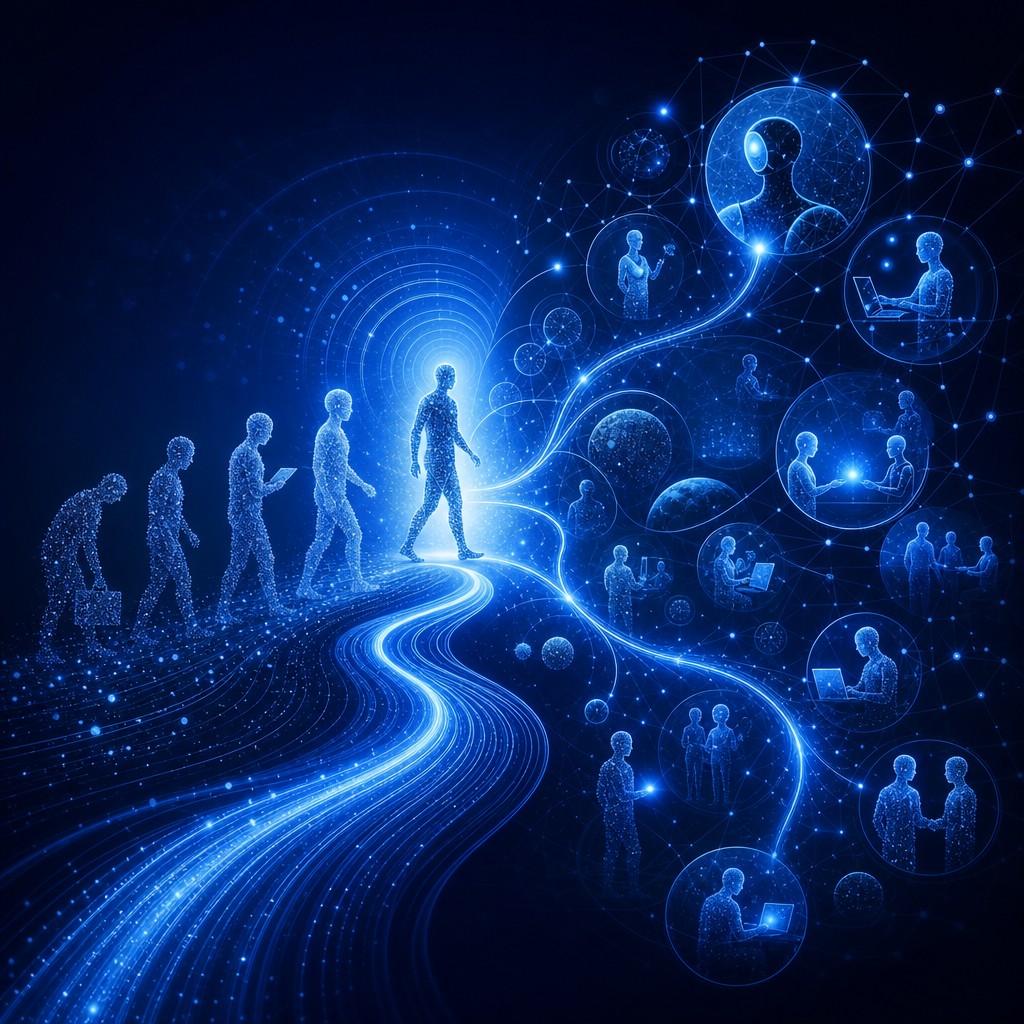
History shows that technological revolutions destroy some jobs while creating others, and AI is no exception. Entirely new categories of work are emerging, including AI specialists, prompt engineers, data analysts, AI ethics professionals, and roles focused on managing and integrating AI systems. As AI tools spread, demand grows for people who can build, oversee, and apply them effectively.
Beyond technical roles, AI is increasing the value of human skills that complement technology. The ability to think critically, communicate well, adapt quickly, and apply judgment becomes more valuable as routine tasks are automated. Many of tomorrow's jobs may not exist yet, just as many of today's roles were unimaginable a generation ago.
Preparing for an AI-Shaped Workforce
For individuals, the key to thriving is continuous learning and adaptability. Developing skills that complement AI, such as creativity, complex reasoning, and emotional intelligence, while also becoming comfortable using AI tools, positions workers for success. Embracing AI as a collaborator rather than fearing it as a replacement is increasingly important.
For businesses, the challenge is to integrate AI thoughtfully, retrain employees, and redesign workflows so that humans and machines complement one another. Organizations that use AI to augment their teams, freeing people to focus on higher-value work, tend to gain both efficiency and employee engagement. Responsible adoption, with attention to fairness and transparency, also helps maintain trust during the transition.
Conclusion
AI could change the job market significantly, automating certain tasks, augmenting many roles, and creating new opportunities that did not exist before. Rather than a simple story of job loss, the more accurate picture is one of transformation, where the nature of work shifts toward uniquely human strengths and new AI-related fields emerge. Both individuals and businesses can prepare by embracing adaptability, continuous learning, and thoughtful integration of AI. For organizations seeking to modernize and stay competitive in this changing landscape, partnering with experienced digital specialists is a practical way to harness AI's benefits while supporting their people through the transition.
Want your brand featured in front of decision-makers? Publish a guest post or get a link insertion in our guides through AAMAX's guest post and link insertion service.
Helpful Links
 SponsoredAAMAX — Full-Service Digital Agency
Write for Us
Share your expertise with our readers. We welcome guest contributions from industry specialists.
Pitch your idea