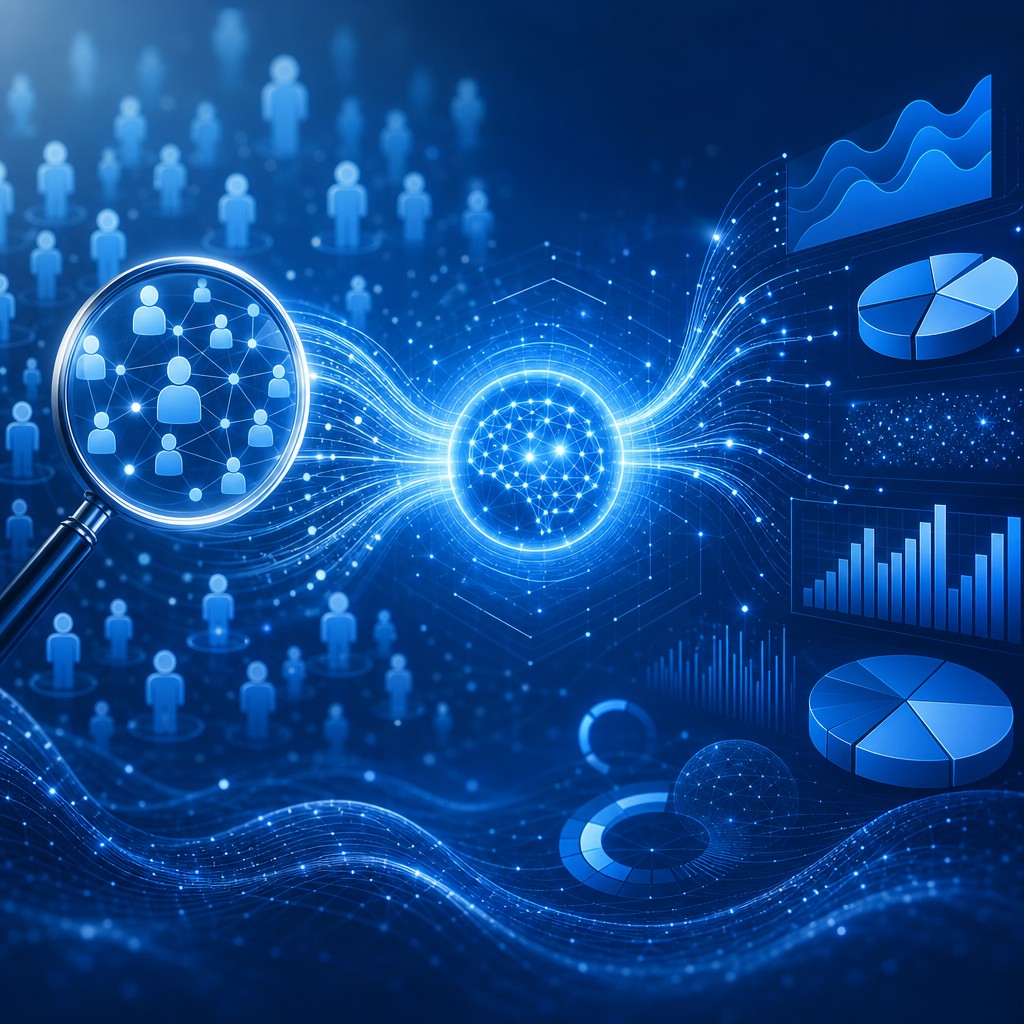
Market research has always been about understanding people: what they want, how they behave, and why they make the choices they do. Artificial intelligence is now revolutionizing how that understanding is gathered and analyzed. AI can process surveys, scan social media sentiment, identify trends, and generate insights in a fraction of the time traditional methods require. This leads many to ask: will market research turn into AI? The reality is that AI is transforming the discipline into something faster and smarter, while human interpretation remains essential to making those insights meaningful.
How AAMAX.CO Turns Data Into Actionable Insight
Gathering data is only valuable when it leads to better decisions, and that requires both technology and expertise. AAMAX.CO is a full-service digital marketing company that helps businesses worldwide understand their audiences and act on what they learn. Their team uses AI-powered research and generative engine optimization techniques to uncover how customers search, behave, and engage, then applies human insight to translate that data into strategies that drive growth. The result is research that is not only faster but genuinely useful.
How AI Is Changing Market Research
AI has dramatically accelerated nearly every stage of market research. It can analyze thousands of survey responses instantly, detect patterns in customer behavior, and monitor online conversations to gauge public sentiment. Predictive models forecast trends and identify emerging opportunities before they become obvious. Tasks that once took weeks can now be completed in hours.
AI also expands the scope of research. It can process unstructured data such as reviews, comments, and images, revealing insights that traditional methods often miss. This gives businesses a richer, more nuanced understanding of their markets than ever before.
The Speed and Scale Advantage
One of AI's greatest contributions is its ability to handle enormous volumes of data quickly. Where human researchers might sample a small group, AI can analyze entire populations of customer interactions. This scale produces more reliable insights and allows businesses to track changes in real time rather than relying on periodic studies.
This speed enables faster decision-making. Companies can test ideas, measure responses, and adjust strategies rapidly, gaining a significant competitive advantage. In fast-moving markets, this responsiveness is increasingly valuable.
Why Human Judgment Still Matters
Despite these advantages, AI cannot fully replace human researchers. Data on its own does not explain the deeper reasons behind human behavior. Understanding context, culture, and emotion requires human interpretation. AI might reveal that customers prefer a product, but a human researcher uncovers why, connecting findings to broader motivations and meaning.
Asking the right questions is another human strength. Effective research depends on framing the right inquiries and knowing which insights truly matter for a business. AI can answer questions, but humans decide which questions are worth asking and how the answers should shape strategy.
Avoiding the Pitfalls of Automated Research
Relying solely on AI for research carries risks. AI models can reflect biases present in their data, leading to skewed conclusions. They may also miss nuance or misinterpret sentiment, especially when language is sarcastic, cultural, or ambiguous. Without human oversight, these errors can lead businesses to make poor decisions.
This is why responsible research combines AI efficiency with human critical thinking. Researchers validate AI findings, question assumptions, and ensure conclusions are accurate and ethical. This oversight protects the quality and integrity of the insights.
The Future Is Augmented Research
Rather than turning entirely into AI, market research is becoming an augmented discipline where humans and machines work together. AI handles data collection and analysis at scale, while researchers provide strategic direction, interpretation, and judgment. This partnership produces deeper, faster, and more actionable insights.
Researchers who embrace AI become more powerful, freed from tedious data processing to focus on the insightful, strategic work that drives real value. The profession evolves, becoming more analytical and impactful rather than obsolete.
Conclusion
Will market research turn into AI? AI is fundamentally transforming the field, automating data collection and analysis while dramatically increasing speed and scale. Yet it will not fully replace human researchers, because interpreting data, understanding human motivation, and asking the right questions require human insight. The future of market research is a powerful collaboration between AI and people. Businesses that combine intelligent tools with experienced human guidance will gain the clearest, most actionable understanding of their customers and markets.
Want your brand featured in front of decision-makers? Publish a guest post or get a link insertion in our guides through AAMAX's guest post and link insertion service.
Helpful Links
 SponsoredAAMAX — Full-Service Digital Agency
Write for Us
Share your expertise with our readers. We welcome guest contributions from industry specialists.
Pitch your idea