AI Is Now Embedded in Everyday Marketing
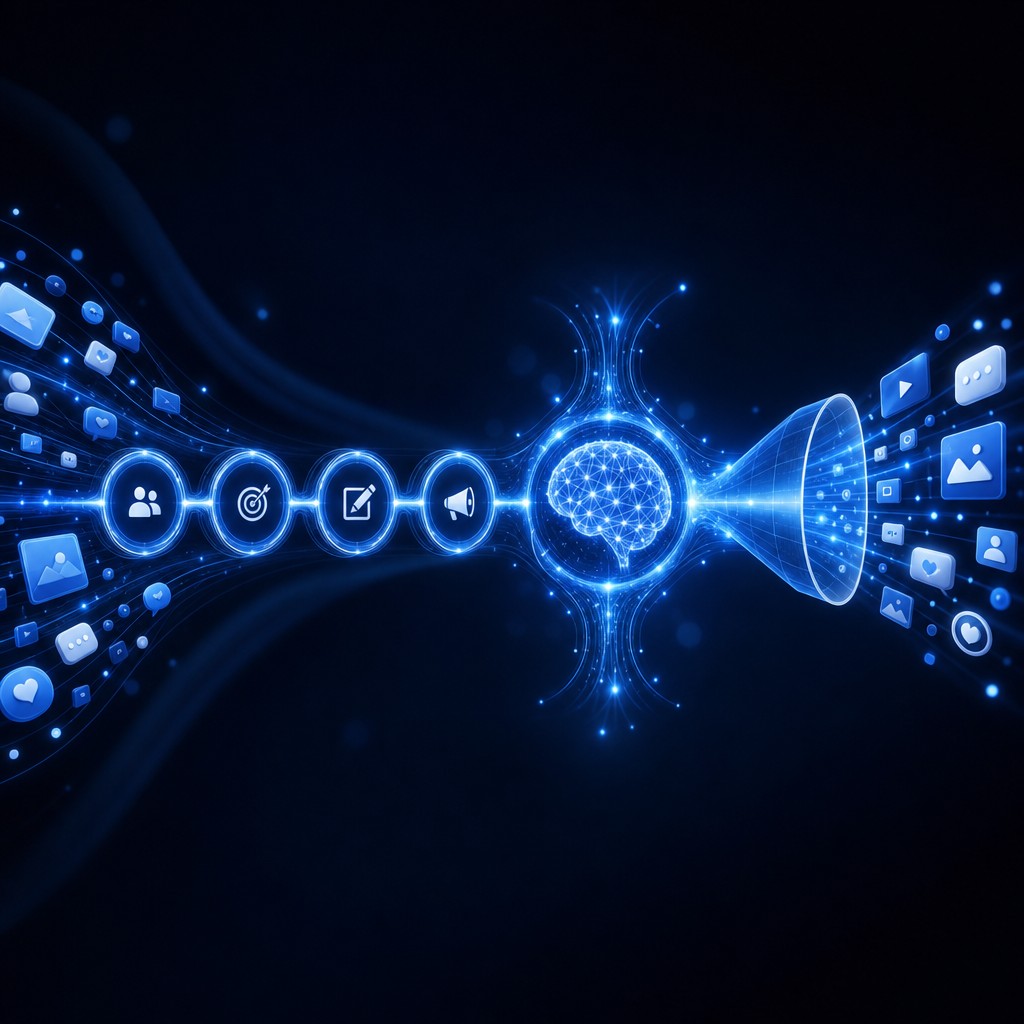
Just a few years ago, AI in marketing was largely experimental — a chatbot here, a recommendation engine there. By 2025 and into 2026, it has become deeply embedded across the entire marketing workflow. From strategy and content creation to campaign execution and analytics, AI now touches nearly every stage of how brands attract and retain customers. The question is no longer whether to use AI, but where it delivers the most value and how to integrate it responsibly.
Understanding where AI fits helps marketing teams avoid two common mistakes: ignoring its potential, or over-relying on it in places where human judgment is irreplaceable.
How AAMAX.CO Integrates AI Into Marketing Workflows
Successfully weaving AI into a marketing operation requires both technical know-how and strategic clarity, and AAMAX.CO brings both to the table. They are a full-service digital marketing company serving clients worldwide, and they help businesses identify where AI can streamline workflows, reduce costs, and improve results without sacrificing quality or brand voice. Their team designs marketing systems that combine automation with human oversight, ensuring efficiency gains never come at the expense of authenticity. Organizations modernizing their operations can draw on their digital marketing expertise to implement AI thoughtfully and effectively.
Research and Strategy
At the top of the funnel, AI accelerates research and planning. It analyzes market trends, competitor positioning, and audience behavior to inform strategy. AI tools can cluster customer segments, predict which messages will resonate, and identify emerging opportunities before they become obvious. This shifts strategists from manual data gathering toward higher-level interpretation and decision-making, where human expertise still matters most.
Keyword and topic research, once painstakingly manual, is now augmented by AI that surfaces intent patterns and content gaps in seconds. This frees teams to focus on crafting differentiated angles rather than compiling spreadsheets.
Content Creation and Personalization
Content is where many teams feel AI's impact most directly. Generative tools produce drafts, headlines, social posts, and email variations rapidly. The smartest teams use AI for first drafts and ideation, then layer in human editing to ensure accuracy, originality, and brand voice. AI also powers dynamic personalization, tailoring messaging, product recommendations, and landing pages to individual users at scale — something impossible to do manually.
Visual content benefits too. AI image and video tools speed up the creation of assets for ads, social media, and websites, reducing production bottlenecks while keeping campaigns visually fresh.
Campaign Execution and Optimization
In execution, AI manages bidding, budget allocation, and audience targeting across advertising platforms. Machine learning continuously optimizes campaigns, reallocating spend toward the best-performing segments in real time. Email and lifecycle marketing tools use AI to determine the best send times, subject lines, and content for each recipient. This automation improves efficiency and frees marketers to focus on creative and strategic work.
A/B and multivariate testing have also become smarter. AI can run continuous experiments and adapt campaigns automatically, learning what works without waiting for a human to analyze each test manually.
Customer Engagement and Support
AI-powered chatbots and virtual assistants now handle a large share of customer interactions, answering questions, qualifying leads, and guiding users through purchases. When designed well, they improve response times and free human agents for complex issues. Increasingly, these assistants are connected to a brand's knowledge base, ensuring consistent, accurate answers across channels.
As more customers discover brands through AI-driven search and assistants, optimizing for those channels becomes part of the engagement workflow. Investing in generative engine optimization helps ensure your brand is the one AI systems recommend when potential customers ask for solutions.
Analytics and Reporting
At the bottom of the funnel, AI transforms analytics. It identifies which channels and touchpoints drive conversions, predicts customer lifetime value, and flags anomalies before they become problems. Automated reporting tools generate plain-language summaries, so teams spend less time building dashboards and more time acting on insights. Attribution modeling, long a thorny challenge, becomes more accurate as AI weighs the contribution of each interaction.
Where Humans Still Lead
Despite AI's reach, human judgment remains essential. Brand strategy, creative vision, emotional storytelling, ethical decisions, and relationship building are areas where people lead and AI assists. The most effective marketing organizations in 2025 and 2026 treat AI as a powerful collaborator — handling scale, speed, and pattern recognition — while reserving creativity, empathy, and strategic direction for humans. Teams that strike this balance, often with guidance from experienced partners, gain efficiency without losing the authenticity that builds lasting customer trust.
Want your brand featured in front of decision-makers? Publish a guest post or get a link insertion in our guides through AAMAX's guest post and link insertion service.
 SponsoredAAMAX — Full-Service Digital Agency
Write for Us
Share your expertise with our readers. We welcome guest contributions from industry specialists.
Pitch your idea