Healthcare Across a Rural District
Delivering healthcare in West Norfolk involves a challenge that urban systems do not face: distance. The district covers a large area with a dispersed population, an older demographic profile than the national average, and significant seasonal population increases along the coast. A resident of a village in the Fens or on the north-west coast may live a considerable drive from acute services, and that geography shapes how care is organised.
The response has been a layered network. Acute hospital services concentrate at the main hospital site in King's Lynn, providing emergency care, surgery, maternity and inpatient specialties. Community hospitals and health centres distributed across the district handle outpatient clinics, diagnostics, rehabilitation and step-down care closer to where people live. Specialist and independent facilities add capacity in particular areas. Community and home-based services extend care into people's houses, which for many older rural residents is the difference between managing at home and requiring admission.
Understanding the Levels of Care
Acute hospital care covers emergency departments, inpatient wards, operating theatres, intensive care, maternity and the full range of diagnostic services. These require concentration to sustain the staffing, equipment and case volumes that safe practice demands, which is why they cluster at a single main site.
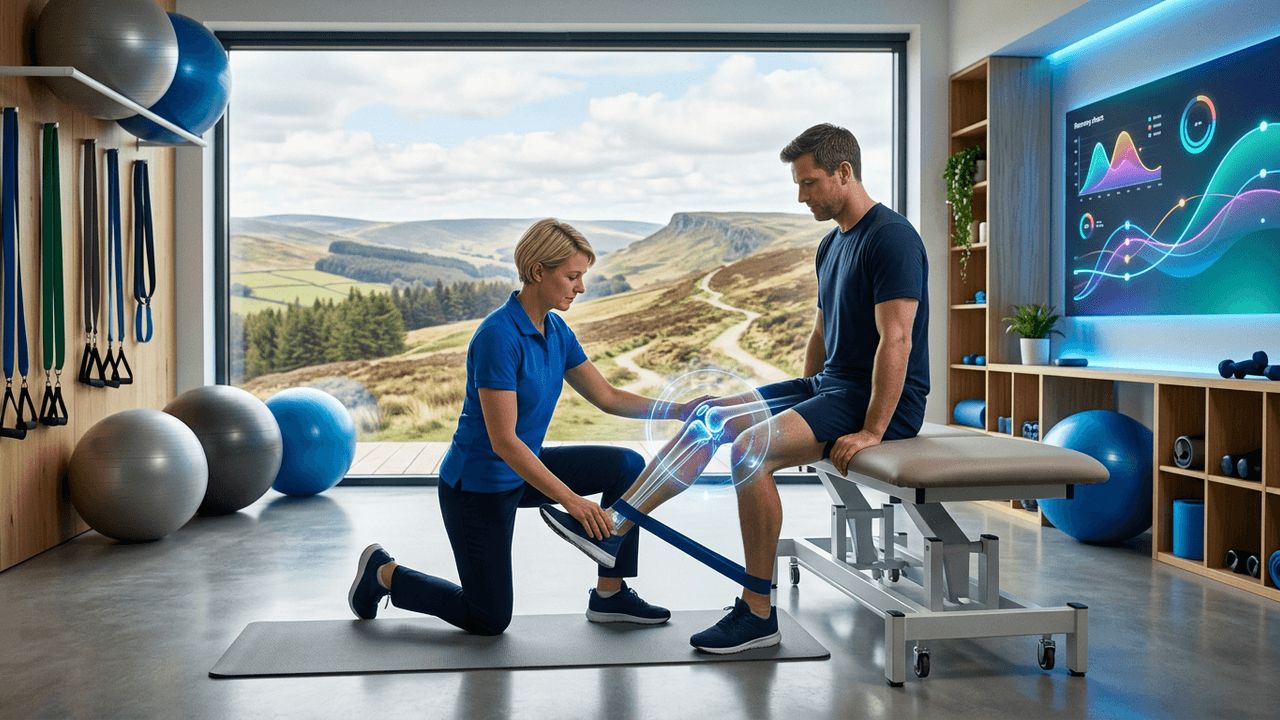
Community hospital services provide intermediate care, rehabilitation, outpatient clinics and minor injury treatment. Their value in a rural district is considerable: they allow follow-up appointments, physiotherapy and recovery care without long journeys, and they enable earlier discharge from acute beds.
Primary care sits at the front of the system through general practices, which handle the overwhelming majority of patient contacts and coordinate referrals. Increasingly, practices work in networks sharing specialist staff such as pharmacists, physiotherapists and mental health practitioners.
Specialist and independent facilities add elective surgical capacity, diagnostics and particular treatments. Community-based and home services — district nursing, palliative care, mental health teams and reablement — deliver care where patients live.
Hospitals and Healthcare Facilities in the District
Queen Elizabeth Hospital King's Lynn is the district's principal acute hospital, providing emergency care, inpatient services, surgery, maternity, paediatrics and a broad range of specialties. It serves West Norfolk along with parts of neighbouring Cambridgeshire and Lincolnshire, and it is the main referral destination for serious illness and injury in the district.
West Norfolk Community Hospital provides intermediate and rehabilitation care, outpatient clinics and diagnostic services, supporting recovery closer to home and reducing pressure on acute beds. Its role in enabling earlier discharge is significant for older patients.
Downham Market Health Centre delivers integrated primary and community services including general practice, community nursing, physiotherapy and outpatient clinics, serving the southern part of the district.
Hunstanton Community Health Centre serves the coastal population with primary care, community nursing, minor injury treatment and outpatient clinics. Its workload varies substantially with the seasonal visitor population.
Fenland Community Care Unit provides rehabilitation, step-down beds and community nursing coordination for the district's western parishes, reducing the need for lengthy travel among a predominantly older patient group.
Sandringham Private Hospital offers independent elective surgery, diagnostics and outpatient consultations. It provides additional capacity for planned procedures and is used by both private patients and, at times, publicly funded referrals.
Norfolk Diagnostic Centre concentrates on imaging and diagnostic services including scanning, endoscopy and cardiac investigation. Dedicated diagnostic capacity separate from acute sites helps reduce waiting times for investigation.
Ouse Valley Mental Health Unit provides inpatient and community mental health services including crisis response, assessment and ongoing treatment. Its community teams extend across the district to reach patients at home.
Marshland Rehabilitation Centre specialises in physical rehabilitation following stroke, injury or surgery, offering intensive therapy programmes on both inpatient and outpatient bases.
Guildhall Specialist Clinic completes the list, providing consultant-led outpatient specialist clinics across multiple disciplines, allowing patients to access specialist opinion locally rather than travelling to regional centres.
Trends in Healthcare Delivery
Community-based care continues to expand, moving services out of hospitals and closer to patients. In a rural district this reduces travel burden significantly and generally produces better outcomes for older patients who deteriorate quickly when admitted unnecessarily.
Digital consultation has become established practice following its rapid adoption during the pandemic period. Telephone and video appointments suit follow-up, medication review and triage particularly well, though connectivity limitations in parts of the district affect reliability, and not all patients find remote consultation accessible.
Diagnostic capacity has been prioritised, with dedicated centres separating planned investigation from emergency pressures. Earlier diagnosis materially improves outcomes across cancer, cardiac and respiratory conditions.
Integrated care arrangements aim to coordinate hospital, community, primary care and social care around individual patients rather than within organisational boundaries. This matters most for people with multiple long-term conditions, who are numerous in an older population.
Workforce recruitment and retention remain the system's most significant constraint, and rural districts face particular difficulty attracting specialist staff. Training pathways, international recruitment and expanded roles for nursing and allied health professionals form the main response.
Navigating Healthcare Locally
Register with a general practice, since primary care is the route into most services and coordinates referrals. Understand which service to use for which need: general practice for ongoing and non-urgent problems, pharmacy for minor ailments and medication advice, minor injury units for straightforward injuries, and emergency departments for genuine emergencies. Using the right service reduces waiting for everyone.
For planned procedures, ask about choice of provider and waiting times at alternative sites, since travelling further sometimes means being treated sooner. Prepare for appointments by listing current medications and specific questions, which makes limited consultation time considerably more productive.
If travel to appointments is difficult, ask about patient transport eligibility and whether remote consultation is appropriate for follow-up.
Final Thoughts
Healthcare in King's Lynn and West Norfolk is organised as a layered network that concentrates acute services while pushing routine and recovery care outwards towards patients. The facilities profiled here span acute, community, diagnostic, mental health, rehabilitation and independent provision. For residents of a large rural district, understanding which service does what is genuinely useful, and community services often provide the most accessible route to care.
Want your brand featured in front of decision-makers? Publish a guest post or get a link insertion in our guides through AAMAX's guest post and link insertion service.
Helpful Links
 SponsoredAAMAX — Full-Service Digital Agency
Write for Us
Share your expertise with our readers. We welcome guest contributions from industry specialists.
Pitch your idea