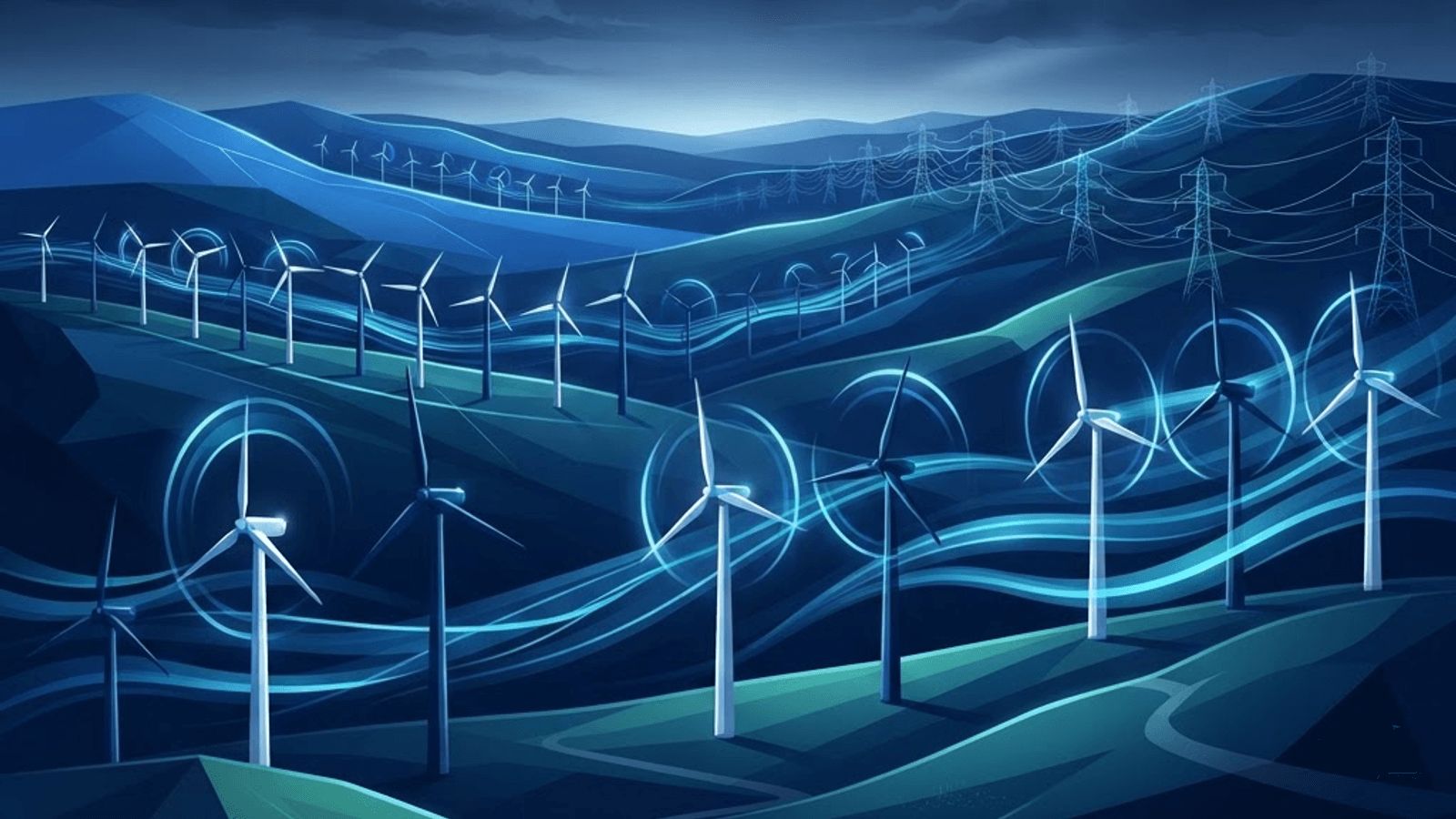
Wind Energy and the East Midlands
Wind has become one of the largest sources of electricity generation in the United Kingdom, and while the most visible capacity sits offshore and in upland regions, the supply chain supporting it extends across the country. The East Midlands contributes substantially through engineering, fabrication, component manufacture, logistics and technical consultancy. Broxtowe, with its established engineering base and skilled manufacturing workforce along the Erewash corridor, participates in this economy more than its landscape might suggest.
Locally, wind development takes a different form than in more exposed regions. Large-scale onshore wind farms are uncommon in this part of Nottinghamshire due to planning constraints and topography. Instead, the opportunities lie in smaller-scale turbines for agricultural and industrial sites, feasibility and consenting work, and — most significantly — supplying goods and services into the wider national wind sector.
How Wind Technology Works
A wind turbine converts kinetic energy in moving air into rotational energy, which drives a generator. Output rises sharply with wind speed, which is why site selection is critical: a modest improvement in average wind speed produces a disproportionately large increase in annual generation. Turbines are categorised broadly into small-scale systems suitable for individual sites, medium turbines used on farms and industrial premises, and utility-scale machines deployed in commercial wind farms.
Modern turbines include sophisticated control systems that adjust blade pitch and yaw to optimise capture and protect the machine in high winds. Maintenance regimes cover gearboxes, bearings, blades and electrical systems, and condition monitoring is increasingly used to predict failures before they occur.
The Top 10 Wind Energy Companies in Broxtowe
1. Erewash Wind Engineering — Provides precision engineering and component manufacture for the wind supply chain, drawing on the borough's established machining and fabrication capability.
2. Broxtowe Wind Consultancy — Offers feasibility studies, wind resource assessment and planning support for landowners and businesses considering turbine installation.
3. Nottinghamshire Turbine Services — Delivers maintenance, inspection and repair services for operational turbines, including blade inspection and gearbox servicing across regional sites.
4. Beeston Renewable Engineering — Focuses on electrical and control systems for wind installations, covering grid connection design, protection systems and monitoring integration.
5. Eastwood Wind Projects — Supports project development from site identification through consenting and construction coordination, working with landowners and community groups.
6. Kimberley Agricultural Energy — Specialises in small and medium turbines for farms and rural businesses, integrating wind generation with existing on-site electrical demand.
7. Attenborough Environmental Assessment — Conducts ecological surveys, noise assessment, landscape and visual impact analysis required to support wind planning applications.
8. Toton Composite Solutions — Works with composite materials used in turbine blades, offering repair services and manufacturing support to the wider sector.
9. Stapleford Industrial Lifting — Provides heavy lifting, transport and logistics services for turbine components, including specialist handling and site access planning.
10. Chilwell Energy Analytics — Delivers performance monitoring and data analysis for wind assets, identifying underperformance and optimising maintenance scheduling.
Planning and Community Considerations
Wind development in England requires careful navigation of the planning system. Applications must address visual impact, noise levels at nearby dwellings, shadow flicker, ecological effects particularly on birds and bats, and cumulative impact where other turbines exist nearby. Proximity to aviation infrastructure and radar can also be a constraint.
Community engagement is now regarded as essential rather than optional. Schemes that consult early, respond to concerns about siting and offer community benefit arrangements consistently progress more smoothly than those presented as a completed proposal. Some projects adopt shared ownership models, giving local residents a direct financial stake in the generation.
The Economics of Wind Projects
Small turbines for individual sites have a narrower economic case than solar in most Broxtowe locations, because average wind speeds at low hub heights in sheltered inland areas are often insufficient. Careful resource assessment before committing capital is therefore essential — installing a turbine based on optimistic assumptions is a well-documented way to lose money.
Medium-scale turbines on genuinely exposed agricultural or industrial sites can perform strongly, particularly where the host has high, consistent daytime electricity demand. For larger projects, revenue typically comes through power purchase agreements or contracts for difference, with financing structured over long asset lives.
Skills and the Local Supply Chain
One of the clearest opportunities for Broxtowe lies in workforce and supply chain participation. Wind requires mechanical and electrical engineers, technicians, composite specialists, project managers, environmental consultants and data analysts. Many of these skills transfer directly from the borough's existing engineering and manufacturing base.
For businesses considering entry, the practical steps are obtaining relevant quality and safety accreditations, understanding the procurement processes of major developers and tier-one suppliers, and building relationships through sector networks. The sector's long-term growth trajectory makes it a credible diversification route for established engineering firms seeking more resilient order books.
Assessing a Site Properly
Anyone considering a turbine should start with resource assessment rather than equipment selection. Published wind speed databases provide an initial indication, but they model conditions at standard heights over generalised terrain and frequently overstate what a specific inland site will achieve. Local obstructions — buildings, hedgerows, mature trees and land contours — create turbulence and reduce effective wind speed considerably.
For any meaningful investment, on-site monitoring over a period of months produces far more reliable data than desktop modelling alone. The cost of monitoring is small relative to the cost of an underperforming turbine. Hub height is the other decisive variable: wind speed increases with height, so a taller mast can transform the economics of an otherwise marginal site, subject to planning acceptability.
Combining Wind With Other Technologies
Wind and solar complement one another well because their generation profiles differ. Solar peaks in summer daylight, while wind generation is typically strongest in autumn and winter and continues through the night. A site combining both achieves a steadier annual output than either alone, which improves self-consumption and reduces reliance on imported electricity.
Adding battery storage strengthens this further by smoothing the mismatch between generation and demand. For agricultural and industrial sites in the borough with significant electrical load, a hybrid arrangement designed around actual consumption patterns generally produces better returns than maximising any single technology in isolation.
Want your brand featured in front of decision-makers? Publish a guest post or get a link insertion in our guides through AAMAX's guest post and link insertion service.
Helpful Links
 SponsoredAAMAX — Full-Service Digital Agency
Write for Us
Share your expertise with our readers. We welcome guest contributions from industry specialists.
Pitch your idea