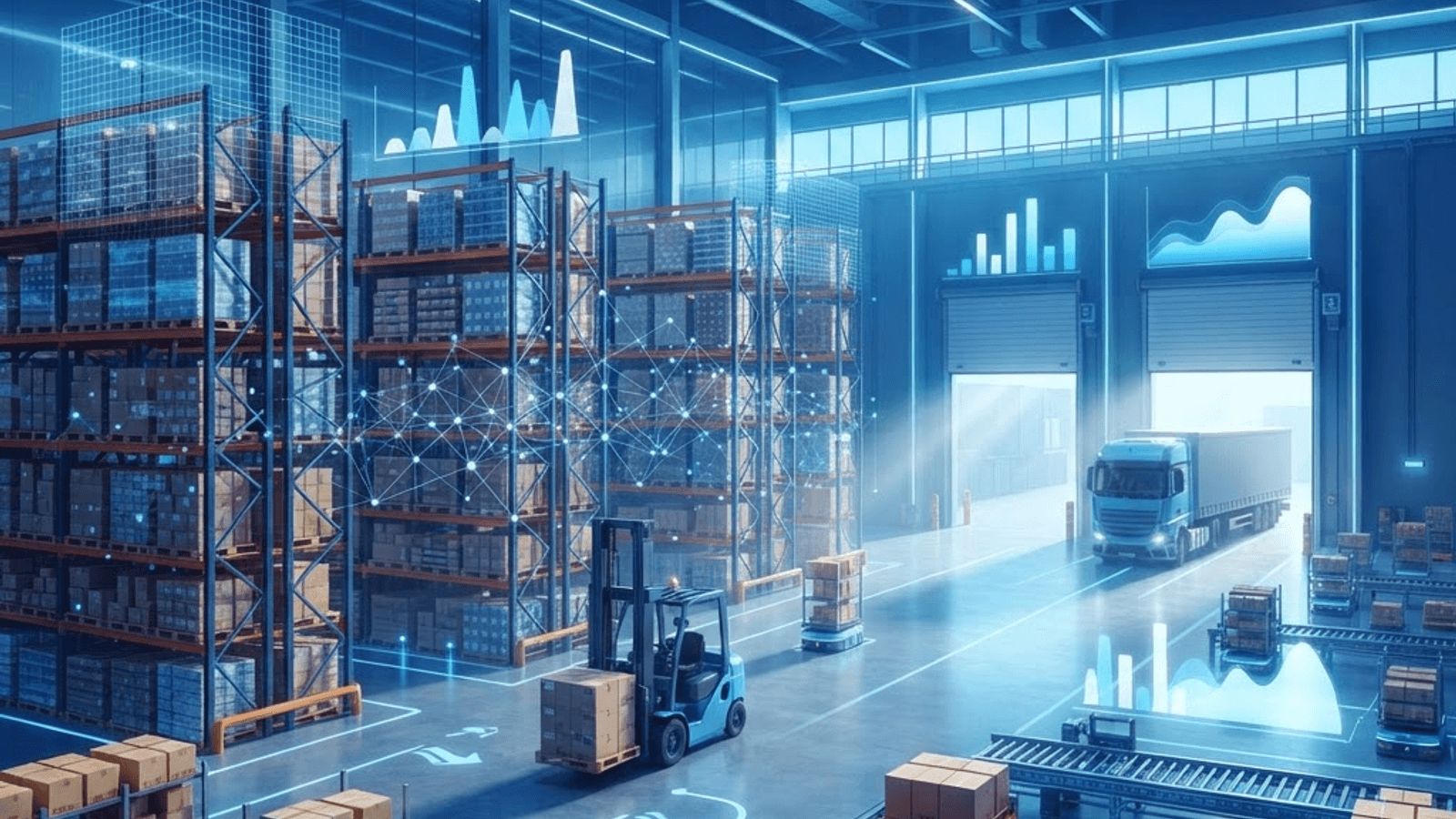
Falkirk as a Warehousing Location
If you were designing a distribution map of Scotland from scratch, you would place a warehouse close to Falkirk. The district sits between the country's two largest cities, has direct motorway access via the M9 and M876, adjoins the Port of Grangemouth and retains rail freight connections that most inland locations lack. Land and rental costs are generally lower than in Edinburgh or Glasgow, while labour availability across the Forth Valley is strong.
Those advantages have created a substantial storage and distribution cluster around Grangemouth, Middlefield, Newhouse Industrial Estate and the corridors towards Larbert and Bonnybridge. The offer ranges from bulk industrial storage serving the petrochemical sector to small e-commerce fulfilment operations picking single items for online orders.
Understanding Warehousing Options
Warehousing is not a single product. Public or shared warehousing stores goods for multiple customers, charging per pallet per week, which suits fluctuating volumes. Contract or dedicated warehousing allocates space and staff exclusively to one client, providing control at higher fixed cost. Bonded warehousing allows imported goods to be stored without paying duty until they leave, which is significant for Scotland's spirits industry. Temperature-controlled facilities serve food, drink and pharmaceuticals. Third-party logistics providers combine storage with pick, pack, dispatch and returns, effectively running your fulfilment operation for you.
Self-storage sits at the other end of the scale, offering small units suitable for tradespeople, market traders and businesses holding modest stock.
The Leading Warehousing Companies Serving Falkirk
1. Malcolm Logistics. The Malcolm Group is one of Scotland's most substantial logistics businesses and offers large-scale warehousing integrated with road and rail distribution. For manufacturers and retailers needing high pallet counts, national distribution and rail-connected sites, it provides a level of scale few Scottish competitors match, along with mature warehouse management systems and reporting.
2. John G Russell Transport. Russell combines container handling, intermodal rail terminals and warehousing across Central Scotland. Its facilities are particularly well suited to importers who want containers unloaded, stored and distributed without multiple handovers, and to exporters consolidating loads for onward shipping.
3. DHL Supply Chain. DHL's contract logistics arm designs and operates dedicated warehouses for larger clients, with standardised processes, automation options and detailed performance measurement. Its appeal in the Falkirk area is to businesses that need audited compliance, international consistency and the ability to scale quickly.
4. Forth Ports Grangemouth Warehousing. Storage within and adjacent to the port itself offers a distinct advantage: goods can be received, stored and shipped with minimal road movement. Facilities include bulk storage, container yards and covered warehousing, and port-side bonded options are valuable for duty-suspended goods.
5. DFDS Logistics. With significant Scottish operations and expertise in cold chain and food and drink, DFDS offers warehousing linked directly to European short-sea shipping. Businesses exporting perishables benefit from a single provider handling temperature-controlled storage, documentation and onward transport.
6. Ferguson Transport and Shipping. This family-owned Scottish operator provides warehousing alongside multimodal transport, with a reputation for handling difficult cargo and serving remote destinations. It is a strong choice for timber, industrial goods and project cargo requiring flexible storage arrangements.
7. Menzies Distribution. Menzies has developed considerable e-commerce fulfilment and final-mile capability from its Scottish base. For online retailers in the Falkirk area, its ability to combine storage, order picking and next-day delivery through established networks offers a route to national service levels without building an in-house operation.
8. Independent Scottish Third-Party Logistics Providers. A cluster of mid-sized Scottish 3PLs serves the Central Belt with shared warehousing, pick and pack, kitting, labelling and returns processing. These providers are typically more flexible on contract length and minimum volumes than multinationals, making them ideal for growing businesses whose forecasts are uncertain.
9. Bonded Warehousing Operators for Spirits and Excise Goods. Scotland's whisky and gin sectors depend on bonded storage, and operators in the wider Central Belt provide HMRC-approved facilities with excise duty management, cask storage and export documentation. For any Falkirk business handling alcohol at scale, bonded capability is not optional.
10. Self-Storage and Business Storage Facilities in Falkirk and Grangemouth. For smaller requirements, local self-storage sites offer flexible units from a few square metres upwards, with monthly terms, extended access hours and pallet racking options. Tradespeople, online sellers and businesses between premises use these heavily, and the absence of long leases is a major attraction.
What to Evaluate When Choosing
Start with location relative to your inbound and outbound flows. A site five miles closer to the port can save meaningful cost over thousands of container movements. Then assess the building itself: eaves height determines racking density, floor loading limits affect heavy goods, and door and yard configuration dictates how quickly vehicles turn around.
Systems matter enormously. Ask which warehouse management system is used, whether it integrates with your ERP or e-commerce platform, what stock accuracy is achieved, and how often full counts are performed. Request evidence of pick accuracy and on-time dispatch rather than accepting general assurances.
Accreditation and compliance should be verified: ISO 9001 and 14001, BRCGS for food-grade storage, fire and security certification, and adequate insurance for stored goods. Clarify whether cover is provided by the warehouse or must be arranged by you, as the latter is common.
Trends in Warehousing
Automation is spreading beyond the largest operators, with goods-to-person systems, conveyors and increasingly warehouse robotics improving productivity where labour is tight. Energy efficiency has become a priority, with solar arrays on warehouse roofs, LED lighting and improved insulation reducing both cost and reported emissions.
Inventory strategy has also shifted. After years of supply chain disruption, many businesses hold higher buffer stock than a decade ago, sustaining demand for flexible pallet storage. At the same time, e-commerce growth continues to push warehouses towards smaller, more frequent picks and sophisticated returns processing.
For Falkirk, the combination of geography, infrastructure and competitive property costs means the district is likely to remain one of Scotland's most attractive warehousing locations for the foreseeable future.
Want your brand featured in front of decision-makers? Publish a guest post or get a link insertion in our guides through AAMAX's guest post and link insertion service.
Helpful Links
 SponsoredAAMAX — Full-Service Digital Agency
Write for Us
Share your expertise with our readers. We welcome guest contributions from industry specialists.
Pitch your idea