Conwy as a Tour Destination
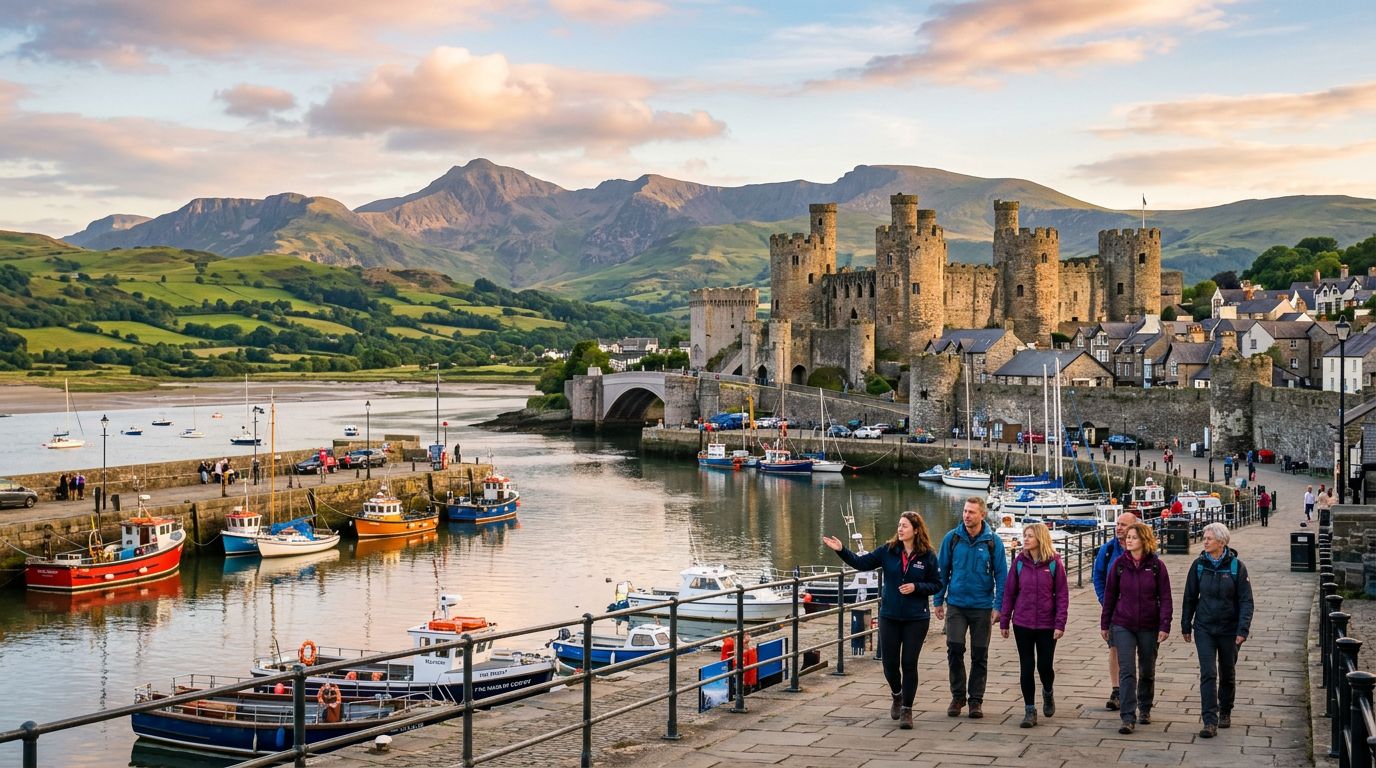
Few places in Britain pack as much into a small area as Conwy. The castle and its encircling town walls form one of the finest surviving medieval fortress complexes in Europe and hold World Heritage status. The Great Orme rises above Llandudno with Bronze Age copper mines, a tramway, a cable car and a limestone headland rich in wildflowers and seabirds. Inland the Conwy Valley runs south into Eryri, giving access to waterfalls, forests, lakes and mountains within half an hour of the coast.
This density of attraction is exactly what makes guided touring valuable here. A visitor with two or three days can see a great deal, but only with knowledge of what is worth the time, how the sites connect, when to visit to avoid crowds and how weather changes the plan. Tour operators supply that knowledge alongside transport, access and interpretation.
Leading Tour Operators
Conwy Heritage Tours concentrates on the historic town, running guided walks of the castle, the walls, the quay and the medieval street pattern. Their guides bring depth to the Edwardian conquest period, the construction of the fortress and the later industrial and maritime history of the town, transforming a walk-around into a coherent narrative.
Snowdonia Mountain Guides provides guided walking, scrambling and mountain skills instruction in Eryri, with departures accessible from the Conwy area. Qualified mountain leaders make challenging terrain accessible to visitors who lack the experience or confidence to attempt it independently, and their weather judgement is a genuine safety benefit.
North Wales Coastal Boat Trips operates sightseeing sailings on the estuary and along the coastline, offering views of the castle and the shoreline from the water together with wildlife spotting including seals and seabirds. Seeing Conwy from the river gives a perspective on the fortress that land-based visits cannot.
Valley Minibus Tours runs small-group day tours covering the Conwy Valley, Betws-y-Coed, the Swallow Falls, mountain passes and viewpoints. The small-vehicle format allows access to narrow roads that coaches cannot use, and the itineraries are flexible enough to respond to conditions.
Great Orme Discovery Tours focuses on the headland above Llandudno, covering the Bronze Age copper mines, the geology and the exceptional flora and fauna of the limestone grassland. Their natural history guiding appeals particularly to visitors with an interest in botany and birdlife.
Castles of Gwynedd Tours takes a regional approach, linking Conwy with the other Edwardian fortresses of the North Wales coast in full-day itineraries. Placing the castles in their strategic context makes a considerably stronger impression than visiting one in isolation.
Welsh Culture and Language Walks offers tours built around Welsh heritage, language and folklore, including place name meanings, literary connections and local traditions. For visitors interested in the cultural layer beneath the scenery, this is a distinctive offer.
Conwy Food and Drink Trails runs guided tasting tours covering local produce, seafood, Welsh cheeses, baking and regional drinks. Combining walking with tasting stops, these tours suit visitors who want an accessible, sociable introduction to the area.
Photography Tours North Wales guides photographers to the strongest locations at optimal light, covering coastal, mountain and heritage subjects, with tuition available for those wanting to improve technique. Knowledge of tide times, light direction and seasonal conditions is where the value lies.
Aberconwy Private Guiding provides bespoke, private guided days tailored to individual interests, pace and mobility. For families with mixed ability, visitors with limited time or those wanting to focus on a specific theme, a private guide delivers a more efficient and more enjoyable day than any fixed itinerary.
Choosing the Right Tour Format
Group size shapes the experience more than any other variable. Large coach tours are the most economical but limit flexibility, access and the ability to ask questions. Small group tours of eight to sixteen people balance cost against a more personal experience. Private tours cost most but deliver complete control over pace and content.
Duration matters as well. Half-day tours suit visitors with other commitments or limited stamina. Full-day tours cover considerably more ground and usually represent better value per hour. Multi-day tours are available for those wanting a structured introduction to the wider region.
Consider physical demand honestly. Castle and town wall tours involve stairs, uneven surfaces and narrow passages. Mountain walking requires appropriate fitness and footwear. Reputable operators state difficulty clearly, and visitors should take those descriptions seriously.
Seasonality and Weather
Peak season runs from late spring through summer, when all operators run full schedules and popular tours book out. Spring and autumn offer fewer crowds, good walking conditions and often better light for photography. Winter operation is reduced, though heritage and indoor-focused tours continue and the landscape under winter conditions has its own appeal.
Weather in North Wales is genuinely changeable and can differ dramatically between the coast and the mountains within a few miles. Good operators plan alternatives and will modify or postpone rather than proceed in unsafe conditions. Visitors should bring waterproofs and layers regardless of forecast.
Safety, Accreditation and Standards
For mountain and water-based activities, check that guides hold recognised qualifications and that the operator carries appropriate insurance and, where relevant, licensing for adventurous activities. For heritage guiding, badged or accredited guides have completed formal training in interpretation and local history.
Group ratios matter in outdoor activities, and reputable operators publish them. Equipment provision, including helmets, harnesses, buoyancy aids and waterproofs, should be clear at the point of booking.
The Wider Value of Guided Touring
Beyond convenience, guided tours distribute visitor spending into the local economy and spread pressure across sites rather than concentrating it. Good operators direct visitors to lesser-known locations, reducing congestion at honeypot sites, and they brief guests on responsible behaviour around farmland, livestock and fragile habitats.
They also deliver something independent visiting rarely achieves: context. Standing on the walls of Conwy and understanding why they were built where they were, who paid for them and what happened to the people already living there turns a photogenic ruin into a place with meaning. That interpretive layer is the real product, and it is why guided touring continues to grow even in an era when every visitor carries a map and a search engine in their pocket.
Want your brand featured in front of decision-makers? Publish a guest post or get a link insertion in our guides through AAMAX's guest post and link insertion service.
Helpful Links
 SponsoredAAMAX — Full-Service Digital Agency
Write for Us
Share your expertise with our readers. We welcome guest contributions from industry specialists.
Pitch your idea