A Living Textile Heritage
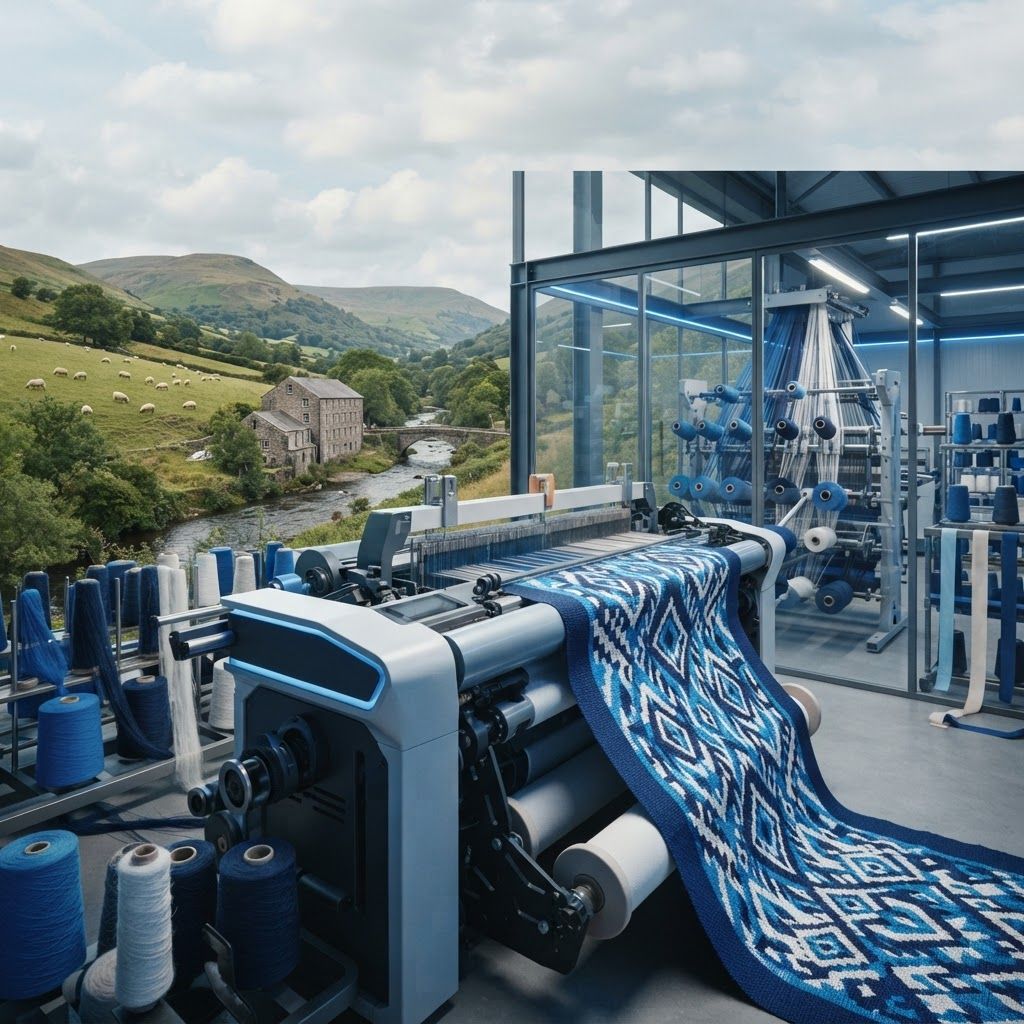
Wales has one of Britain's most distinctive textile traditions, and Carmarthenshire sits close to its heart. The Teifi valley and surrounding areas once supported dozens of woollen mills powered by fast-flowing rivers, producing blankets, flannel and cloth for both domestic use and export. While industrial-scale production declined through the twentieth century, the craft, knowledge and equipment survived, and today a smaller but genuinely vibrant textile sector operates across the county and its borders.
Contemporary Carmarthenshire textile manufacturing spans several distinct categories: traditional double cloth weaving producing the tapestry blankets recognised worldwide as Welsh design, contemporary woven and knitted fabrics, sheepskin and leather goods, technical and industrial textiles, garment manufacture and made-to-measure production, soft furnishing and upholstery workshops, and craft-scale spinning and dyeing operations.
Welsh Woollens and Traditional Weaving
Welsh tapestry weave, characterised by geometric patterns produced through a double cloth construction, has experienced remarkable renewed demand. Vintage blankets command significant prices, and contemporary producers have modernised colourways while retaining traditional pattern libraries. This work requires specific loom capability and considerable weaving skill, making the surviving mills genuinely irreplaceable assets.
Local wool supply underpins this sector. Carmarthenshire's substantial sheep flocks produce fleece that, while historically undervalued, is increasingly appreciated for durability, natural flame resistance and biodegradability. Initiatives connecting local farms directly to mills shorten supply chains and provide traceable provenance that consumers value highly.
Contemporary and Technical Production
Beyond heritage products, textile manufacturers in the region supply interior design markets with upholstery fabrics, curtaining and cushions, hospitality clients with bespoke furnishings for hotels and holiday accommodation, and retail brands with private-label woven goods. Digital printing onto natural and synthetic bases has expanded design flexibility considerably, allowing short runs and bespoke commissions that were previously uneconomic.
Technical textiles form a quieter but commercially important strand, covering agricultural fabrics, geotextiles, protective workwear, filtration media and industrial felts. These products demand consistent specification, batch testing and documented compliance with performance standards, and manufacturers operating in this space maintain considerably more rigorous quality systems than craft producers require.
Garment and Accessory Manufacture
Small-batch garment manufacture has grown as brands seek alternatives to distant overseas production. Carmarthenshire workshops offer pattern cutting, sampling, grading, cutting and sewing for clothing brands, uniform suppliers and outdoor apparel companies. Minimum order quantities are typically far lower than offshore factories require, which suits emerging brands testing product lines.
Accessory production includes bags, hats, scarves, blankets, sheepskin products and homeware. Many producers sell directly to consumers through farmers markets, craft fairs, tourism outlets and their own retail spaces, capturing full retail margin and building brand recognition organically.
Sustainability as Competitive Advantage
Textiles carry a heavy global environmental burden, and the sector's local producers have positioned sustainability as a central proposition rather than an afterthought. Natural fibre use, particularly undyed or naturally dyed wool, avoids the water and chemical intensity of synthetic processing. Short supply chains reduce transport emissions. Durability is deliberately prioritised, with products designed for decades of use and, in the case of blankets, generational inheritance.
Waste reduction practices include using offcuts for smaller products, offering repair services, taking back worn items for refurbishment and composting natural fibre waste. Water management is closely regulated given the proximity of mills to sensitive river systems, and responsible operators invest in effluent treatment and closed-loop dyeing where feasible.
Evaluating a Textile Manufacturing Partner
Brands seeking a manufacturing partner should assess several dimensions. Capability first: confirm which processes are performed in-house versus subcontracted, since a weaver who outsources finishing has less control over quality and lead time. Capacity second: establish realistic output volumes and how the manufacturer handles seasonal peaks.
Quality systems matter regardless of scale. Ask about inspection procedures, defect rates, colour matching methodology and how variation between batches is managed. For products requiring regulatory compliance, including children's items, flame retardancy for furnishings and protective workwear, insist on documented test certification rather than verbal assurance.
Commercial terms deserve equal attention: minimum order quantities, sampling costs and lead times, tooling or loom set-up charges, payment terms, ownership of designs and patterns, and confidentiality where original designs are involved. Reputable manufacturers document all of this clearly.
Challenges and Opportunities
The sector faces real pressures. Skilled weavers, mechanics able to maintain vintage looms, pattern cutters and machinists are in short supply, and training pathways have narrowed. Energy costs affect processes involving heat and water heavily. Competition from low-cost imports remains constant at commodity price points.
Yet opportunity is expanding. Consumer interest in provenance, craftsmanship and durability has grown markedly. Tourism provides direct retail access, with mill shops and visitor experiences generating both revenue and brand awareness. Interior design specification increasingly favours natural, traceable materials. Export interest in authentic Welsh textiles remains strong across North America, Japan and continental Europe.
Investment in skills is the sector's most important strategic priority, and collaborations between manufacturers, colleges and heritage organisations are beginning to rebuild the training infrastructure that long-term viability requires.
Final Thoughts
Carmarthenshire's textile manufacturers combine genuine heritage skill with contemporary design and commercial discipline. Whether commissioning bespoke furnishings, sourcing a private-label range or buying a blanket that will outlast its owner, choose producers who can explain their process, evidence their material sourcing and demonstrate consistent quality. The county's textile industry rewards buyers who value substance over speed.
Want your brand featured in front of decision-makers? Publish a guest post or get a link insertion in our guides through AAMAX's guest post and link insertion service.
Helpful Links
 SponsoredAAMAX — Full-Service Digital Agency
Write for Us
Share your expertise with our readers. We welcome guest contributions from industry specialists.
Pitch your idea