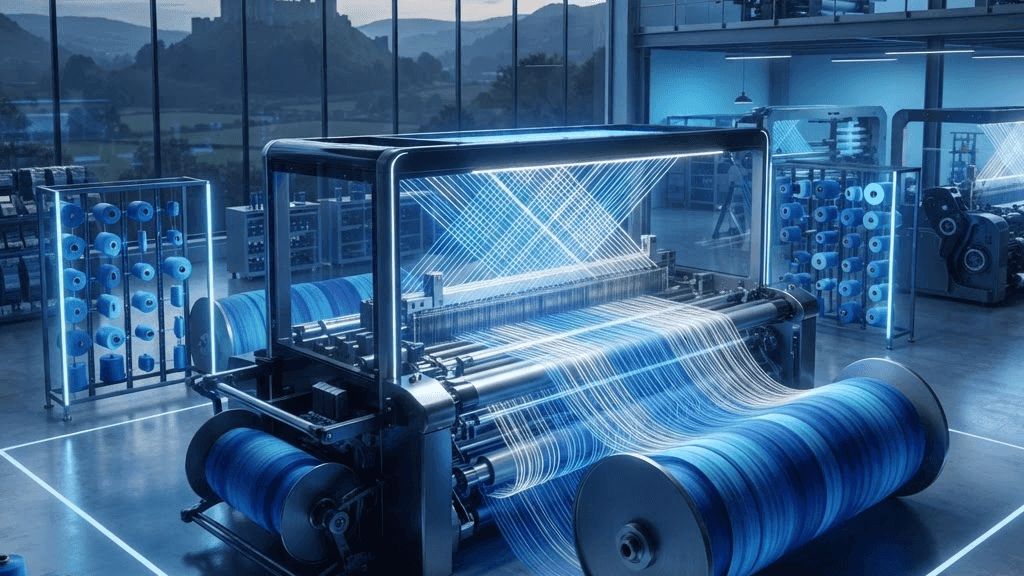
Weaving Tradition and Innovation in Caerphilly
Wales has a long and proud textile history, from the woollen mills that once lined its rivers to the garment factories that provided employment across the valleys in the twentieth century. While the industry has contracted from its peak, textile manufacturing in and around Caerphilly has adapted rather than disappeared. Today the sector includes technical textile producers supplying automotive and medical markets, workwear and uniform manufacturers, upholstery and soft furnishing makers, knitwear specialists and small heritage weavers reviving traditional Welsh patterns.
These businesses benefit from the area's skilled workforce, affordable industrial premises, proximity to Cardiff and the M4 corridor, and a growing consumer interest in locally made, sustainable products. The ten manufacturers profiled here show the diversity and resilience of textiles in the Caerphilly area.
1. Valleys Technical Textiles
Valleys Technical Textiles produces engineered fabrics for demanding applications, including automotive interiors, filtration, protective clothing and industrial composites. Its weaving and coating facilities produce materials to exacting specifications for manufacturers across the United Kingdom and Europe. The company invests heavily in research and development and collaborates with universities on next generation performance fabrics.
2. Castle Workwear and Uniforms
Castle Workwear and Uniforms manufactures corporate clothing, protective workwear, healthcare uniforms and school wear for organisations throughout Wales and beyond. Its in house design, cutting, sewing and embroidery operations allow it to offer bespoke garments with short lead times. The company is noted for its commitment to ethical production and for keeping skilled sewing jobs in the valleys.
3. Rhymney Woollen Mill
Rhymney Woollen Mill weaves traditional Welsh tapestry blankets, throws and cloth using patterns rooted in the region's heritage alongside contemporary designs. Operating both restored historic looms and modern machinery, it sells to interiors retailers, tourists and export markets. The mill has become a destination in its own right, with visitors able to watch weaving in progress and learn about the history of Welsh wool.
4. Sirhowy Upholstery Fabrics
Sirhowy Upholstery Fabrics manufactures woven and printed fabrics for furniture, contract interiors and transport seating. Its products are found in hotels, offices, hospitals and public transport across the United Kingdom, where durability, flame retardancy and easy cleaning are essential. The company offers custom design services to architects and interior designers and holds the certifications required for contract use.
5. Penallta Knitwear
Penallta Knitwear produces fully fashioned knitwear, including jumpers, cardigans and accessories, for fashion brands, retailers and its own label. Its computerised flat knitting machines enable complex patterns and made to order production with minimal waste. The company has embraced the growing demand for sustainable, locally produced fashion and works with natural fibres including Welsh wool.
6. Bedwas Medical Textiles
Bedwas Medical Textiles manufactures fabrics and finished products for the healthcare sector, including compression garments, wound care materials, orthopaedic supports and hospital textiles. Operating to medical device quality standards, it supplies health services and medical device companies. Its growth reflects the strength of the life sciences sector in South Wales and the value of textile expertise in medical innovation.
7. Morgan Price Narrow Fabrics
Morgan Price Narrow Fabrics specialises in webbing, tapes, elastics and cords used in safety harnesses, outdoor equipment, automotive components and apparel. Its high performance webbings meet stringent load and safety standards, and it supplies manufacturers of climbing equipment, workwear and vehicle restraints. The company demonstrates how specialised niche production can thrive in a competitive global market.
8. Aber Valley Dyeing and Finishing
Textile manufacturing depends on skilled dyeing and finishing, and Aber Valley Dyeing and Finishing provides these services to weavers, knitters and garment makers across the region. It offers colour matching, performance finishes such as water repellency and flame retardancy, and increasingly low water and low chemical processes that reduce environmental impact. Its role as a shared service provider strengthens the whole local textile cluster.
9. Nantgarw Automotive Interiors
Nantgarw Automotive Interiors manufactures seat covers, headliners, trim components and cut and sewn textile assemblies for vehicle manufacturers and their tier one suppliers. Located close to automotive plants across South Wales, it operates just in time production with rigorous quality systems. The shift to electric vehicles has brought new opportunities for lightweight and sustainable interior materials.
10. Greenway Sustainable Textiles
Greenway Sustainable Textiles produces fabrics from recycled fibres, organic cotton and regenerated materials for fashion and homeware brands seeking to reduce their environmental footprint. It also operates a textile recycling programme that recovers post consumer garments for fibre reclamation. The company's circular approach positions it at the forefront of the industry's response to concerns about waste and pollution.
Textile Industry Trends
Several trends are shaping textile manufacturing in Caerphilly. Reshoring is bringing production back from overseas as brands prioritise shorter supply chains, quality control and responsiveness. Sustainability has become central, with demand for recycled and natural fibres, lower impact processing and transparent supply chains. Technical textiles for medical, automotive and protective applications offer higher margins than commodity products. Digital technologies, including automated cutting, computerised knitting and digital printing, are enabling customisation and small batch production. Skills development remains a priority, with manufacturers investing in apprenticeships to secure the next generation of textile workers.
Working with Local Textile Manufacturers
Brands and organisations sourcing textiles should consider the advantages of working with local manufacturers: faster development, smaller minimum orders, easier quality oversight, lower transport emissions and the marketing value of Welsh provenance. When selecting a manufacturer, review certifications relevant to your application, ask about minimum quantities and lead times, and visit the facility if possible to understand its capabilities and working conditions.
The manufacturers profiled here demonstrate that textiles in Caerphilly are not a relic of the past but a living industry combining heritage, innovation and a commitment to responsible production.
Want your brand featured in front of decision-makers? Publish a guest post or get a link insertion in our guides through AAMAX's guest post and link insertion service.
Helpful Links
 SponsoredAAMAX — Full-Service Digital Agency
Write for Us
Share your expertise with our readers. We welcome guest contributions from industry specialists.
Pitch your idea