Why Solar Makes Sense in Braintree
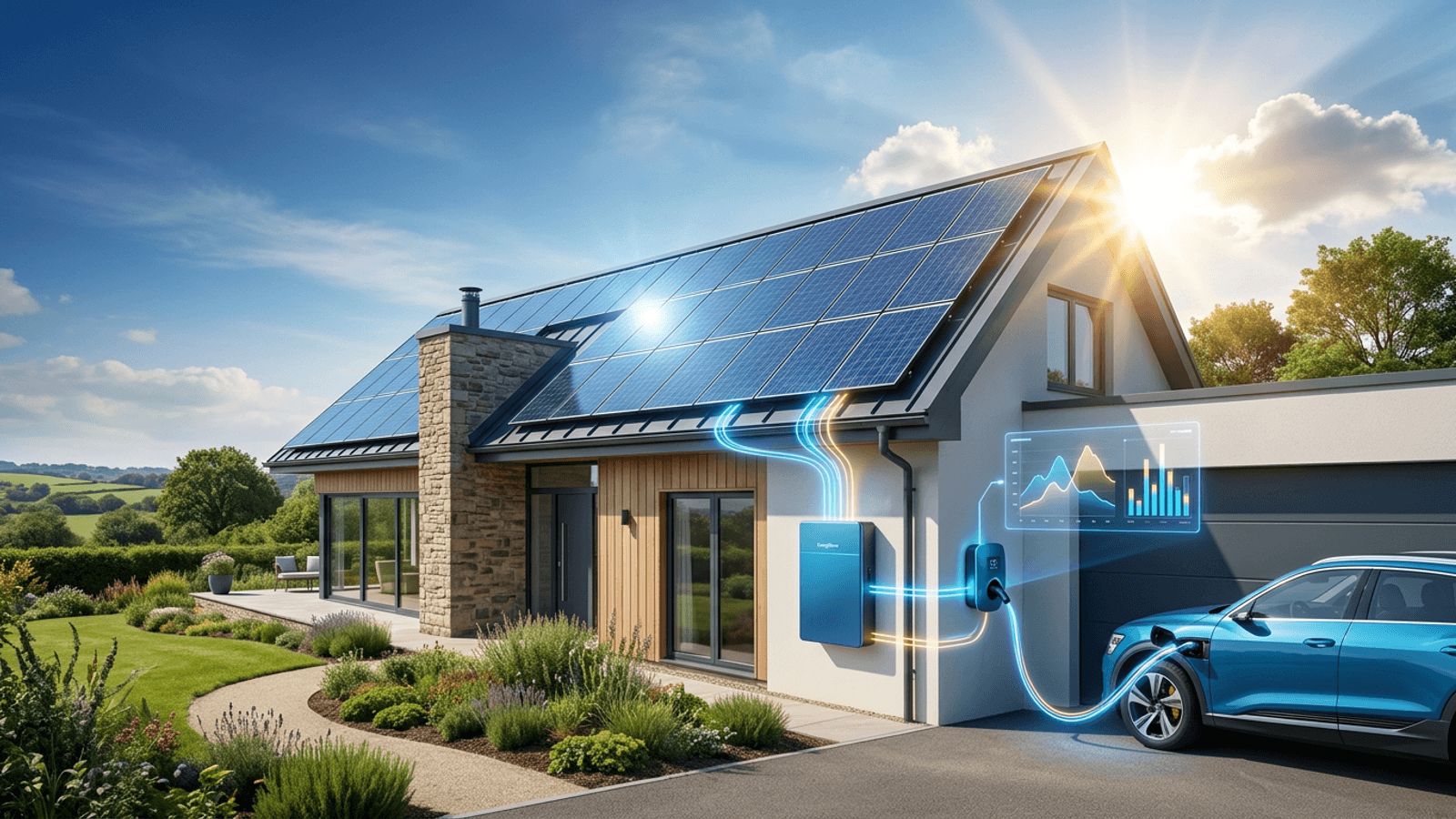
Solar photovoltaic technology has become the default renewable choice for property owners in mid-Essex, and the reasons are practical. The region receives high levels of annual solar irradiance by national standards, panel costs have fallen dramatically over the past decade, and electricity prices have risen enough that self-generated power now displaces an expensive import. The result is a technology that pays back within a period most homeowners and virtually all businesses find acceptable.
Braintree also offers ideal physical conditions. The district contains extensive industrial and warehouse roofing on its business parks, large agricultural buildings, and a housing stock that includes many post-war and modern properties with unshaded south-facing or east-west roof planes. Ground-mounted arrays are feasible on land with limited agricultural value, particularly where an existing grid connection is available.
How a Solar System Works and What Affects Output
Panels convert daylight into direct current, an inverter converts it to alternating current for use on site, and any surplus either charges a battery or is exported to the grid. Output depends on several factors that a competent installer will assess directly rather than estimate.
Orientation and pitch matter, with south-facing roofs producing the highest annual total while east-west configurations spread generation across the morning and evening, which often suits household consumption patterns better. Shading from trees, chimneys, adjacent buildings or plant equipment reduces output disproportionately unless mitigated with optimisers or micro-inverters. Roof condition and structural capacity determine whether remedial work is needed. Finally, the size of the array should reflect actual consumption, since generating far more than can be used or stored has diminishing value.
The Top 10 Solar Energy Companies Serving Braintree
1. Braintree Solar Installations handles domestic and light commercial projects end to end, from survey and design through scaffolding, installation, commissioning and grid notification, with monitoring included as standard.
2. Flitch Commercial Solar focuses on large roof arrays for warehouses, factories and distribution units, managing structural surveys, half-hourly consumption analysis and connection applications for higher-capacity systems.
3. Rayne Road Solar and Battery specialises in combined solar and storage design, sizing batteries against real consumption profiles so that evening demand is met from stored generation rather than imported power.
4. Great Notley Rooftop Energy serves the residential market with careful attention to aesthetics, offering in-roof mounting for new builds and renovations where flush integration matters to owners and planners.
5. Blackwater Ground Mount Solar designs field-scale arrays for farms, estates and larger commercial sites, covering foundation options, security fencing, cable routing and dual land use with grazing beneath panels.
6. Cressing Solar Maintenance concentrates on servicing rather than new sales, providing inverter replacement, panel cleaning, string testing, fault diagnosis and performance recovery for underperforming legacy systems.
7. Essex Ridge Solar Carports builds canopy structures over parking areas, combining generation with weather protection and electric vehicle charging, which appeals to employers with large staff car parks.
8. Silver End Renewable Design operates as an independent consultancy, producing feasibility studies, yield modelling and tender documents for clients who want objective analysis before approaching installers.
9. Bocking Solar Retrofit Services specialises in older and character properties, addressing roof strengthening, listed building sensitivities, cable routing in solid-wall houses and integration with existing heating systems.
10. Panfield Solar Advisers assists smaller households with compact systems, clear explanation of export arrangements and honest advice on whether solar or insulation should come first.
Trends in the Solar Market
Battery adoption has risen sharply. Without storage a typical household uses only a portion of what it generates, while a well-sized battery can lift self-consumption substantially, improving returns and providing partial resilience during power cuts.
Panel efficiency continues to improve, meaning smaller roof areas now yield outputs that previously required significantly more space. Bifacial panels, which capture reflected light on the rear surface, are increasingly used in ground-mounted installations.
Smart tariffs have changed system economics. Time-of-use pricing allows batteries to charge cheaply overnight and discharge during expensive periods, generating savings independent of sunshine. Export arrangements have also become more competitive, rewarding surplus generation more fairly than early schemes did.
For commercial sites, funded models are expanding. Third-party investors install and maintain arrays at no capital cost to the occupier, who purchases the electricity at a fixed rate, an approach that suits businesses prioritising cash flow over asset ownership.
Specifying a System Correctly
Begin with consumption data. Domestic customers should provide annual usage and, ideally, an understanding of when electricity is used. Businesses should supply half-hourly data, which reveals the load profile and shows precisely how much generation can be used on site.
Require a detailed proposal containing panel and inverter specifications, warranty periods for equipment and workmanship, estimated annual generation with the modelling assumptions stated, expected self-consumption, and payback under conservative price assumptions. Be sceptical of projections that assume steep future energy price rises.
Check the installer's certification, insurance and whether the work is covered by an insurance-backed guarantee. Confirm who handles the grid application and who provides aftercare, since inverters typically require replacement partway through the panels' life.
Finally, address the roof first. Installing panels over covering that will need replacement within a few years creates avoidable cost, so any necessary roof work should precede installation.
Final Thoughts
Solar is now a mature, low-risk technology, and Braintree offers both favourable conditions and a competitive installer market covering domestic retrofits, warehouse arrays, carports and field-scale schemes. The best outcomes come from systems sized to genuine consumption, paired with storage where evening demand is high, and installed by companies that model performance honestly and remain contactable for maintenance. Approached that way, a solar installation delivers decades of predictable savings and a measurable reduction in carbon footprint.
Want your brand featured in front of decision-makers? Publish a guest post or get a link insertion in our guides through AAMAX's guest post and link insertion service.
Helpful Links
 SponsoredAAMAX — Full-Service Digital Agency
Write for Us
Share your expertise with our readers. We welcome guest contributions from industry specialists.
Pitch your idea