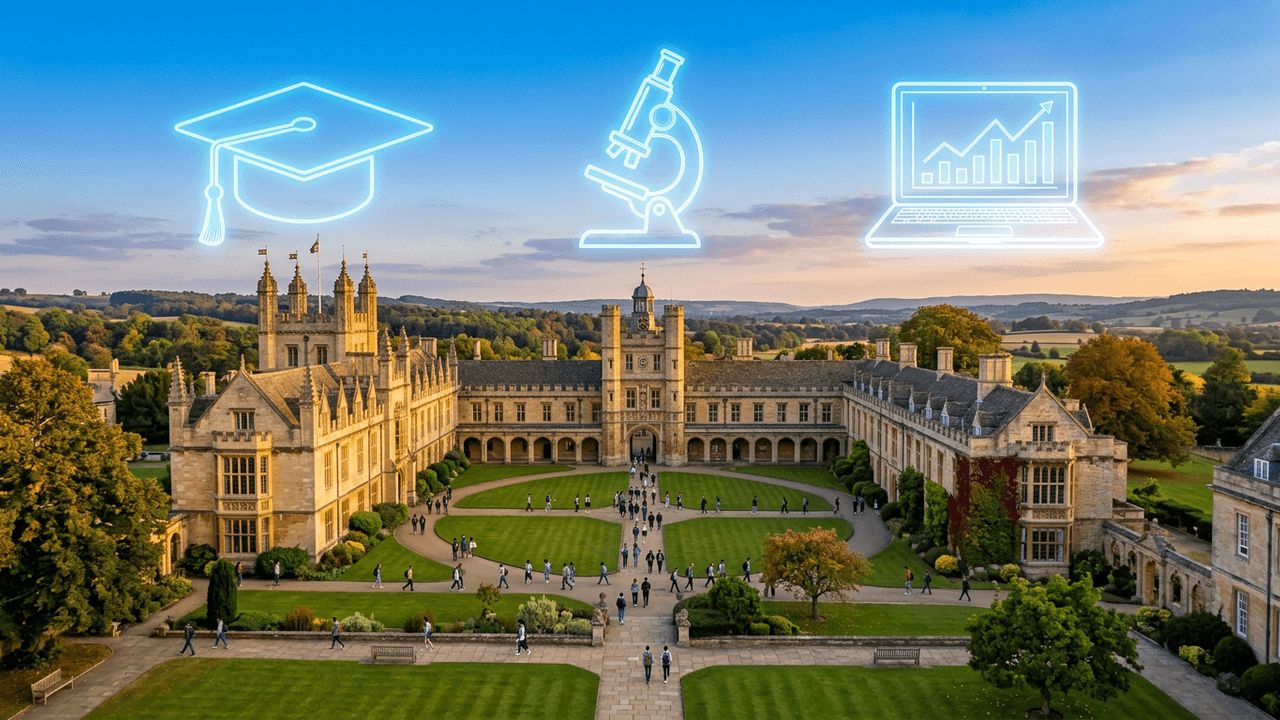
Education as a Defining Feature of the District
Education is one of the principal reasons families move to East Hertfordshire. The district combines high-performing state secondary schools, a well-regarded independent sector, strong primary provision and good access to further education, all within commuting distance of London. That combination drives property demand around the most sought-after catchments and makes school choice one of the most consequential decisions local families face. Understanding how the system works locally is essential, because outcomes vary less by school reputation than parents often assume, while admissions rules vary a great deal.
How to Evaluate a School Properly
League tables are a starting point, not an answer. More revealing measures include progress made by pupils between key stages rather than raw attainment, which reflects the school's actual contribution. Inspection reports provide qualitative insight into leadership, behaviour and curriculum breadth. Beyond the data, consider the breadth of subject choice at sixth form, provision for pupils with special educational needs, pastoral structures, extracurricular depth in music, drama and sport, staff retention rates, and the school's approach to behaviour. A visit during a normal school day, watching how pupils move between lessons and how staff speak to them, communicates more than any brochure.
The Ten Best Schools in East Hertfordshire
1. The Bishop's Stortford High School. A well-established boys' secondary with a mixed sixth form, consistently strong academic outcomes and a notable reputation in sport and music. Its differentiator is a settled, disciplined culture combined with genuine breadth beyond the classroom.
2. Herts and Essex High School, Bishop's Stortford. A high-performing girls' secondary with a mixed sixth form, widely respected for academic results, an ambitious curriculum and a strong record of progression to competitive universities.
3. Richard Hale School, Hertford. A long-established boys' school with a mixed sixth form, known for academic rigour, strong mathematics and science provision and an active extracurricular programme.
4. Simon Balle All-through School, Hertford. Distinctive for educating pupils from primary through to sixth form on one site, providing exceptional continuity and a well-regarded creative and performing arts culture.
5. Presdales School, Ware. A girls' secondary with a mixed sixth form, respected for consistently strong outcomes, a supportive pastoral structure and a broad subject offering at advanced level.
6. Chauncy School, Ware. A co-educational comprehensive with a strong community reputation, valued for inclusive practice, improving outcomes and effective support for pupils with additional needs.
7. Haileybury, near Hertford. A leading independent boarding and day school set in extensive grounds, offering both advanced level and international baccalaureate pathways, exceptional facilities and a global alumni network.
8. Bishop's Stortford College. An independent co-educational school spanning prep and senior phases, known for small class sizes, strong music and sport and close attention to individual progression.
9. St Edmund's College, Old Hall Green. One of the country's oldest Catholic independent schools, offering day and boarding provision with a distinctive ethos, strong pastoral care and broad curriculum choice.
10. Hertford St Andrew Primary and comparable district primaries. The district contains numerous highly regarded primary schools whose reading, writing and mathematics outcomes sit comfortably above national averages, with strong transition support into secondary education.
Admissions, Catchments and Timing
State school admissions in Hertfordshire operate through a coordinated application process with fixed national deadlines: late October for secondary transfer and mid January for primary entry, with offers issued on national offer days in March and April. Oversubscription criteria typically prioritise children in care, siblings, distance from the school and, in faith schools, religious observance. Some schools apply catchment rules or use rank-ordered distance measures, and distances in popular catchments can be extremely tight in high-demand years. Independent schools run their own timetables, usually with assessments and interviews in the autumn or early spring of the year before entry, and often with scholarship and bursary processes running in parallel.
Sixth Form and Post-Sixteen Options
Post-sixteen choice in the district is genuinely broad. Several secondary schools operate mixed sixth forms with wide advanced level offerings. Independent schools add international baccalaureate and, in some cases, vocational pathways. Further education colleges within reach provide technical qualifications, T levels and apprenticeship routes, which increasingly appeal to students heading into engineering, health, digital and construction careers. Families should compare not only subject availability but also class sizes at advanced level, university guidance quality and whether the sixth form supports students who need to resit or change direction.
Special Educational Needs and Inclusion
Provision for special educational needs and disabilities is a critical consideration and varies significantly between schools. Key questions include the experience of the special educational needs coordinator, how support is deployed within lessons rather than only in withdrawal sessions, arrangements for education, health and care plans, and how the school manages transitions between phases. Hertfordshire also maintains specialist provision and resourced units attached to mainstream schools. Parents should request specific examples of how a school has supported children with similar profiles rather than accepting general assurances.
Trends in Local Education
Several developments are shaping schooling in the district. Academy trusts now run many schools, changing governance and admissions administration while enabling shared resources across groups. Digital learning has become embedded rather than experimental, with online platforms supporting homework, feedback and revision. Attention to pupil mental health and wellbeing has increased substantially, with dedicated staff roles now common. Curriculum breadth is under discussion nationally, with continued debate about the place of creative and technical subjects alongside core academic ones. And demographic change is beginning to ease pressure on primary places in some areas while secondary demand remains high.
Practical Advice for Parents
Visit schools in person and attend open evenings, but also ask about a normal-day visit. Talk to current parents rather than relying solely on online commentary. Check the previous three years of admissions data to understand how far the effective catchment extended. List preferences honestly in order of genuine preference, since the coordinated system does not penalise ambitious first choices. Consider the daily journey realistically, including winter weather and bus timetables. And if considering the independent sector, enquire early about bursaries, which are more widely available than many families assume.
Final Thoughts
East Hertfordshire offers an unusually strong educational landscape, from selective and high-performing state secondaries in Hertford, Ware and Bishop's Stortford to nationally recognised independent schools such as Haileybury and Bishop's Stortford College. The best school, however, is the one that fits a particular child's temperament, interests and needs. Look past headline results to progress data, pastoral quality and curriculum breadth, visit in person, and apply within the published deadlines with a properly ordered list of preferences.
Want your brand featured in front of decision-makers? Publish a guest post or get a link insertion in our guides through AAMAX's guest post and link insertion service.
Helpful Links
 SponsoredAAMAX — Full-Service Digital Agency
Write for Us
Share your expertise with our readers. We welcome guest contributions from industry specialists.
Pitch your idea