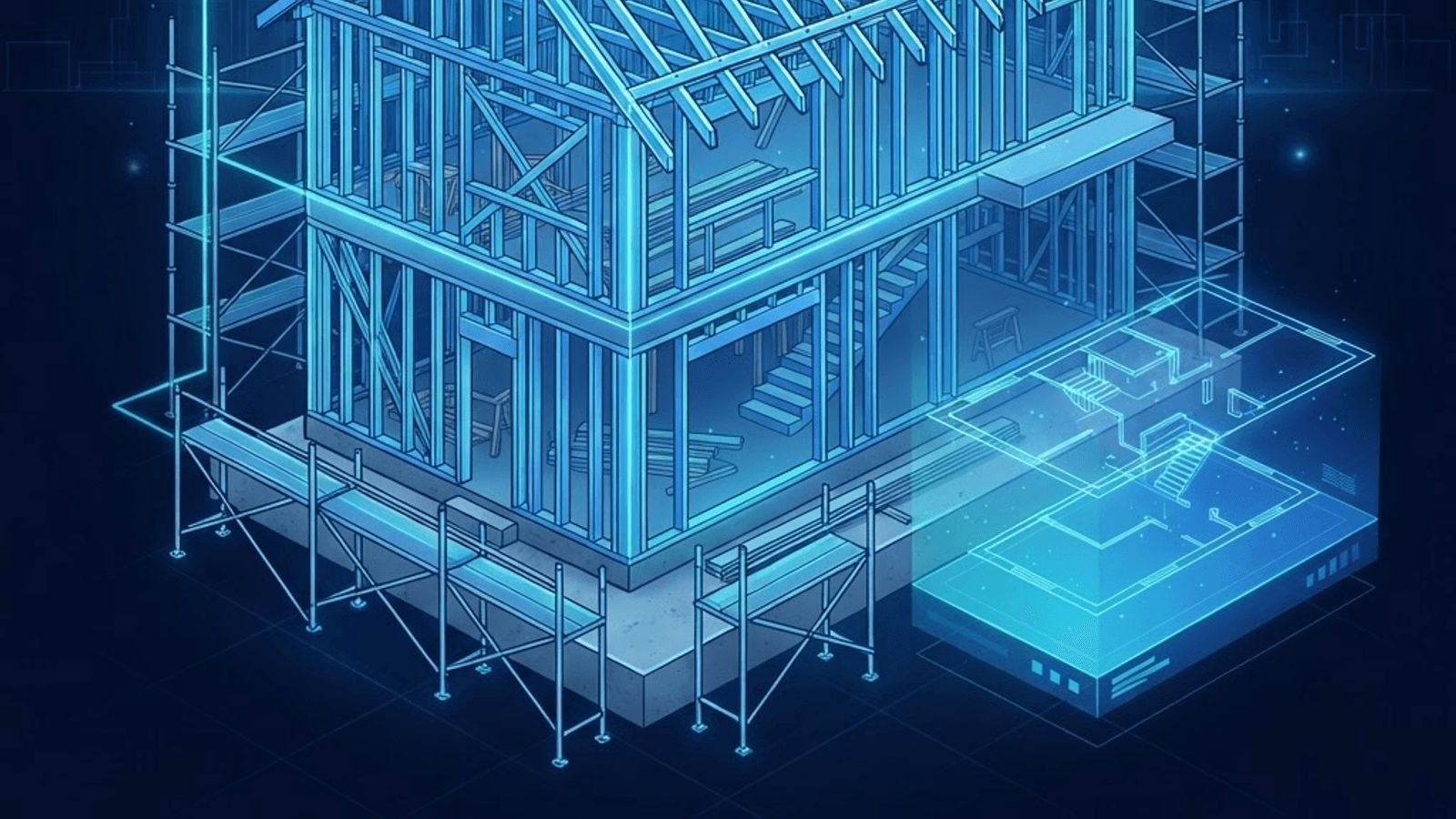
Building Homes for Highland Conditions
A house built to minimum standards will stand up anywhere. A house built well for Highland conditions is a considerably more demanding proposition, and the difference reveals itself in heating bills, condensation, comfort and long-term maintenance rather than in the appearance of the finished building.
The climate drives this. Extended heating seasons make thermal performance economically significant, not marginal. Persistent humidity and driving rain make moisture management and airtightness critical, because a poorly detailed building envelope in Highland develops interstitial condensation and mould problems that a drier climate would forgive. Wind exposure on elevated sites affects structural design and external envelope specification.
Site conditions add further complexity. Sloping plots, variable ground conditions, high water tables and rural servicing requirements are common. Companies that treat every plot as flat serviced ground produce expensive surprises.
1. Highland Home Builders
The region's largest residential contractor, Highland Home Builders constructs individual homes and small developments across the region.
Its standard specification exceeds regulatory minimums meaningfully, particularly on insulation, glazing and airtightness. Construction detailing is documented and consistent, which matters because thermal bridging and air leakage occur at junctions rather than in the middle of well-built walls. The company conducts airtightness testing on every completion and remedies failures rather than accepting marginal results.
2. Highland Custom Homes
Building bespoke houses to individual designs, this company works with clients and architects from concept through completion.
Its design-stage cost management is unusually good, providing realistic cost feedback while designs are still fluid rather than after they are fixed, which prevents the redesign cycles that derail custom projects. Craftsmanship on bespoke joinery, stonework and finishing is genuinely high, and the company works comfortably on complex sloping sites.
3. Highland Timber Frame Construction
Specialising in timber frame and structural insulated panel construction, this company builds highly insulated structures with rapid weathertight envelope times.
Speed to weathertight is a substantial advantage in Highland, where extended exposure to rain during construction causes real problems. Off-site panel fabrication improves dimensional accuracy and reduces weather-dependent site work, and the resulting thermal performance is excellent.
4. Highland Passive House Builders
Constructing to ultra-low-energy standards, this company delivers homes requiring minimal space heating even through Highland winters.
Achieving this requires extreme discipline on airtightness, thermal bridge elimination and ventilation with heat recovery, and the company's detailing and testing regime supports it. Build costs carry a premium, offset over time by running costs that are a small fraction of conventional construction.
5. Highland Extensions and Conversions
Focused on adding to existing homes, this company handles extensions, loft conversions, garage conversions and structural alterations.
Its structural expertise is important, since extension work involves altering load paths in buildings that were not designed for it. Junction detailing between new and existing construction is handled properly, which is where most extension damp problems originate.
6. Highland Affordable Housing Construction
Delivering cost-efficient housing at volume, this company works with housing providers and private developers on standardised designs.
Standardisation permits genuine efficiency without compromising quality, and the company's designs still achieve strong thermal performance because running costs matter enormously to occupants of affordable housing. Programme reliability on multi-unit sites is strong.
7. Highland Rural Home Construction
Building in remote locations, this company handles the logistics and servicing challenges that rural Highland sites present.
Access road construction, private water supply, off-mains drainage and independent power provision are routine work rather than exceptions, and the company's rural planning experience helps clients navigate policy constraints that frequently surprise first-time rural builders.
8. Highland Luxury Residential
Operating at the premium end, this company builds high-specification homes with substantial architectural ambition.
Execution of complex geometry, large glazed openings and specialist finishes is accomplished. Large glazing in Highland's climate requires careful thermal and structural resolution, and the company specifies and details it properly rather than accepting the performance penalty.
9. Highland Renovation and Restoration
Working on existing housing stock, this company modernises older homes while addressing their structural and moisture issues.
Its understanding of traditional construction is essential here. Retrofitting insulation into solid-wall buildings without creating condensation problems requires breathable material systems and careful analysis, and the company's approach avoids the damage that inappropriate retrofit commonly causes.
10. Highland Modular Housing
Manufacturing homes in factory conditions for site assembly, this company offers rapid delivery with high quality control.
Factory construction eliminates weather exposure during the critical build phase and permits tolerances that site construction struggles to match. Design flexibility is more limited than bespoke construction, which the company states plainly.
What to Look for in a Highland Home Builder
Ask about airtightness results on completed projects. A builder who tests and can quote typical results is managing envelope quality. One who has never tested is guessing, and Highland's climate punishes guessing.
Review construction details, particularly at junctions: wall to roof, wall to floor, window reveals and service penetrations. These determine real thermal and moisture performance far more than headline insulation thickness.
Confirm structural warranty provision and what it covers. Ten-year warranties are standard for new construction and should be arranged before work starts.
Discuss ventilation strategy explicitly. Highly insulated airtight homes require designed ventilation, and homes built airtight without it develop serious indoor air quality and condensation problems.
Visit completed projects and speak to occupants after at least one winter. Heating bills and condensation experience are the honest measures of construction quality, and they only emerge with occupation.
Final Thoughts
Highland's residential construction sector includes companies building genuinely excellent homes well beyond minimum standards, and the running-cost difference over decades is substantial. Prioritise envelope performance, moisture detailing and ventilation design over cosmetic specification, choose a builder who tests and documents their work, and assess ground conditions properly before finalising a design.
Want your brand featured in front of decision-makers? Publish a guest post or get a link insertion in our guides through AAMAX's guest post and link insertion service.
Helpful Links
 SponsoredAAMAX — Full-Service Digital Agency
Write for Us
Share your expertise with our readers. We welcome guest contributions from industry specialists.
Pitch your idea