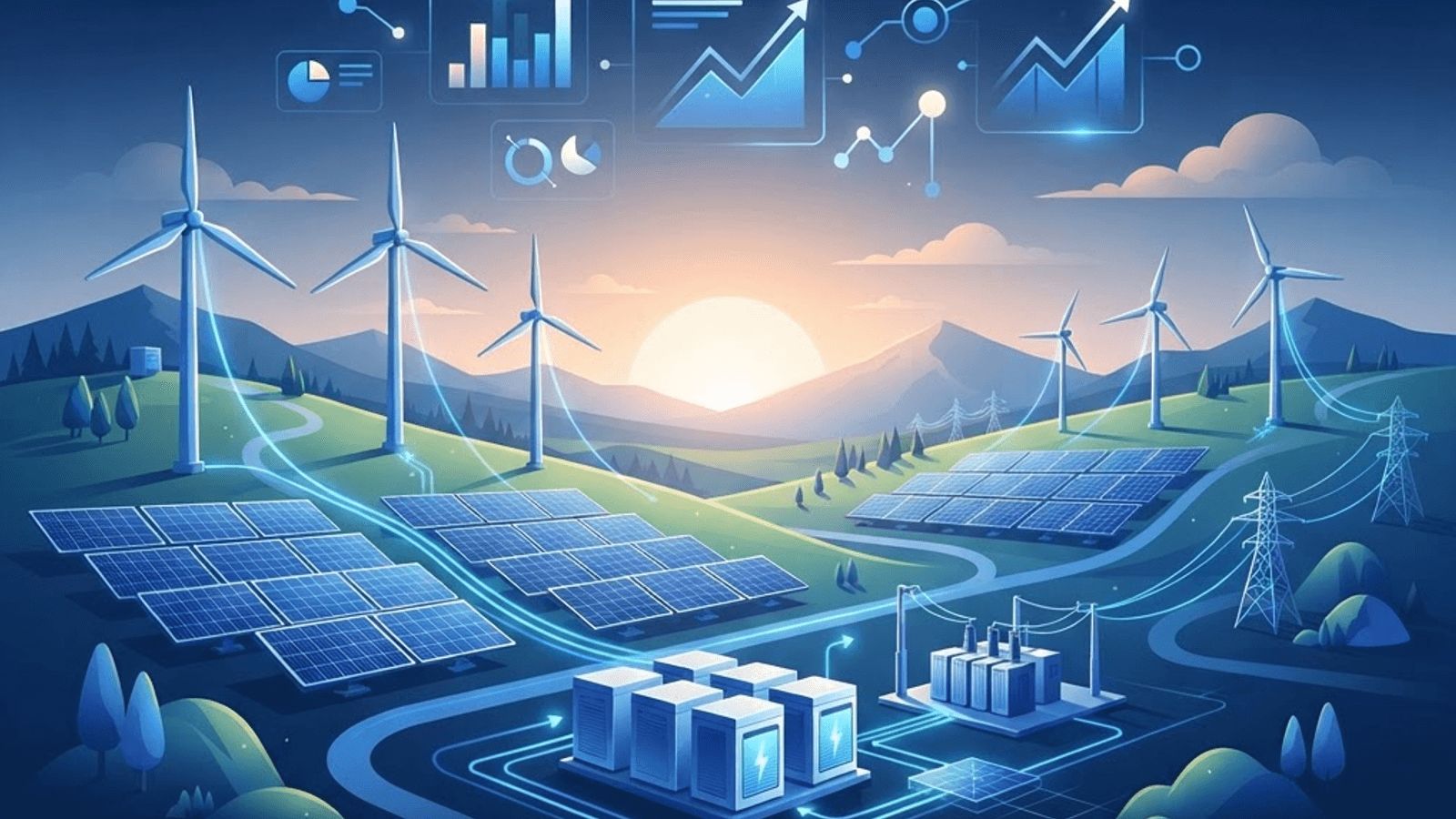
East Ayrshire's Renewable Energy Position
East Ayrshire occupies an unusually favourable position in Scotland's energy transition. Its exposed upland areas around the Muirkirk, New Cumnock and Dalmellington districts offer strong and consistent wind resource. Former opencast coal sites provide large areas of previously disturbed land suitable for redevelopment. Existing transmission infrastructure, built historically to serve mining and industry, reduces the cost of grid connection compared with more remote parts of Scotland.
The result is a concentration of renewable activity that has changed the character of the local economy. Where coal once dominated employment, wind development, solar deployment, battery storage and associated engineering services now provide skilled work, land income and substantial community benefit funding.
Leading Renewable Energy Companies in the Region
1. Ayrshire Wind Developments
Focused on onshore wind project development, from site identification and feasibility through planning, construction and operation. Its work includes repowering ageing turbine sites with higher-capacity modern machines.
2. Kilmarnock Renewable Engineering Group
Providing balance-of-plant engineering, electrical infrastructure, substation works and civil construction for renewable projects across the west of Scotland.
3. Cumnock Solar and Storage Solutions
Designing and installing commercial solar photovoltaic systems combined with battery storage for manufacturing sites, farms and public buildings seeking to reduce energy costs.
4. East Ayrshire Community Energy Partnership
Supporting community-owned generation projects, shared ownership arrangements with commercial developers and administration of community benefit funds for local initiatives.
5. Doon Valley Hydro and Micro-Generation
Specialising in small-scale hydro schemes on suitable watercourses alongside micro-generation for rural properties off the mains gas network.
6. Irvine Valley Energy Services
Delivering operations and maintenance for wind and solar assets, including turbine servicing, blade inspection, performance monitoring and fault response.
7. Ayrshire Battery Storage Developments
Developing grid-scale battery energy storage systems that provide balancing services, absorb surplus generation and support network stability during peak demand.
8. Stewarton Green Heat Technologies
Installing air source and ground source heat pumps, heat networks and thermal storage for domestic, commercial and public sector clients pursuing decarbonised heating.
9. Scotland West Renewable Consultancy
Providing planning support, environmental impact assessment, ecology surveys, noise modelling and landscape and visual assessment for development applications.
10. Muirkirk Land and Energy Regeneration
Focused on restoring former opencast sites and bringing them back into productive use through renewable generation, peatland restoration and biodiversity improvement.
Technologies Driving the Transition
Onshore wind remains the dominant technology. Modern turbines generate substantially more electricity per unit than earlier machines, meaning repowering existing sites can increase output without expanding footprint. Capacity factors in East Ayrshire's upland sites compare favourably with almost anywhere in Europe.
Solar photovoltaic deployment has accelerated as costs have fallen. While Scotland receives less irradiance than southern England, cooler operating temperatures improve panel efficiency, and commercial rooftop installations on the region's industrial estates deliver strong returns where daytime consumption is high.
Battery storage has become the critical enabler. Intermittent generation requires flexibility, and grid-scale batteries provide frequency response, capacity market services and arbitrage between periods of surplus and scarcity. Several sites in Ayrshire have progressed through planning in recent years.
Heat decarbonisation represents the next frontier. Heat pumps, district heating and improved building fabric are essential to meeting emissions targets, and rural East Ayrshire properties currently reliant on oil or LPG stand to benefit most from conversion.
Economic and Community Impact
Renewable development generates several distinct income streams locally. Landowners receive option payments and rent. Contractors and suppliers secure construction work. Operational sites create long-term technical roles in maintenance and monitoring. Non-domestic rates contribute to public finances.
Community benefit funds have become particularly significant. Developers typically commit annual payments per megawatt of installed capacity, administered locally to support village halls, sports facilities, energy efficiency schemes, youth projects and training bursaries. Over a project lifetime of twenty-five years or more, these funds can total substantial sums for small communities.
Shared ownership models go further, allowing community organisations to invest directly and receive a proportionate share of revenue. This converts a passive benefit into an asset that communities control.
Challenges Facing the Sector
Grid capacity is the most cited constraint. Connection queues and reinforcement timescales can delay projects by years, and transmission charging arrangements for Scottish generators remain a long-running point of contention within the industry.
Planning and consenting requires careful management. Landscape and visual impact, ornithology particularly regarding raptors, peatland carbon, hydrology, noise and cumulative effects all require detailed assessment. Early and genuine community engagement materially improves outcomes.
Supply chain and skills pressures also bite. Demand for electrical engineers, high-voltage technicians, turbine maintenance staff and heat pump installers exceeds supply, which is why local colleges and training providers have expanded renewable-focused programmes.
How to Choose a Renewable Energy Provider
For businesses considering on-site generation, seek providers who begin with an energy audit and consumption profile rather than leading with hardware. System sizing should match actual demand patterns to maximise self-consumption, which is where the strongest financial returns arise.
Check accreditation and certification relevant to the technology, along with electrical competence, insurance and warranty terms covering both equipment and workmanship. Ask for references from comparable installations in the region.
Scrutinise performance projections. Reputable providers use site-specific modelling and present conservative assumptions with clear explanation of degradation, maintenance costs and payback sensitivity to energy price changes.
For landowners approached about development, obtain independent legal and valuation advice before signing option agreements, as these documents bind land for extended periods and significantly affect future use and value.
Final Thoughts
East Ayrshire has transitioned from a coal economy to a renewables economy more successfully than many comparable regions. Wind, solar, storage, hydro and heat technologies now support a broad ecosystem of developers, engineers, consultants and maintenance specialists. For businesses, landowners and communities, the opportunity is substantial, but realising it requires careful provider selection, independent advice and realistic assessment of grid and planning constraints.
Want your brand featured in front of decision-makers? Publish a guest post or get a link insertion in our guides through AAMAX's guest post and link insertion service.
Helpful Links
 SponsoredAAMAX — Full-Service Digital Agency
Write for Us
Share your expertise with our readers. We welcome guest contributions from industry specialists.
Pitch your idea