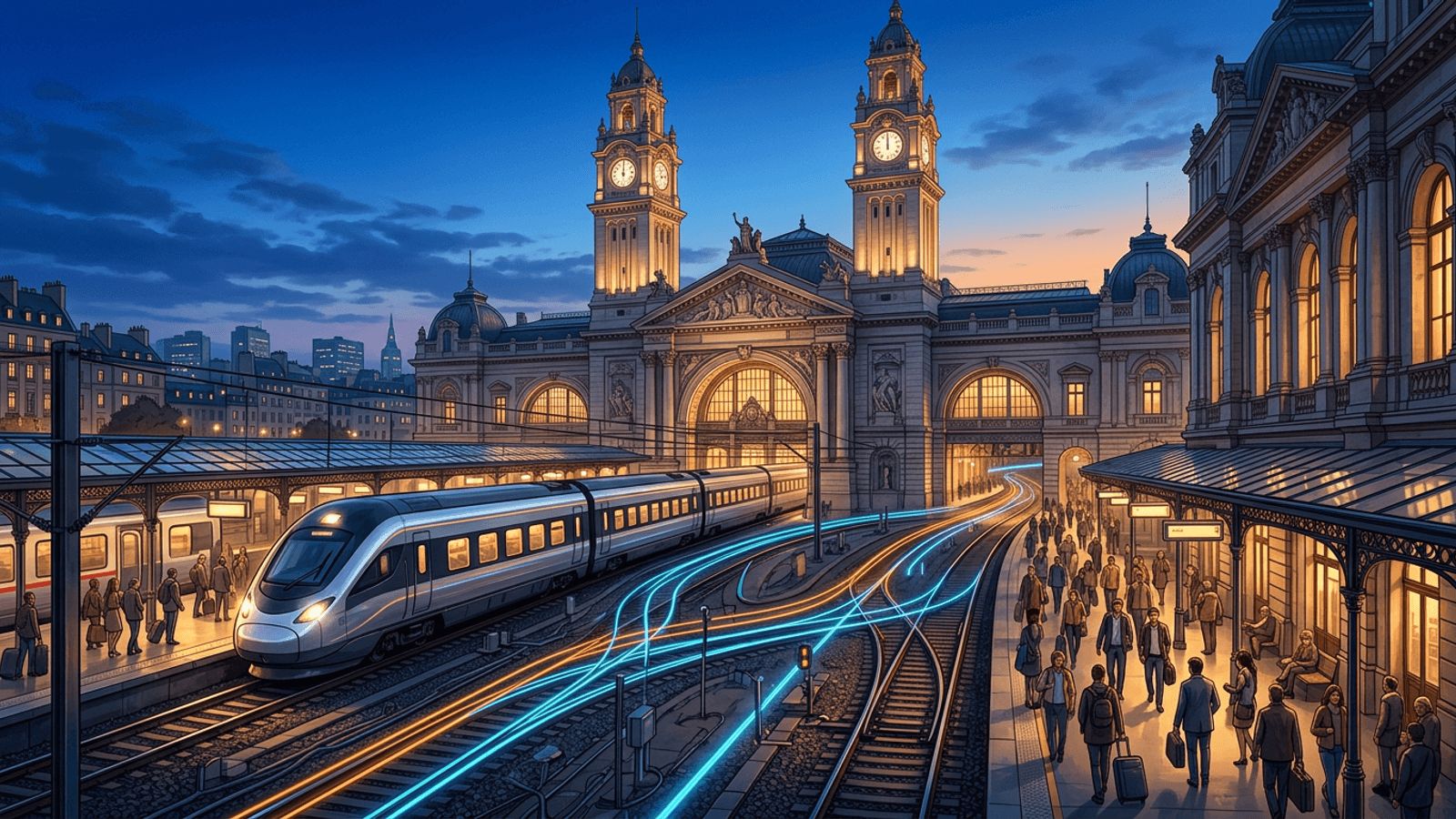
Getting Around West Lothian Without a Car
West Lothian is one of the better connected areas in Scotland for public transport. Its position between Edinburgh and Glasgow means several major rail corridors and trunk bus routes pass directly through the county, while the compact size of towns such as Bathgate, Linlithgow, Broxburn and Whitburn makes local journeys practical by bus. Livingston, as a planned new town, was designed with segregated pathways and dedicated bus corridors that still shape how people travel today.
The county nonetheless faces a familiar rural challenge. Frequencies drop sharply in villages, evening and Sunday services can be sparse, and some journeys that are quick by car require an awkward interchange by public transport. Understanding which service does what is therefore genuinely useful.
The Ten Key Public Transit Services
1. ScotRail local and regional services. The county's rail network is its greatest public transport asset. Frequent trains serve Linlithgow, Livingston North, Livingston South, Bathgate, Uphall, Armadale, Blackridge, West Calder, Addiewell, Breich and Fauldhouse, delivering journey times to Edinburgh or Glasgow that road transport cannot match at peak times. Electrification brought quieter, faster and higher-capacity trains to the main corridors.
2. First Bus, operating as First Scotland East. The largest scheduled bus operator across central West Lothian, running high-frequency services linking Livingston, Bathgate, Broxburn, Linlithgow and surrounding towns, plus express connections to Edinburgh and Falkirk. Contactless payment, daily fare capping and live app tracking make it straightforward for everyday use.
3. Lothian Country. Bringing the Lothian Buses service ethos west of the capital, Lothian Country operates comfortable double-deckers on routes connecting West Lothian towns with Edinburgh. Passengers value the consistency of presentation, clear route branding and integration with Edinburgh's wider network and ticketing.
4. E and M Horsburgh. Based in Pumpherston, this local operator is central to the county's supported and school transport network. It runs many of the routes serving smaller villages and estates that commercial services do not reach, making it indispensable for rural residents.
5. Stagecoach East Scotland. Provides interurban links towards Falkirk, Stirling and the Forth Valley, complementing the east-west focus of other operators. Its early and late journeys are important for shift workers travelling outside standard commuting hours.
6. McGill's Scotland East. The United Kingdom's largest independent bus group operates on several central belt corridors touching the county, competing on frequency and simple fare products. Its investment in newer, lower-emission vehicles has improved passenger comfort noticeably.
7. Edinburgh Trams and Transport for Edinburgh. Although the tram network does not enter West Lothian, it is a crucial onward connection. Rail passengers arriving at Edinburgh Gateway or Haymarket can transfer directly to trams for the airport, the city centre and Leith, making the tram effectively part of many West Lothian journeys.
8. Community transport and dial-a-ride services. Accessible minibus and volunteer driver schemes provide door-to-door transport for residents who cannot easily use conventional buses, including wheelchair users and people with limited mobility. For many older residents in rural West Lothian these services are the primary means of reaching appointments and shops.
9. School and college transport network. A substantial contracted network moves pupils to secondary schools including those in Linlithgow, Bathgate, Broxburn, Whitburn and West Calder, and students to West Lothian College. Free travel entitlements for under twenty-twos have significantly increased use of scheduled services by young people as well.
10. Traveline Scotland and journey planning tools. Not a transport operator but arguably the most useful service of all, national journey planning combines bus, rail, tram and ferry timetables with live disruption information. For multi-operator journeys, which are common in West Lothian, this is essential.
Tickets, Fares and Concessions
Concessionary travel has reshaped the market. Free bus travel for residents under twenty-two and for older and disabled people means a large share of passengers travel without paying a fare, boosting patronage and making buses the default for many households. Applications are made through the national entitlement card scheme.
For paying passengers, contactless tap-on payment with daily capping is now the simplest option on most buses, removing the need to calculate whether a day ticket is worthwhile. Multi-operator products are valuable where a journey involves two companies. On rail, season tickets suit five-day commuters while flexible multi-journey products better match hybrid working. Advance purchase makes little difference on short local journeys but matters greatly for longer trips.
Trends and Improvements
Decarbonisation is visible across the network, with battery-electric buses entering service in the central belt and electrified rail already covering the busiest corridors. This reduces emissions in town centres where air quality has historically been a concern.
Integration is the second major theme. Better timetable coordination between rail and connecting buses, improved interchange facilities and combined ticketing are priorities for regional transport partnerships. Park and ride expansion at stations such as Livingston North, Bathgate and Uphall extends the reach of the rail network into surrounding villages.
Active travel is increasingly treated as part of the public transport system rather than separate from it. Improved cycle parking at stations, better footpath links and canal towpath upgrades along the Union Canal help people complete the first and last mile of their journey without a car.
Practical Tips
Check timetables for evenings and Sundays before relying on a return journey, as frequencies reduce substantially. Use the rail network for longer trips towards the cities and buses for local movements within towns. If you live in a village, learn which single operator serves you and note the last departure time.
Download at least one operator app plus a national journey planner, since live tracking removes most of the uncertainty from waiting at a stop. If you have accessibility needs, book passenger assistance for rail travel in advance and confirm vehicle accessibility for less frequent rural bus routes.
Final Thoughts
West Lothian's public transport is genuinely usable for a large proportion of everyday journeys. ScotRail provides fast, frequent links to Edinburgh and Glasgow, First Bus, Lothian Country, Stagecoach and McGill's compete on local and interurban routes, E and M Horsburgh together with community transport providers reach the places others cannot, and journey planning tools tie it all together. Continued electrification, better integration and expanding active travel links should strengthen the network further.
Want your brand featured in front of decision-makers? Publish a guest post or get a link insertion in our guides through AAMAX's guest post and link insertion service.
Helpful Links
 SponsoredAAMAX — Full-Service Digital Agency
Write for Us
Share your expertise with our readers. We welcome guest contributions from industry specialists.
Pitch your idea