Public Transport in a Nottinghamshire Market Town
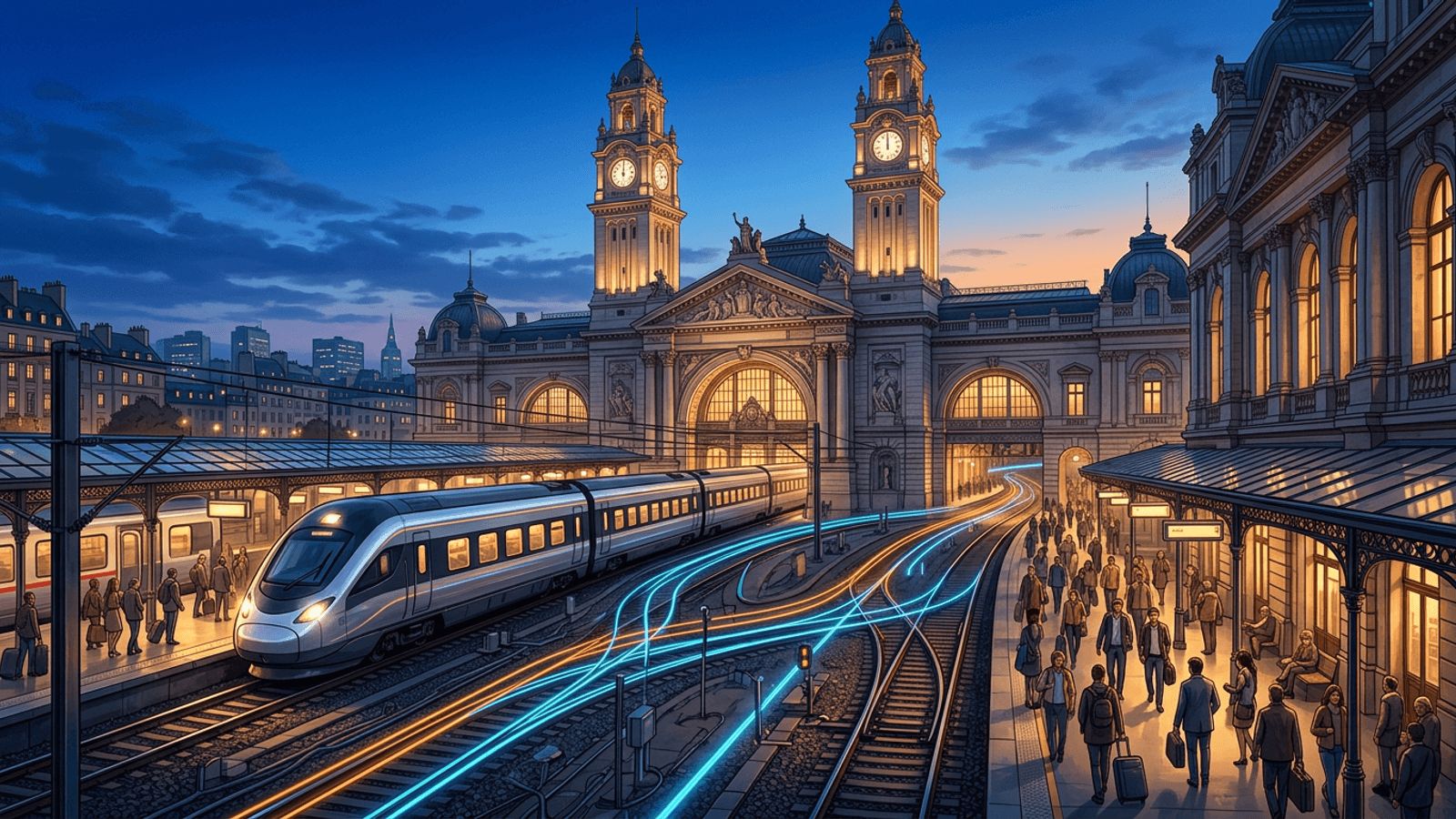
Mansfield is unusual among towns of its size in having a properly integrated public transport hub. The bus station and railway station sit adjacent to one another in the town centre, allowing passengers to transfer between modes in a couple of minutes under cover. Many far larger towns have their bus and rail facilities separated by an inconvenient walk, so the arrangement here is a real asset.
The district covers a wide area, from the town centre out to Mansfield Woodhouse, Forest Town, Rainworth, Warsop and a scattering of former colliery villages. Public transport connects these settlements with the centre, with each other and with the larger cities of Nottingham, Sheffield and Chesterfield. For residents without a car, and for those choosing not to drive into the town centre, the network is the practical backbone of daily life.
How the Network Fits Together
Three layers operate in parallel. High frequency commercial bus routes serve the main corridors, typically running every ten to twenty minutes during the day. Supported and contracted services cover routes that would not survive commercially, generally at lower frequency, and are funded through local authority arrangements. Rail provides the fast spine towards Nottingham and Worksop.
Alongside these sit community transport and demand responsive services, which fill gaps for passengers whose needs the fixed network cannot meet. These include door to door services for people with mobility difficulties and bookable minibus services in rural areas.
Ten Public Transit Services Serving Mansfield
1. Mansfield Bus Station and Interchange
The interchange itself deserves recognition as a service. Modern, sheltered and staffed, with real time departure displays, travel information and direct pedestrian access to the railway station, it makes multi-modal journeys straightforward. Almost every bus route in the district passes through it, so it functions as the reference point for planning any journey.
2. Stagecoach East Midlands
The principal bus operator in the area, Stagecoach runs the majority of frequent town and interurban services, including key links to Sutton-in-Ashfield, Kirkby and Nottingham. Its app offers live tracking, mobile ticketing and fare capping, and its network coverage means most residents live within a short walk of one of its routes.
3. East Midlands Railway Robin Hood Line
The Robin Hood Line provides Mansfield's rail connection, linking the town northwards to Mansfield Woodhouse, Shirebrook and Worksop, and southwards through Sutton Parkway and Newstead to Nottingham. Journey times to Nottingham are competitive with driving once parking is factored in, and the service is heavily used by commuters and students.
4. Trentbarton
Trentbarton operates well regarded interurban services connecting the wider Mansfield and Ashfield area with Nottingham and neighbouring towns. The company consistently performs strongly in passenger satisfaction measures, and its route branding, comfortable vehicles and reliable timekeeping have built a loyal commuter following.
5. Nottinghamshire County Council Supported Services
Many routes serving smaller villages exist because the county council contracts operators to run them. These supported services connect communities that commercial operations would bypass, maintaining access to shops, healthcare and employment for residents in outlying areas.
6. Mansfield Community Transport
Community transport schemes provide door to door minibus and car services for residents who cannot easily use conventional buses, including elderly people and those with disabilities. Typically operated with volunteer drivers and accessible vehicles, these services are essential for medical appointments, shopping trips and social activities.
7. Nottinghamshire Dial-a-Ride Services
Dial-a-ride operates on a bookable basis, collecting passengers from their homes and taking them to their destination. Vehicles are wheelchair accessible and drivers trained to assist. The service is particularly valuable in rural parts of the district where fixed route frequency is low.
8. Robin Hood Network Multi-Operator Ticketing
Multi-operator ticketing allows passengers to travel across different bus companies, and in some cases rail and tram, on a single ticket. For journeys requiring a change between operators, this removes the penalty of buying two separate fares and makes the network function as a coherent whole.
9. Mansfield Park and Ride Provision
Park and ride arrangements allow drivers from surrounding villages to leave vehicles at peripheral locations and continue by bus or train. The Sutton Parkway station on the Robin Hood Line, with its car park, functions in this way for many drivers heading into Nottingham, reducing city centre congestion and parking costs.
10. School and College Transport Services
Dedicated school and college transport moves thousands of students daily across the district, operated by a mix of commercial operators and contracted coach companies. These services shape the wider network, since vehicles and drivers are shared with public routes, and their timings influence peak capacity across the district.
Trends in Local Public Transport
Fare simplification has been the most beneficial recent development for passengers. Daily and weekly capping means travellers pay no more than a set amount regardless of how many journeys they make, removing the need to predict travel patterns in advance. Contactless payment has made boarding faster and eliminated the exact change problem.
Real time information has improved markedly. Live vehicle tracking through operator apps and departure screens at the interchange give passengers confidence that a bus is actually coming, which research consistently shows is one of the strongest determinants of whether people choose public transport.
Fleet renewal continues, with lower emission vehicles progressively replacing older stock. Electric and biogas buses have entered service across the East Midlands, improving both air quality and onboard comfort. Accessibility standards have also risen, with low floor vehicles, wheelchair spaces and audio-visual announcements now widespread.
The persistent challenge is evening and Sunday provision. Frequencies drop substantially outside core hours, which limits public transport's usefulness for shift workers and evening leisure travel. This remains the most commonly raised concern among local passengers.
Making the Most of the Network
Plan around the interchange, since almost all services converge there. Check whether a multi-operator ticket suits your journey before buying separate fares. Download the app for your main operator to access live tracking, which is far more reliable than printed timetables during disruption.
If you have accessibility needs, contact community transport providers directly, as eligibility criteria and booking lead times vary. For regular commuting, weekly and monthly passes offer meaningful savings over daily tickets, and combined bus and rail products can be worthwhile for journeys involving both modes.
Final Thoughts
Mansfield's public transport provision is genuinely strong for a town of its size, anchored by an integrated interchange, a successful reopened railway and a dense bus network. Commercial operators deliver frequency on the main corridors, while supported and community services maintain access for those the market alone would not serve. Used together, they make car-free living in Mansfield a realistic proposition for many residents.
Want your brand featured in front of decision-makers? Publish a guest post or get a link insertion in our guides through AAMAX's guest post and link insertion service.
Helpful Links
 SponsoredAAMAX — Full-Service Digital Agency
Write for Us
Share your expertise with our readers. We welcome guest contributions from industry specialists.
Pitch your idea