Getting Around Hammersmith and Fulham
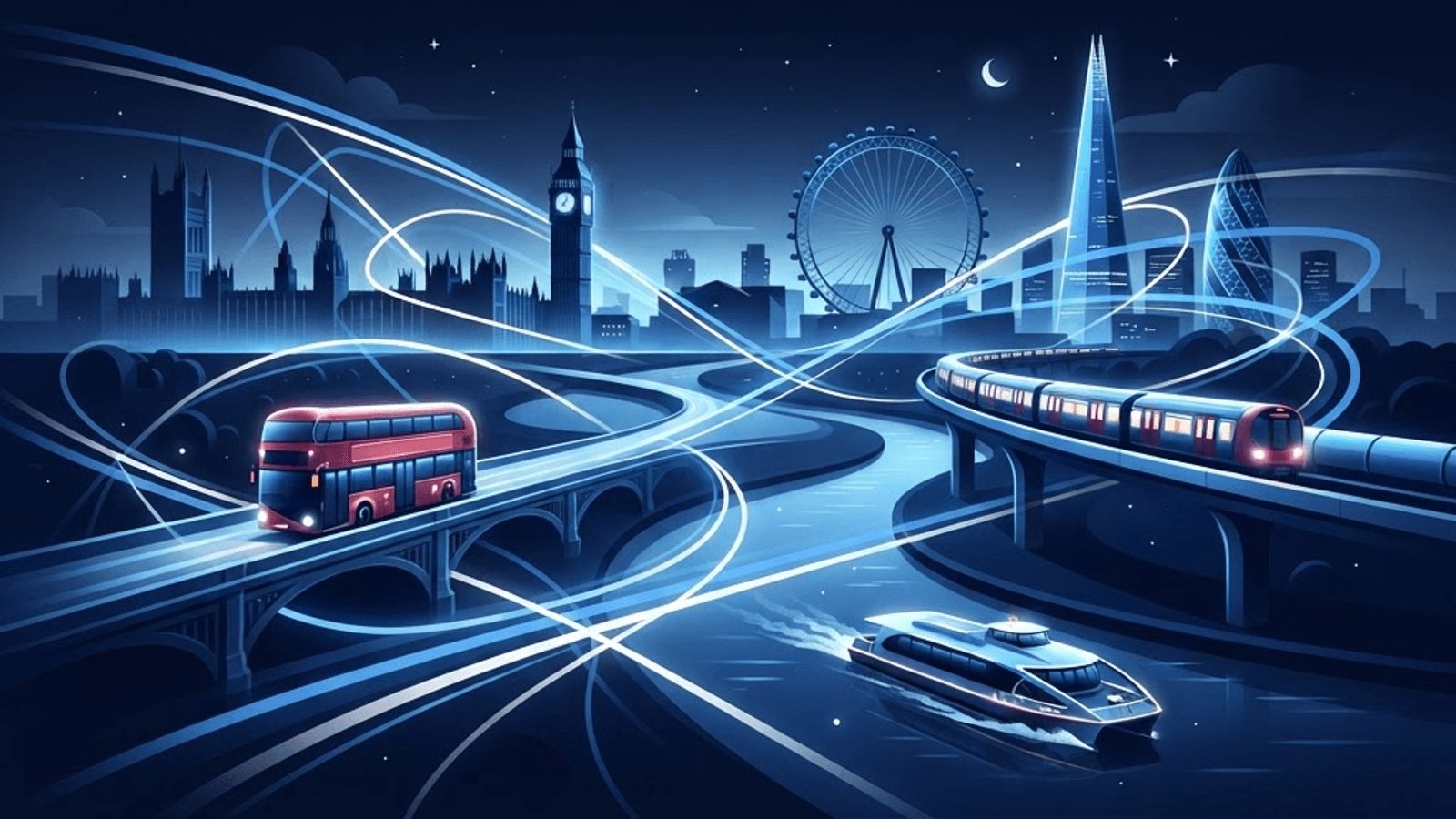
Hammersmith and Fulham enjoys public transport connectivity that many world cities would envy. The borough contains major interchanges at Hammersmith and Shepherd's Bush, sits on six Underground lines, hosts an Overground route and a major bus network, and has river frontage served by scheduled boat services. Public transport accessibility levels across much of the borough are among the highest in London, which is why a large share of residents travel without owning a car.
That density of provision also creates choice. For many journeys there are three or four viable options, differing in speed, cost, comfort and reliability. Knowing the strengths of each service is what turns a good network into genuinely effortless travel.
How Fares and Ticketing Work
Almost all local public transport uses contactless bank cards or Oyster with pay-as-you-go pricing and automatic daily and weekly capping, so travellers pay no more than the equivalent travelcard cost. Buses and trams have a flat fare with a one-hour hopper allowance permitting unlimited further bus journeys within sixty minutes at no extra charge.
Children and young people benefit from free or discounted travel through Zip photocards, while older and disabled residents can access the Freedom Pass. Railcards can be linked to Oyster for off-peak discounts on rail services. For visitors, simply using a contactless card is now the simplest and cheapest approach.
The Top 10 Public Transit Services in Hammersmith and Fulham
1. London Underground. The core of the borough's transport system, with District, Piccadilly, Circle, Hammersmith and City and Central line services calling at stations including Hammersmith, Fulham Broadway, Parsons Green, Barons Court, West Kensington, Shepherd's Bush and White City. High frequencies and direct central London access make it the default choice for most journeys.
2. London Buses. An extensive network covers streets the rail system cannot reach, with key corridors along Fulham Palace Road, King Street, Uxbridge Road and Wandsworth Bridge Road. Twenty-four-hour and night routes provide cover when the Underground closes, and the hopper fare makes multi-leg bus journeys excellent value.
3. London Overground. The west London route through Shepherd's Bush, Kensington Olympia and West Brompton provides orbital travel toward Clapham Junction and Willesden Junction, avoiding the need to travel via central London for many cross-city trips.
4. Elizabeth Line. Accessible within minutes from the borough via Paddington or Ealing Broadway, the Elizabeth line has transformed east–west journeys with fast, high-capacity, air-conditioned trains serving Canary Wharf, the City, Heathrow and the Thames Valley.
5. National Rail services at Kensington Olympia and West Brompton. Southern services on the West London Line link the borough directly with Clapham Junction and destinations across Surrey and Sussex, offering a valuable alternative to the Underground during disruption.
6. Uber Boat by Thames Clippers. Scheduled river bus services along the Thames provide a scenic and reliable commuting option, with piers within reach of the borough and frequent sailings toward Westminster, London Bridge, Canary Wharf and Greenwich. Capacity, comfort and guaranteed seating make it popular with commuters willing to pay a premium.
7. Santander Cycles. Transport for London's docked bike hire scheme has numerous stations across Hammersmith, Fulham and Shepherd's Bush, offering short-hop journeys at low cost. It works particularly well for the first or last mile between home and a station.
8. Dial-a-Ride and Taxicard. These accessible transport services provide door-to-door travel for residents unable to use mainstream public transport, using wheelchair-accessible vehicles and subsidised taxi journeys. They are an essential part of the borough's mobility offer.
9. Licensed black cabs. London's traditional taxis can be hailed or booked and are fully wheelchair accessible. Drivers hold the Knowledge, which remains valuable for navigating the borough's complex one-way systems, and the fleet has moved substantially toward electric and hybrid vehicles.
10. National Express and coach services. Long-distance coach services from nearby Victoria Coach Station and Heathrow provide low-cost travel to airports and cities across the United Kingdom, complementing rail for budget-conscious and luggage-heavy journeys.
Trends Shaping Local Transit
Air quality policy has been the biggest single influence. The Ultra Low Emission Zone and the electrification of the bus fleet have measurably improved emissions along the borough's busiest corridors, while cycle infrastructure and low traffic measures continue to expand.
Hybrid working has flattened the traditional peak. Demand is now spread more evenly across the day and skewed toward midweek, prompting operators to rethink timetables and encouraging more flexible ticketing products.
Accessibility remains a priority, with step-free access, tactile paving, audio-visual announcements and improved wayfinding gradually rolling out across stations. Real-time information through mobile applications has also made multi-modal journey planning far easier than it was a decade ago.
Tips for Travelling Smarter
Remember that Hammersmith has two adjacent stations with the same name serving different line groups, so check which one your route requires. Use the hopper fare deliberately, since two consecutive bus journeys within an hour cost the same as one. Travel just outside the peak windows where possible for lower fares and more space.
During District line engineering work, the Overground and bus routes along Fulham Palace Road provide reliable alternatives. Signing up for line status alerts and checking planned closures before weekend travel avoids most avoidable frustration.
Final Thoughts
Public transport in Hammersmith and Fulham is dense, frequent and unusually varied, spanning six Underground lines, an extensive bus network, orbital rail, river boats, cycle hire and accessible door-to-door services. For residents and visitors alike, the practical advantage lies in mixing modes rather than relying on one. Combining a bus with a train, or a hire bike with the Underground, often produces the fastest and most pleasant journey the borough has to offer.
Want your brand featured in front of decision-makers? Publish a guest post or get a link insertion in our guides through AAMAX's guest post and link insertion service.
Helpful Links
 SponsoredAAMAX — Full-Service Digital Agency
Write for Us
Share your expertise with our readers. We welcome guest contributions from industry specialists.
Pitch your idea