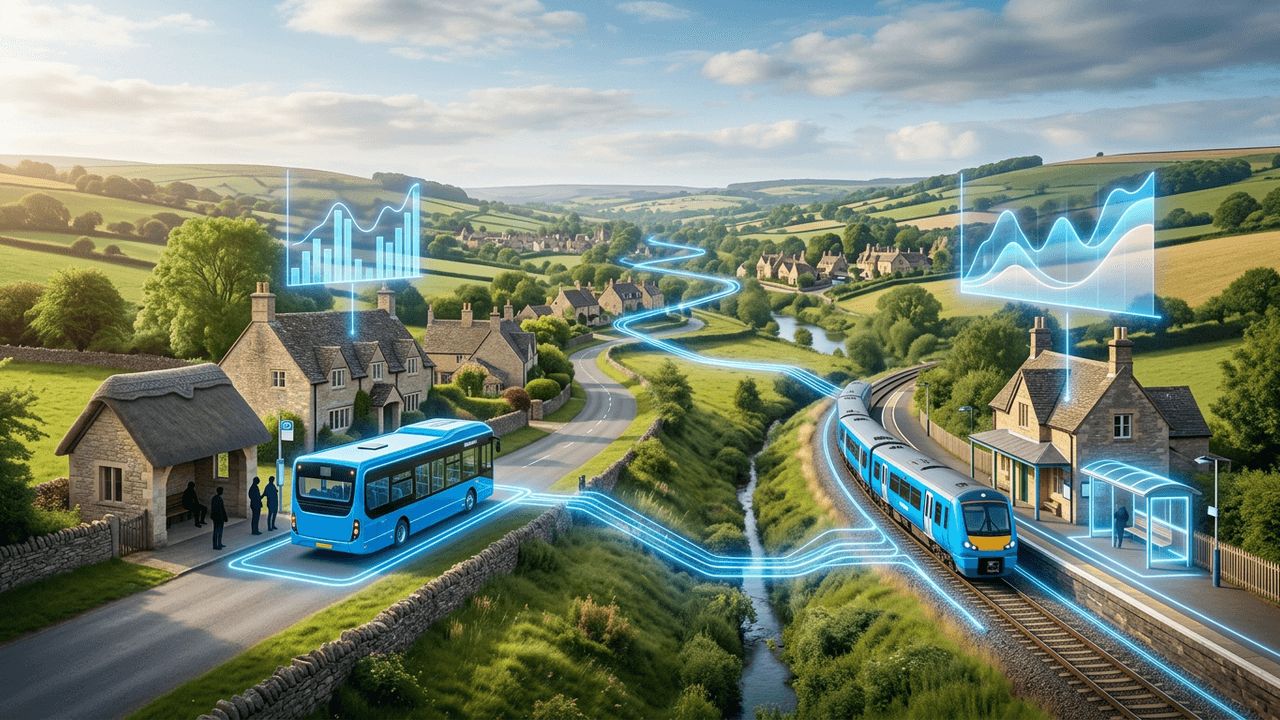
Public transport in the Cotswolds combines mainline railways, rural bus routes, long-distance coaches and innovative on-demand services. While coverage is less dense than in cities, careful planning allows residents and visitors to reach most towns and many villages without driving.
Using public transport also helps reduce traffic and parking pressures in popular villages. These ten services form the backbone of Cotswold public transit.
How Public Transport Works in the Cotswolds
Railway stations at Moreton-in-Marsh, Kingham, Charlbury, Kemble and Stroud provide gateways into the region. From there, buses link to market towns and villages. Local councils in Gloucestershire and Oxfordshire support many rural routes, and new demand-responsive schemes aim to fill gaps where fixed timetables are not practical.
Top 10 Best Public Transit Services in Cotswold: Our Picks
1. Great Western Railway
Great Western Railway operates key rail lines serving the Cotswolds, linking London Paddington with Moreton-in-Marsh, Kingham, Kemble and Stroud. Its services are the most common starting point for car-free visits.
2. Stagecoach West
Stagecoach West runs extensive bus services across Gloucestershire, including routes from Cheltenham and Gloucester into the Cotswolds. Contactless payment and real-time tracking make journeys easier.
3. Pulhams Coaches
Pulhams operates vital rural routes linking Cheltenham, Bourton-on-the-Water, Stow-on-the-Wold and Moreton-in-Marsh. Its services are popular with both residents and tourists visiting the North Cotswolds.
4. Stagecoach Oxfordshire
Stagecoach Oxfordshire connects Oxford with Witney, Burford and Chipping Norton, offering an important gateway to the eastern Cotswolds for visitors arriving in Oxford.
5. The Robin
The Robin is Gloucestershire's demand-responsive bus service, allowing passengers to book journeys in areas with limited fixed routes. It provides flexible, door-to-door style travel for rural communities.
6. Swanbrook
Swanbrook operates coach services linking Cheltenham and Oxford through the Cotswolds, along with school and private hire services. It offers a useful east-west connection across the region.
7. Johnsons Excelbus
Johnsons provides bus services in the North Cotswolds and Stratford-upon-Avon area, connecting towns such as Chipping Campden and Shipston-on-Stour with Stratford.
8. CrossCountry
CrossCountry trains stop at Cheltenham Spa, linking the Cotswolds with Birmingham, the North and the South West. It is a key connection for long-distance travellers.
9. National Express
National Express coaches connect Cheltenham, Gloucester and Cirencester with London, airports and cities across the UK, offering affordable long-distance travel.
10. Community Transport Schemes
Volunteer-led community transport groups across the Cotswolds provide essential journeys for elderly and disabled residents, including trips to medical appointments and shops. They play a vital role in reducing rural isolation.
Benefits of Choosing Public Transport
Using public transport in the Cotswolds offers benefits for travellers and communities alike. It removes the stress of navigating narrow lanes and finding parking in busy villages, and it allows passengers to relax and enjoy the scenery. Public transport also reduces congestion and emissions in one of England's most cherished landscapes, helping protect it for future generations. For residents, reliable bus and rail services provide independence, access to jobs and education, and vital links for those who do not drive.
Tips for Using Public Transport
Check timetables in advance, as rural services may run hourly or less frequently and often have reduced Sunday schedules. Use journey planning apps that combine rail and bus information. Consider multi-journey or day tickets for savings, and allow extra time for connections between trains and buses.
Public Transport Trends
Fare caps, contactless payments and integrated ticketing are making buses more attractive. Electric buses are gradually being introduced, and demand-responsive transport continues to expand in rural areas. Improved real-time information helps passengers plan with greater confidence, while tourism partnerships promote car-free visits.
Sample Car-Free Itineraries
A classic car-free day starts with a train to Moreton-in-Marsh, followed by a bus to Bourton-on-the-Water and a gentle walk to Lower and Upper Slaughter before returning via Stow-on-the-Wold. In the south, travellers can take a train to Kemble, continue by bus to Cirencester and explore the Corinium Museum and Cirencester Park. From Oxford, buses to Burford offer a beautiful gateway to the Windrush Valley, with riverside walks to Swinbrook and Asthall.
Frequently Asked Questions
Can I explore the Cotswolds without a car?
Yes, with planning. Trains and buses connect many towns and villages, and walking or cycling can bridge the gaps.
What is demand-responsive transport?
It is a bookable bus service that operates flexibly within a zone, picking passengers up based on requests rather than fixed timetables.
Are there discounted bus fares?
Fare caps and day tickets often reduce costs, and older or disabled residents may be eligible for free bus passes.
Where can I find timetables?
Operator apps, local council transport pages and national journey planning tools provide up-to-date timetable information.
Final Thoughts
With a little planning, public transport opens up the Cotswolds in a relaxed and sustainable way. These services connect residents to essential destinations and allow visitors to enjoy the region's beauty without the stress of driving or parking.
Want your brand featured in front of decision-makers? Publish a guest post or get a link insertion in our guides through AAMAX's guest post and link insertion service.
Helpful Links
 SponsoredAAMAX — Full-Service Digital Agency
Write for Us
Share your expertise with our readers. We welcome guest contributions from industry specialists.
Pitch your idea