An Integrated Network at the Heart of the Borough
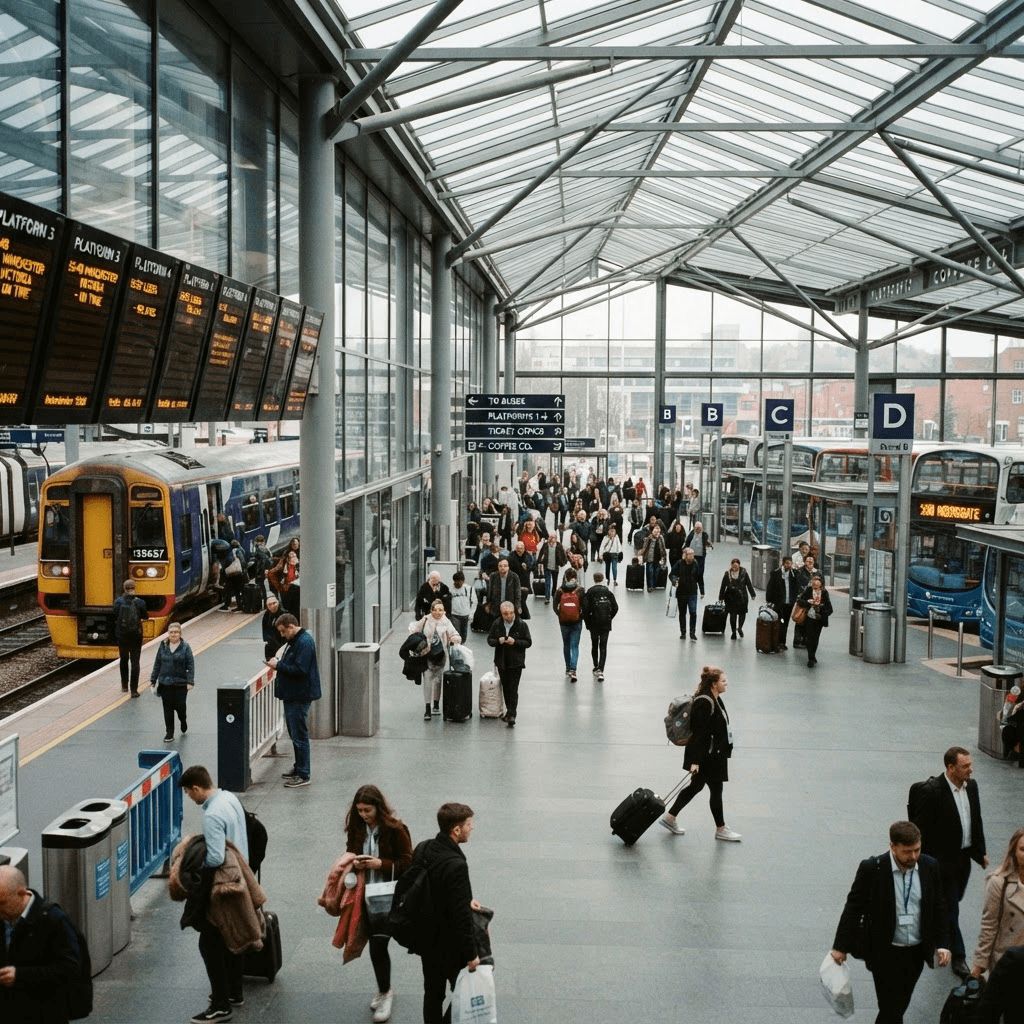
Public transport in Barnsley is defined by one piece of infrastructure more than any other: Barnsley Interchange. By placing bus stands and railway platforms in a single accessible building at the edge of the town centre, the Interchange makes multi-modal travel genuinely practical rather than theoretical. A passenger from a village service can walk a short distance to a train towards Sheffield or Leeds, and the same building provides travel information, waiting facilities and ticket purchase in one place.
That integration matters because of the borough's geography. Barnsley's population is distributed across the town and a wide network of former mining villages, many of which lack rail access. Public transport therefore depends on buses feeding a rail spine, supplemented by community transport for those who cannot use conventional services and active travel infrastructure for shorter journeys.
Ten Public Transit Services Serving Barnsley
1. South Yorkshire's transport authority network coordination. The regional transport body plans and coordinates public transport across Barnsley, Sheffield, Rotherham and Doncaster. It funds socially necessary bus services that would not run commercially, manages concessionary travel schemes, maintains bus stations and interchanges and provides journey planning and travel information. Its role is largely invisible to passengers but shapes almost every aspect of the network.
2. Stagecoach Yorkshire local bus services. Stagecoach operates a large share of Barnsley's bus network from its local depot, running frequent services between the town centre and communities including Hoyland, Wombwell, Athersley, Kendray and Worsbrough, plus longer interurban links towards Sheffield. Modern low-floor buses, contactless payment, live tracking through its app and multi-journey ticket bundles make it a mainstay for daily travel.
3. First South Yorkshire. First provides additional local and cross-boundary routes, connecting Barnsley passengers into the wider Sheffield and Rotherham network. Its digital ticketing, service update notifications and continuing fleet renewal have improved the experience on longer corridors.
4. Arriva Yorkshire. Serving the northern part of the borough, Arriva links Barnsley with Wakefield, Dewsbury and West Yorkshire destinations. For residents commuting across the county boundary, its regional ticket products and connections into the West Yorkshire network are particularly valuable.
5. Northern rail services. Northern operates local trains through Barnsley on the Hallam and Penistone lines, providing the borough's fast connections to Sheffield, Meadowhall, Leeds, Wakefield and Huddersfield. Stations at Wombwell, Elsecar, Dodworth, Silkstone Common and Penistone extend rail access beyond the town, and newer rolling stock has improved comfort and accessibility.
6. TransPennine Express and connecting intercity operators. Although long-distance operators do not all call within the borough, TransPennine Express, East Midlands Railway, CrossCountry and LNER services reached via Sheffield, Leeds, Doncaster and Wakefield form the second leg of most longer journeys from Barnsley. Understanding these connections is essential for anyone travelling nationally by public transport.
7. Barnsley Dial-a-Ride and community transport. Community transport provides pre-booked, door-to-door accessible travel for residents who cannot easily use scheduled buses, typically using wheelchair-accessible minibuses with trained drivers who assist passengers from their door. These services support independence for older and disabled residents and enable community groups to hire accessible vehicles affordably.
8. School and college transport services. A substantial share of the borough's public transport capacity is dedicated to education. Contracted school services and enhanced journeys to Barnsley College and the university campus carry large numbers of young people, and student travel discount schemes make daily attendance affordable for families.
9. Taxi and private hire services. Licensed hackney carriages and private hire operators complement scheduled public transport, particularly for evening journeys, rural areas with limited timetables and passengers with luggage or mobility needs. Council licensing sets standards on vehicle condition, driver checks and accessibility, and a proportion of the fleet is wheelchair accessible.
10. Active travel networks and cycle infrastructure. Walking and cycling routes, including the Trans Pennine Trail passing through the borough and the Dearne Valley greenways, form part of the wider transit picture. Secure cycle parking at the Interchange, improved crossings and traffic-free paths make cycle-plus-rail journeys realistic for many residents, and investment in these links continues.
Ticketing and Value for Money
Because most Barnsley journeys involve more than one operator or mode, multi-operator ticketing is the key to affordable travel. Regional day, weekly and monthly network tickets valid across participating bus operators and, in some cases, local rail journeys, generally cost far less than buying individual fares. Fare capping on contactless payments has reduced the risk of overpaying for occasional travellers.
Concessionary passes provide free or discounted off-peak travel for eligible older and disabled residents across the network. Young person's discount schemes cut costs substantially for students and apprentices, and rail travellers should consider railcards, which typically deliver a third off eligible fares and pay for themselves quickly for anyone making a few longer trips a year.
Accessibility Across the Network
Accessibility has improved markedly. Nearly all scheduled buses are low-floor with ramps and designated wheelchair spaces, audio and visual next-stop announcements are increasingly standard, and Barnsley Interchange offers step-free access, lifts, accessible toilets and staffed assistance. Rail passengers can book assisted travel in advance, and turn-up-and-go help is generally available at staffed stations.
Gaps remain, particularly at smaller rural stations with stepped access only and at bus stops without raised kerbs or shelters. Community transport fills much of this gap, and continued investment in stop infrastructure is a recognised priority.
Trends and Investment Shaping the Future
Three themes dominate. First, bus network reform and franchising discussions across South Yorkshire aim to give the transport authority greater control over routes, fares and standards, potentially improving coordination and evening and Sunday coverage. Second, fleet decarbonisation is progressing, with electric and low-emission buses entering service and rail decarbonisation plans under consideration for regional lines. Third, digital integration continues to advance, with better real-time information, contactless capping and journey planning that treats bus, rail and cycling as one connected system.
Reliability remains the biggest challenge, with congestion, driver recruitment and funding pressures all affecting punctuality. Bus priority measures and better roadworks coordination are among the practical responses being pursued locally.
Making the Network Work for You
For commuting, identify whether your journey is better served by a direct bus or a bus-to-rail combination via the Interchange, as the latter is often faster to Sheffield and Leeds. Buy a network ticket rather than daily fares if you travel regularly. Use live tracking apps rather than printed timetables at peak times. If you have accessibility needs, register with community transport and book rail assistance in advance.
Barnsley's public transport is not perfect, but the combination of an excellent central interchange, multiple bus operators, two rail corridors, strong community transport and improving active travel routes gives residents a genuinely usable alternative to driving, particularly for journeys into the town centre and the wider Yorkshire conurbations.
Want your brand featured in front of decision-makers? Publish a guest post or get a link insertion in our guides through AAMAX's guest post and link insertion service.
Helpful Links
 SponsoredAAMAX — Full-Service Digital Agency
Write for Us
Share your expertise with our readers. We welcome guest contributions from industry specialists.
Pitch your idea