Plastics in Modern Manufacturing
Plastics attract criticism, much of it deserved when applied to single-use packaging, yet the material remains indispensable across engineering, healthcare, construction and transport. Polymers offer combinations of light weight, corrosion resistance, electrical insulation, formability and cost that no alternative matches across the board. The challenge is using them appropriately and managing them responsibly at end of life.
Mansfield hosts a capable plastics sector covering the principal conversion processes along with tooling, recycling and technical support. Much of the output is business-to-business: components for machinery, vehicles, electrical equipment, medical devices and construction products rather than consumer goods.
The Main Processes Explained
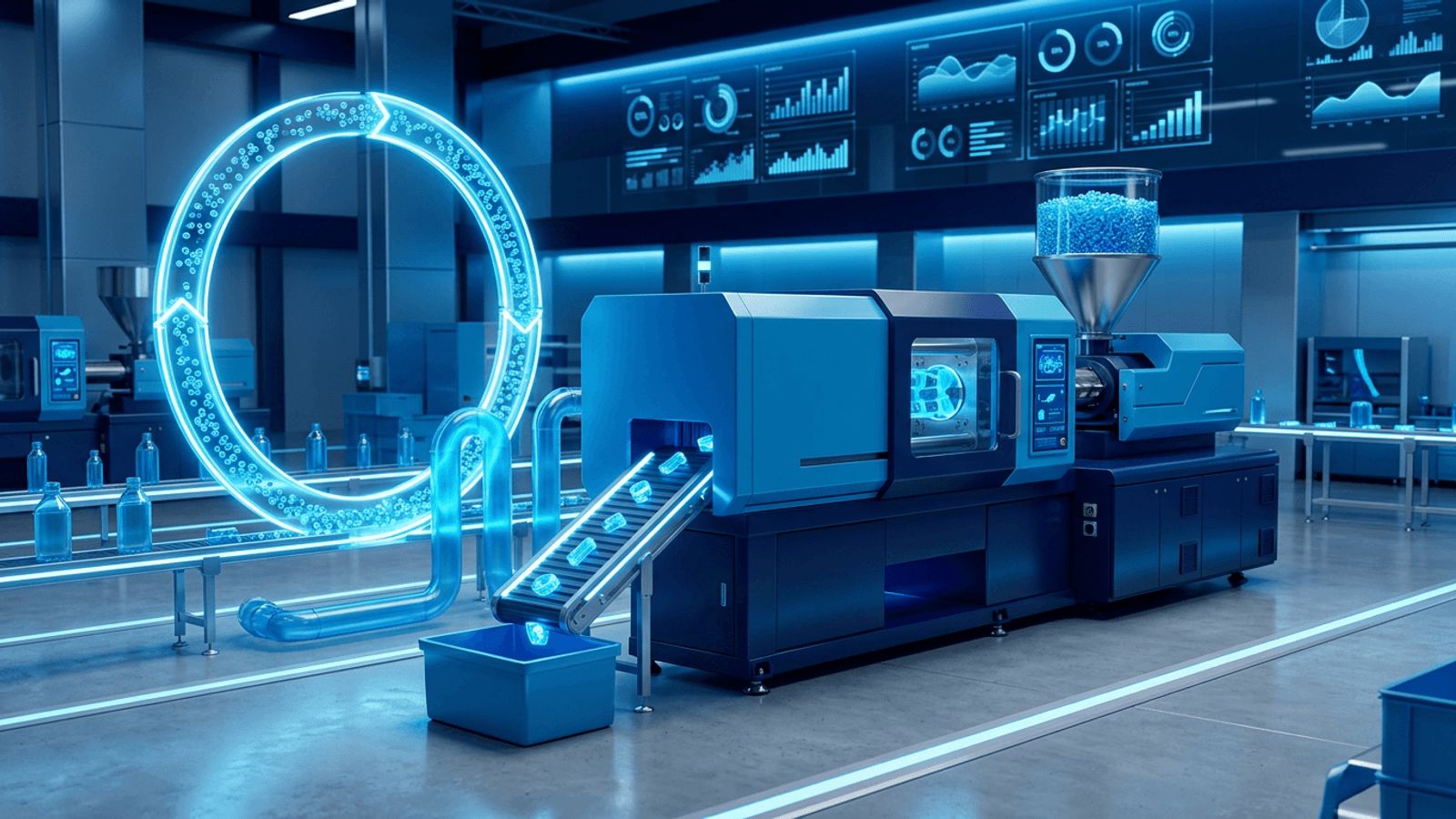
Injection moulding is the dominant process for volume production. Molten polymer is injected into a steel tool under high pressure, cooled and ejected. Tooling costs are substantial, so the process suits higher volumes where the tool cost is spread across many parts. Cycle times are measured in seconds, and dimensional consistency is excellent.
Extrusion produces continuous profiles such as pipe, tube, sheet and window sections by forcing melted polymer through a die. Tooling is far cheaper than injection moulding, making it viable at lower volumes.
Vacuum forming and thermoforming heat a sheet and draw it over a mould, suiting large, relatively shallow parts such as trays, covers and machine panels at modest volumes with low tooling cost.
Rotational moulding produces large hollow items like tanks and containers, while CNC machining of plastic stock serves prototypes and very low volumes where no tooling investment can be justified.
Top 10 Best Plastic Manufacturers in Mansfield
1. Sherwood Injection Moulding
A technical moulder producing precision components for engineering and electrical applications, with in-house tool maintenance and scientific moulding process control.
2. Mansfield Polymer Extrusions
Manufacturers of profiles, tube and sheet, offering bespoke die design for customers needing non-standard sections.
3. Portland Thermoforming
Specialists in vacuum formed covers, trays and machine guarding, well suited to low and medium volume industrial applications.
4. Ashfield Tooling and Moulds
Designers and makers of injection moulding tools, including multi-cavity and hot runner systems, supporting moulders across the region.
5. Clumber Plastic Fabrication
A fabrication business machining, bending and welding acrylic, polycarbonate and engineering plastics for displays, guards and tanks.
6. Rufford Recycled Polymers
A reprocessor converting post-industrial and post-consumer waste into usable regrind and compounded pellets for manufacturers seeking recycled content.
7. Oakleaf Medical Plastics
Producers of components for healthcare applications, operating under cleanroom conditions with full material traceability and validated processes.
8. Bridge Street Rotational Moulding
Manufacturers of tanks, containers and large hollow mouldings for agricultural, water treatment and industrial storage use.
9. Nottinghamshire Polymer Compounds
Compounders blending base polymers with additives, fillers and colourants to achieve specific mechanical, thermal or flame-retardant properties.
10. Mansfield Plastic Prototyping
A rapid prototyping specialist combining additive manufacturing and CNC machining to produce functional plastic parts before tooling commitment.
Choosing the Right Polymer
Material selection is where most plastic component projects succeed or fail. Commodity polymers such as polypropylene and polyethylene offer excellent chemical resistance and low cost but limited stiffness and temperature tolerance. Engineering polymers including ABS, polycarbonate, nylon and acetal deliver higher strength, better dimensional stability and improved temperature performance. High performance polymers serve demanding applications where cost is secondary to capability.
Beyond the base polymer, additives change everything. Glass fibre reinforcement dramatically increases stiffness at the cost of some toughness. Flame retardants are essential for electrical enclosures. UV stabilisers prevent degradation in outdoor use. Getting these decisions right early avoids expensive tool modification later.
Sustainability and the Circular Economy
The plastics industry is under legitimate pressure and is changing in response. Regulatory measures including packaging taxes linked to recycled content have created strong commercial incentives to incorporate recovered material. Mechanical recycling, where waste is cleaned, ground and reprocessed, is well established for clean industrial streams. Chemical recycling, breaking polymers back to feedstock, is developing for mixed and contaminated waste.
Design for recyclability matters enormously. Single-material products, avoidance of incompatible material combinations, elimination of adhesive labels and easy disassembly all raise the likelihood that a product is actually recycled rather than merely recyclable in theory.
Lightweighting reduces material use and, for transport components, cuts lifetime emissions. Replacing metal with well-chosen polymer can also lower a product's overall carbon footprint despite plastics' reputation.
Working with a Plastics Manufacturer
Engage the manufacturer during design rather than after. Design for manufacture review typically identifies wall thickness variations, missing draft angles, sink mark risks and unnecessary undercuts that would otherwise cause defects or inflate tooling cost.
Clarify tooling ownership and storage arrangements in writing. Understand the relationship between order volume, cycle time and unit price. Ask about quality systems, dimensional inspection capability and material certification, particularly for regulated applications. Discuss recycled content options, since many grades now perform comparably to virgin material.
Final Thoughts
Plastics manufacturing in Mansfield is technically sophisticated and increasingly focused on responsible material use. For product designers and industrial buyers, having moulders, extruders, toolmakers and recyclers within the district shortens development cycles and makes collaborative problem-solving far easier than working at distance.
Want your brand featured in front of decision-makers? Publish a guest post or get a link insertion in our guides through AAMAX's guest post and link insertion service.
Helpful Links
 SponsoredAAMAX — Full-Service Digital Agency
Write for Us
Share your expertise with our readers. We welcome guest contributions from industry specialists.
Pitch your idea