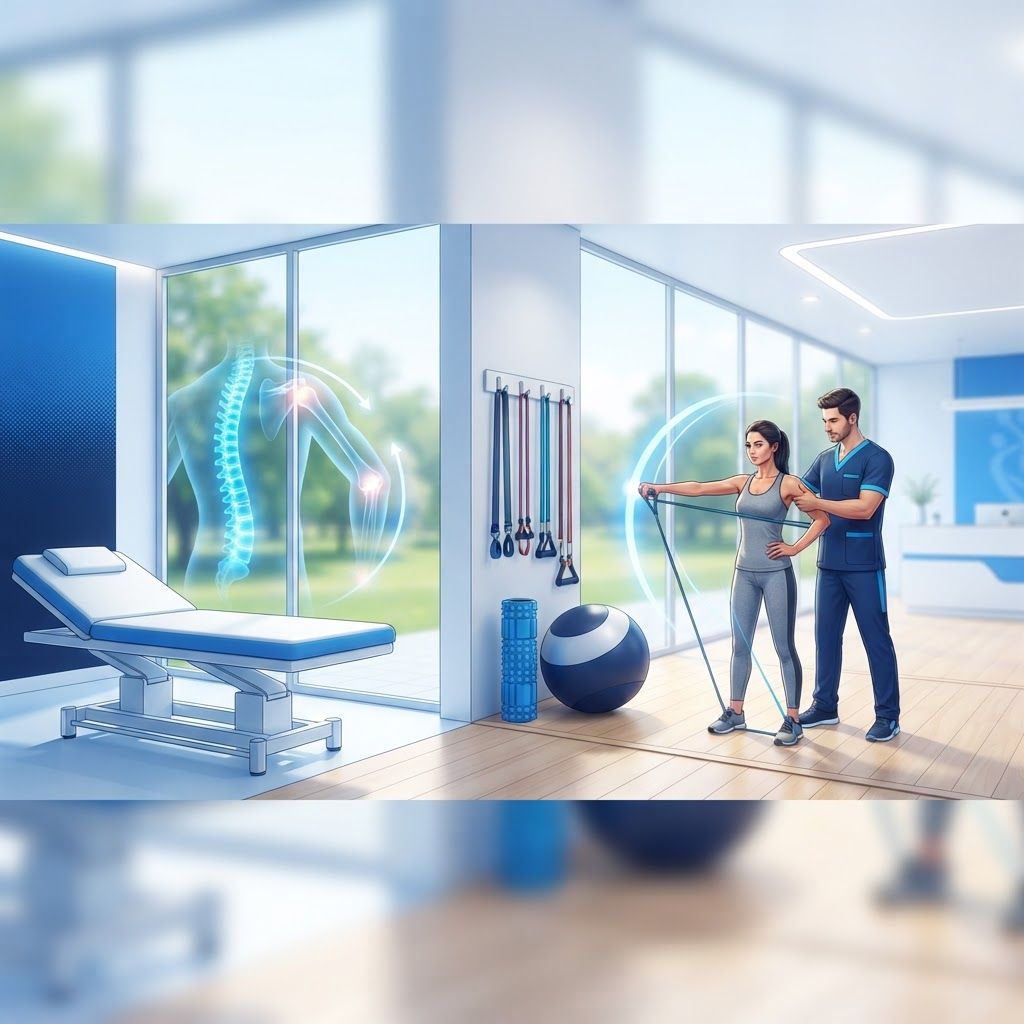
Why Physiotherapy Matters in an Industrial Borough
Physiotherapy demand in Blackburn with Darwen is shaped by how people work and live. The borough retains a substantial manufacturing, warehousing and construction workforce, occupations involving lifting, repetitive movement, standing for long periods and machinery operation. Musculoskeletal injury is consequently common, and back pain remains one of the leading causes of working days lost locally as nationally.
Alongside occupational injury sits a large population living with osteoarthritis, post-surgical rehabilitation needs following joint replacement, sports injuries from an active amateur sporting culture, and neurological rehabilitation after stroke. Physiotherapy addresses all of these, and evidence consistently shows that early, active rehabilitation produces better outcomes than rest and waiting.
Physiotherapy Providers in the Borough
East Lancashire Hospitals Physiotherapy Services provides NHS musculoskeletal, respiratory, neurological and paediatric physiotherapy across hospital and community settings, including post-operative rehabilitation and specialist pain programmes.
Among private providers, Blackburn Physiotherapy Clinic is well established for musculoskeletal assessment, manual therapy and exercise-based rehabilitation. Darwen Physio and Sports Injury Clinic serves the Darwen area with sports injury management and post-surgical programmes.
Pennine Physiotherapy and Ribble Valley Physiotherapy are respected for detailed biomechanical assessment and long-term condition management. Physio Direct North West offers rapid access appointments frequently used by employers and insurers for occupational injury.
Nuffield Health Physiotherapy and Spire Physiotherapy provide private rehabilitation linked to surgical pathways, useful for patients wanting continuity from operation through recovery. Complete Physio Lancashire and Active Rehab Blackburn focus on functional rehabilitation and return-to-work programmes, while The Sports Injury Clinic Blackburn supports the borough's amateur football, rugby, cricket and running communities with acute injury management and performance rehabilitation.
Routes to Treatment
There are several ways to access physiotherapy locally, and understanding them saves considerable time. First-contact physiotherapists now work within many GP practices and primary care networks, meaning patients with musculoskeletal problems can often be seen by a physiotherapist directly without a GP appointment first. This is frequently the fastest NHS route.
Self-referral to NHS physiotherapy is available in many areas, allowing patients to book assessment without GP involvement. Waiting times vary by condition and urgency, with post-surgical and neurological rehabilitation prioritised.
Private physiotherapy offers immediate access, typically within days, longer appointment times and continuity with one therapist. Costs are per session, and most conditions require several sessions, so understanding the likely course of treatment helps budgeting. Many private health insurance policies cover physiotherapy, sometimes without GP referral, and employer-funded occupational health schemes are common among the borough's larger manufacturers.
What Physiotherapy Actually Involves
Effective physiotherapy is considerably more active than many patients expect. A first appointment involves detailed history taking, physical examination assessing movement, strength, joint function and neurological signs, and discussion of goals. The therapist should explain their working diagnosis in understandable terms and outline a plan with expected timescales.
Treatment typically combines several elements. Exercise therapy forms the core, because strengthening, mobility and motor control work addresses causes rather than symptoms. Manual therapy including joint mobilisation and soft tissue techniques can reduce pain and improve movement, creating the window in which exercise becomes possible. Education about the condition, pain mechanisms and activity pacing is genuinely therapeutic, particularly in persistent pain where understanding reduces fear-driven avoidance.
Additional modalities such as acupuncture, taping, shockwave therapy for tendon problems and hydrotherapy may feature depending on condition and clinic facilities. Crucially, home exercise adherence largely determines outcome. A programme performed consistently between appointments achieves far more than clinic sessions alone.
Choosing a Physiotherapist
Verify registration with the Health and Care Professions Council, which is a legal requirement for anyone using the title physiotherapist, and membership of the Chartered Society of Physiotherapy indicates professional standing. Ask about specific experience with your condition, as physiotherapy encompasses very different specialisms.
Look for clinics with adequate space and equipment for exercise rehabilitation rather than treatment couches alone, since progressive loading requires appropriate facilities. Ask how many sessions are typically needed and what will be measured to demonstrate progress, as a clear plan with objective markers indicates professional rigour.
Be cautious of any provider recommending extended courses of passive treatment without progressive exercise, or making claims about permanently realigning structures. Contemporary evidence strongly supports active rehabilitation, and reputable therapists work toward patient independence rather than ongoing dependence.
Conditions Commonly Treated
Lower back pain dominates caseloads, and current guidance emphasises staying active, avoiding bed rest and progressive exercise rather than imaging or prolonged passive treatment. Neck pain and shoulder problems including rotator cuff disorders and impingement follow closely, often related to work posture and repetitive overhead activity.
Knee and hip osteoarthritis respond well to strengthening and weight management, and physiotherapy is recommended before considering joint replacement, sometimes deferring surgery for years. Post-operative rehabilitation after knee and hip replacement, ligament reconstruction and spinal surgery follows structured protocols where adherence directly affects final function.
Tendon problems including tennis elbow, Achilles and patellar tendinopathy require specific loading programmes over months rather than weeks. Sports injuries, ankle sprains, hamstring strains and return-to-play assessment form a significant private caseload. Respiratory physiotherapy supports people with chronic obstructive pulmonary disease, relevant given local respiratory disease prevalence, and neurological physiotherapy aids recovery after stroke and manages conditions such as multiple sclerosis and Parkinson's disease.
Prevention and Workplace Health
For a borough with substantial physical employment, prevention offers the greatest return. Manual handling training, workstation assessment, job rotation to reduce repetitive loading and early reporting of symptoms all reduce injury and time off work. Several local physiotherapy providers offer on-site occupational services, and employers who invest in these typically see measurable reductions in absence.
Individually, general strength and mobility work is protective, as is maintaining activity through minor pain rather than complete rest. The most consistent message from physiotherapists across Blackburn with Darwen is that movement is generally safe, that pain does not always indicate damage, and that gradual progressive loading is the route back to function. Seeking assessment early, before compensation patterns and fear of movement become established, reliably shortens recovery.
Want your brand featured in front of decision-makers? Publish a guest post or get a link insertion in our guides through AAMAX's guest post and link insertion service.
Helpful Links
 SponsoredAAMAX — Full-Service Digital Agency
Write for Us
Share your expertise with our readers. We welcome guest contributions from industry specialists.
Pitch your idea