Precision Engineering in Warwickshire
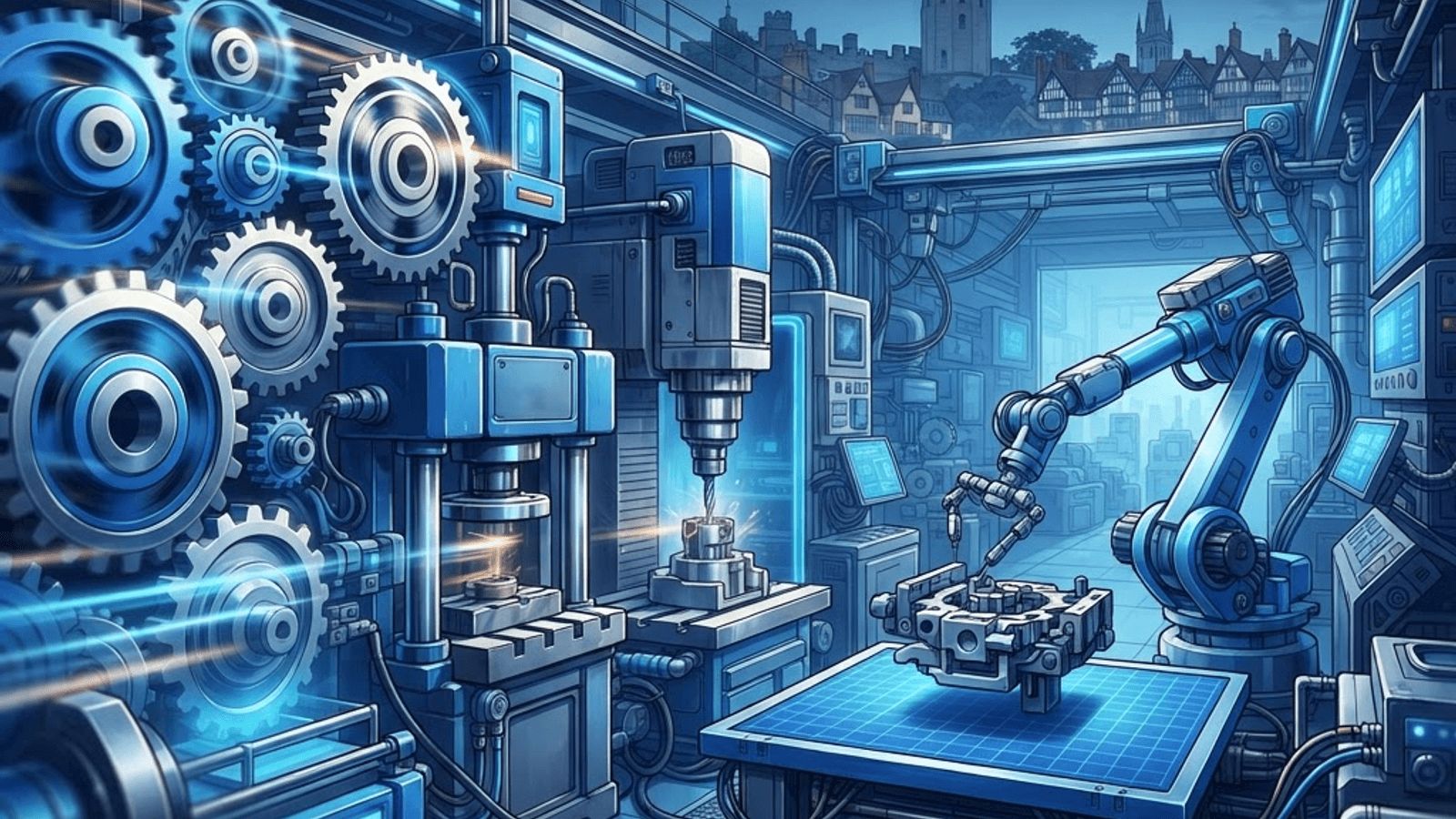
Machinery manufacturing is the industry that makes other industries possible. Every product manufactured anywhere depends on machines designed and built by someone, and Warwickshire has been building them for well over a century. The county's engineering tradition, forged in the industrial expansion of the Midlands, has evolved into a sector characterised by precision, automation capability and specialist problem-solving.
Contemporary machinery manufacturing in Warwick bears little resemblance to its industrial-era predecessor. Computer-controlled machining, robotics integration, sensor-driven process control and digital simulation define modern practice. What has persisted is the underlying discipline: understanding materials, tolerances, forces and how mechanisms fail.
The Ten Leading Machinery Manufacturers in Warwick
Warwick Precision Machinery designs and builds bespoke production machinery for manufacturing clients. Rather than selling standard equipment, it engineers solutions to specific process problems, covering mechanical design, control systems, safety integration and commissioning. This consultative model suits manufacturers whose processes have no off-the-shelf answer.
Castle CNC Engineering operates a substantial computer-controlled machining capability, producing precision components in metals and engineering plastics. Multi-axis milling and turning, along with in-house metrology, allow it to hold tight tolerances on complex geometries for aerospace, automotive and medical customers.
Avon Automation Systems integrates robotics and automated handling into production environments. Robot selection, end-effector design, vision systems, safety guarding and programming are delivered as complete cells, and its work has helped Warwickshire manufacturers address both labour availability and consistency requirements.
Jephson Agricultural Machinery manufactures and services equipment for the farming sector, including cultivation implements, handling equipment and bespoke modifications. Warwickshire's substantial agricultural base generates steady demand, and precision agriculture technology has added sophistication to traditionally mechanical products.
Priory Hydraulic Systems designs and builds hydraulic power units, cylinders, manifolds and control systems. Hydraulics remains unmatched for high force density in industrial and mobile applications, and the firm's system design capability extends to filtration, thermal management and contamination control.
Mill Street Toolmaking produces press tools, injection moulds, jigs and fixtures. Toolmaking is among the most demanding engineering disciplines, since the tool must be more accurate than the parts it produces and must maintain that accuracy across hundreds of thousands of cycles.
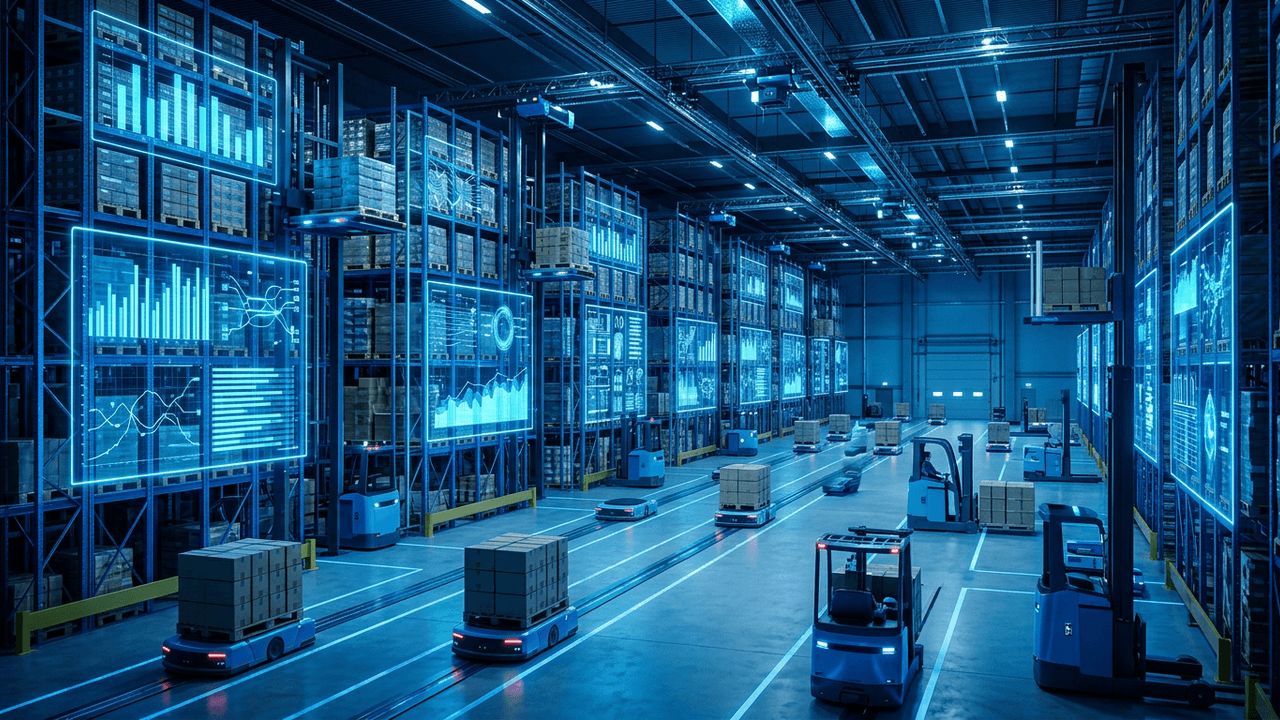
Saltisford Materials Handling manufactures conveyor systems, palletising equipment and warehouse automation. Growth in distribution and e-commerce fulfilment has driven demand for handling systems that operate reliably at high throughput with minimal intervention.
Northgate Packaging Machinery builds filling, sealing, labelling and cartoning equipment for food, beverage and consumer goods producers. Packaging machinery must handle variable products at speed while satisfying hygiene requirements, and changeover flexibility has become increasingly important as product ranges proliferate.
Emscote Machine Tools supplies, refurbishes and services machine tools, extending the working life of capital equipment that would otherwise be scrapped. Retrofitting modern controls to mechanically sound older machines offers substantial capability at a fraction of replacement cost.
Shire Industrial Maintenance provides preventive and reactive maintenance, condition monitoring and breakdown response for production machinery. Unplanned downtime is extraordinarily expensive in continuous manufacturing, and predictive maintenance based on vibration and thermal monitoring prevents failures rather than merely responding to them.
Digital Manufacturing and Industry 4.0
The integration of digital technology into machinery has progressed substantially. Machines now generate continuous data on cycle times, energy consumption, vibration signatures, temperatures and process parameters. Analysing this data reveals patterns that anticipate failure and identify efficiency opportunities invisible to periodic inspection.
Digital twins — simulation models mirroring physical machinery — allow process changes to be tested virtually before implementation. For complex production lines, this substantially reduces commissioning time and the risk of expensive physical modification.
Connectivity brings genuine benefits alongside real risks. Networked industrial equipment creates cyber security exposure that manufacturing environments were not historically designed to handle. Operational technology security has consequently become a serious consideration, with segmentation, access control and monitoring now part of responsible machinery specification.
Automation and the Skills Question
Automation adoption among Warwickshire manufacturers has accelerated, driven less by cost reduction than by labour availability and quality consistency. Skilled operators are increasingly difficult to recruit, and automated processes deliver repeatability that manual operations cannot match.
Collaborative robots have widened access considerably. Designed to work safely alongside people without extensive guarding, they suit smaller manufacturers with variable production who cannot justify traditional caged robot cells. Their lower cost and simpler programming have brought automation within reach of businesses previously excluded.
The skills implication is nuanced. Automation displaces repetitive manual tasks but creates demand for technicians who can programme, maintain and optimise automated systems. Warwickshire's engineering training provision, including apprenticeship programmes run by local manufacturers, is central to meeting this need.
Sustainability in Machinery Design
Energy efficiency has become a design priority rather than an afterthought. Variable speed drives, regenerative braking on servo systems, optimised pneumatic circuits and intelligent standby modes all reduce consumption meaningfully across a machine's operating life.
Durability and repairability matter environmentally as well as commercially. Machinery designed for component-level repair, with available spares and accessible service points, lasts decades rather than years. Warwickshire's machinery manufacturers have generally maintained this philosophy, and long-lived equipment remains a genuine selling point.
Commissioning Machinery Successfully
Specify the process, not the machine. Manufacturers who describe the outcome required — throughput, tolerance, material, changeover frequency — receive better solutions than those who specify a machine configuration based on what they have seen elsewhere.
Involve operators in the specification. The people who will run the equipment daily identify practical issues around access, cleaning, adjustment and changeover that design engineers frequently overlook, and their input prevents machines that work in theory but frustrate in practice.
Plan for the full lifecycle. Spare parts availability, service response times, training provision and control system obsolescence all affect long-term cost. A machine with an unsupported proprietary controller becomes a liability well before it wears out.
Finally, insist on realistic acceptance testing. Run-off at the manufacturer's facility using your actual materials, at your target rate, for a sustained period, reveals problems that a short demonstration will not. Resolving them before installation is far easier than afterwards.
Want your brand featured in front of decision-makers? Publish a guest post or get a link insertion in our guides through AAMAX's guest post and link insertion service.
Helpful Links
 SponsoredAAMAX — Full-Service Digital Agency
Write for Us
Share your expertise with our readers. We welcome guest contributions from industry specialists.
Pitch your idea