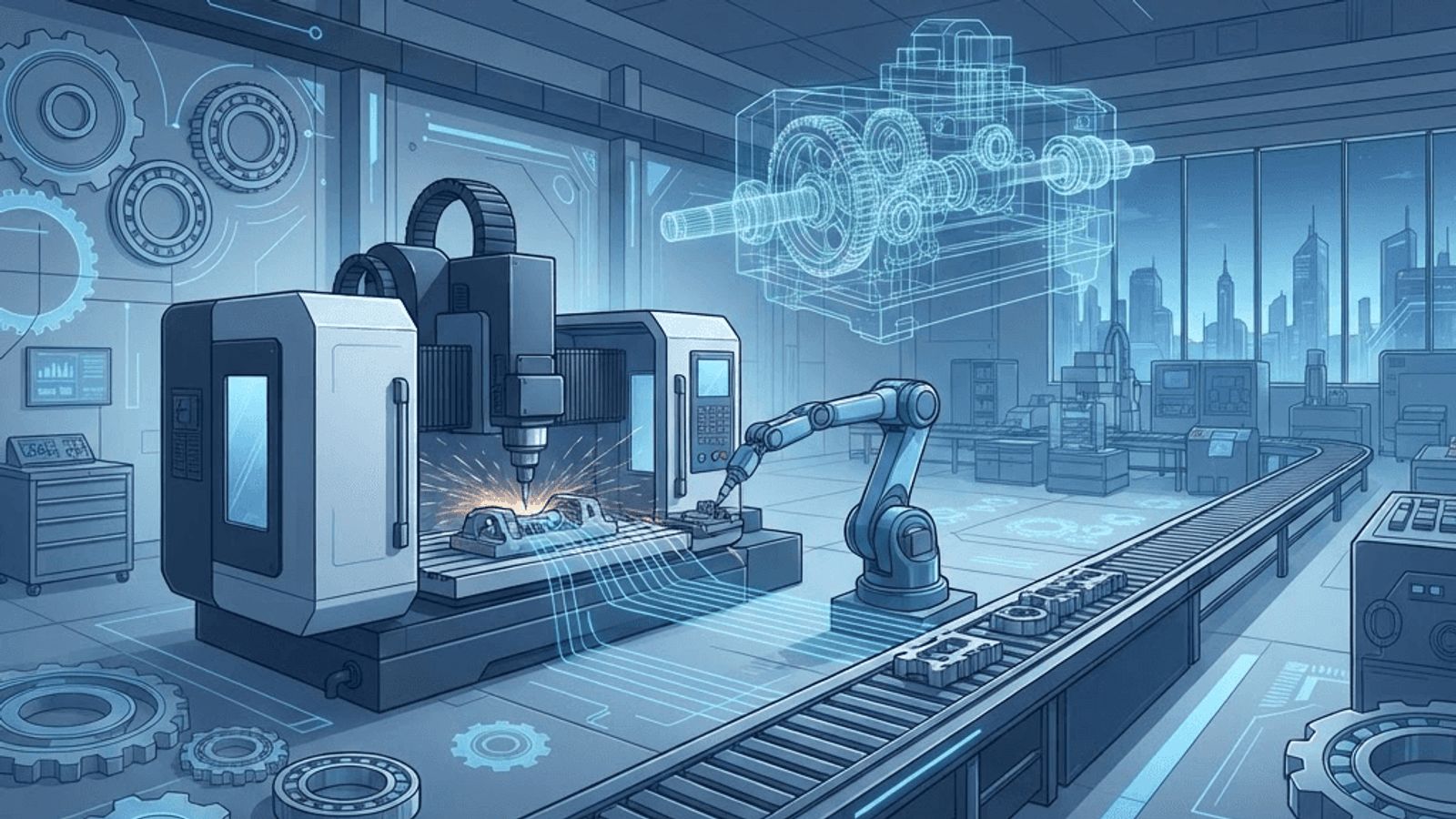
Machinery Building in a Research-Led Economy
Machinery manufacturing in South Cambridgeshire has been shaped by the demands of its customers. Research institutes and biotechnology companies need laboratory automation, sample handling systems and analytical instrumentation. Food producers and growers need grading, washing, packing and processing lines. Arable farms need cultivation, drilling and harvesting equipment suited to the region's soils. Manufacturers across the district need bespoke assembly rigs, test equipment and special purpose machines that no catalogue supplier offers.
The common thread is customisation. Very little machinery built in the district is standard product produced in volume. Most is engineered to a specific application, often in quantities of one to a few dozen, which requires a different business model from series manufacturing. Companies here compete on engineering capability, mechanical and control integration, project management and after-sales support rather than on price per unit.
How to Assess a Machinery Manufacturer
Several factors distinguish capable machine builders. Design capability should include mechanical design with proper analysis, control system engineering covering programmable logic controllers, drives, safety circuits and human-machine interfaces, and software where automation is involved. In-house manufacturing capacity for machining, fabrication and assembly gives better control over schedule and quality than fully outsourced builds. Compliance competence is essential, since machinery placed on the market requires conformity assessment, risk assessment to recognised standards, safety-related control system design to appropriate performance levels, and complete technical documentation. Finally, after-sales support determines lifetime cost: spare parts availability, response times, remote diagnostics and operator training.
The Top 10 Machinery Manufacturers in South Cambridgeshire
1. Granta Laboratory Automation
Designing and building automated systems for laboratories, including liquid handling platforms, sample storage and retrieval, plate handling robotics and integrated analytical workflows, with software that interfaces to laboratory information management systems.
2. Linton Agricultural Machinery
Manufacturing and refurbishing cultivation, drilling and crop handling equipment engineered for the region's heavy and variable soils, alongside grain handling, drying and storage systems for arable holdings.
3. Shelford Special Purpose Machines
Building bespoke machines to customer specification, including assembly and joining systems, leak and functional test rigs, marking and inspection stations and automated handling equipment for production lines.
4. Duxford Packaging Systems
Producing filling, capping, labelling, cartoning and end-of-line packaging machinery for food, beverage, cosmetics and pharmaceutical producers, with format flexibility and washdown construction where hygiene requirements demand it.
5. Histon Precision Engineering
Operating multi-axis machining centres and turning capability for precision components and sub-assemblies, with coordinate measuring metrology, supporting both its own machine builds and external customers requiring tight tolerances.
6. Sawston Robotics Integration
Integrating industrial and collaborative robots into production and laboratory environments, covering cell design, end-effector development, vision-guided handling, safety assessment for collaborative applications and programming.
7. Melbourn Food Processing Equipment
Manufacturing washing, grading, sorting, cutting and conveying equipment for fresh produce and prepared food operations, built to hygienic design principles with cleanability and material compliance for food contact.
8. Papworth Materials Handling
Supplying conveyors, elevators, palletising systems, bulk handling equipment and storage solutions, designed around specific product characteristics, throughput requirements and site layout constraints.
9. Fulbourn Test & Measurement Rigs
Designing and building test equipment including environmental chambers, mechanical load and fatigue rigs, flow and pressure test benches and instrumented data acquisition systems for research and quality assurance use.
10. Cambourne Machine Retrofit & Upgrade
Specialising in extending the life of existing machinery through control system replacement, drive upgrades, safety system modernisation to current standards, guarding improvements and the addition of monitoring and data collection to legacy equipment.
Specifying Machinery Properly
Most machinery projects that disappoint do so because the specification was inadequate rather than because the builder was incompetent. A good specification states throughput requirements in measurable terms, including cycle time and expected availability. It defines the full range of products or samples the machine must handle, including edge cases, since machines optimised for a nominal product often fail on variants. It states the operating environment, cleaning regime and utilities available. It sets acceptance criteria and the test method by which they will be demonstrated. And it identifies interfaces to upstream and downstream equipment, control systems and data platforms.
Compliance and Safety
Machinery safety is a legal obligation, not an optional extra. Builders must carry out risk assessment, apply the hierarchy of inherently safe design, guarding and then protective devices, design safety-related control functions to an appropriate performance level, provide adequate instructions and produce a technical file supporting the declaration of conformity. Users have parallel duties covering safe use, maintenance, inspection and operator training. Buyers should confirm at quotation stage who carries responsibility for conformity assessment, particularly where a machine is assembled from several suppliers' equipment, since combining machinery can create obligations for the integrator.
Lifetime Cost Considerations
Purchase price is a minority of total cost for most production machinery. Availability, spare parts pricing, energy consumption, changeover time, consumable use, operator requirements and eventual upgrade path all matter more over a ten or fifteen year life. Asking for a service and spares proposal alongside the capital quotation gives a much better comparison between suppliers. Increasingly, buyers also specify data output and connectivity so that machine performance can be monitored and maintenance planned on condition rather than schedule.
Choosing a Manufacturer
Match capability to the application, review comparable installations and speak to their operators where possible, and scrutinise both the specification and the acceptance testing arrangements before signing. South Cambridgeshire's machinery builders offer strong engineering and integration skills, and clear specification is the most effective way to ensure that capability is directed at the right problem.
Want your brand featured in front of decision-makers? Publish a guest post or get a link insertion in our guides through AAMAX's guest post and link insertion service.
Helpful Links
 SponsoredAAMAX — Full-Service Digital Agency
Write for Us
Share your expertise with our readers. We welcome guest contributions from industry specialists.
Pitch your idea