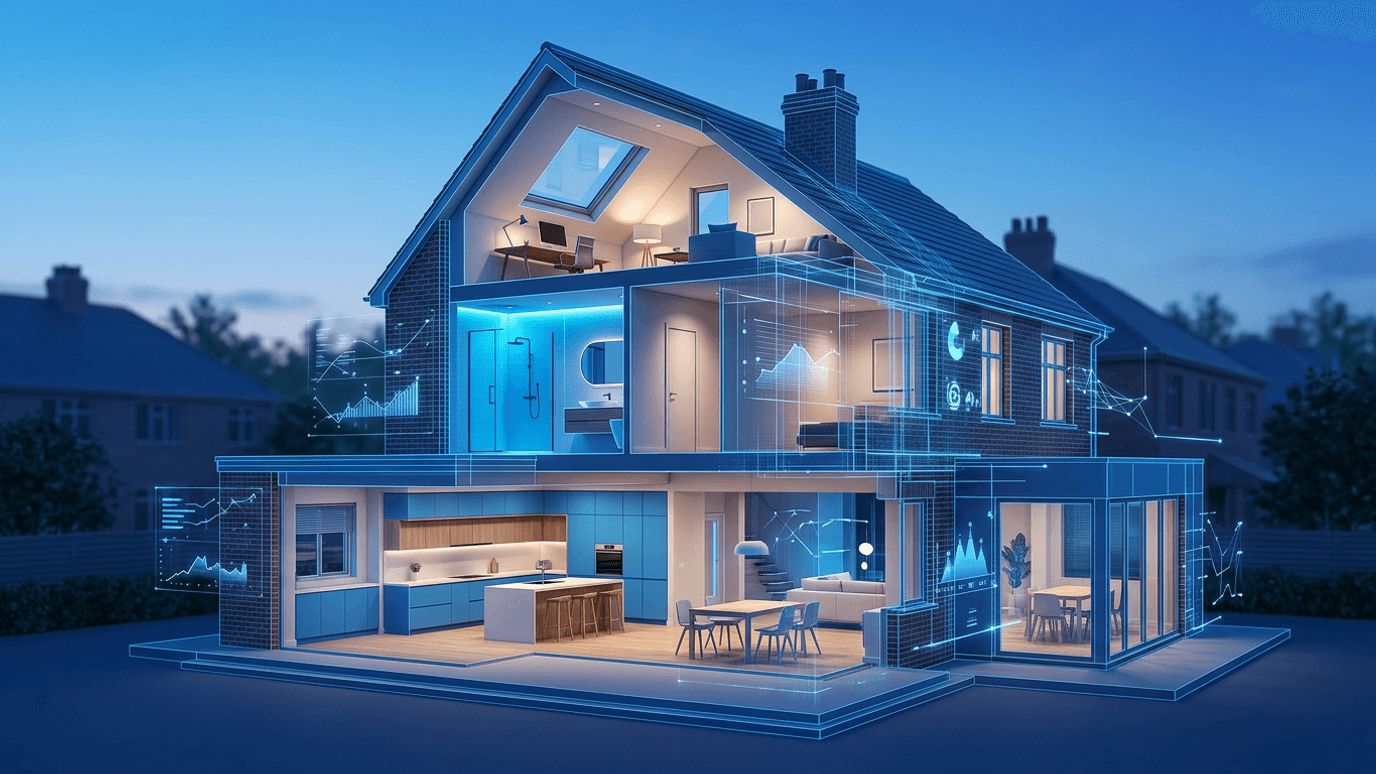
Home Security as a Layered System
Effective home security is rarely about a single product. It works as a series of layers, each designed to deter, delay, detect or record. Good lighting and visible signage deter opportunists. Quality locks and reinforced doors delay forced entry. Alarm sensors and cameras detect activity. Monitoring and recording ensure a response and provide evidence.
Households in Lancaster face a varied risk profile. Terraced streets with rear alleyways present different vulnerabilities from detached rural properties with outbuildings and long approach drives. Student areas experience seasonal patterns around term breaks when properties stand empty. A competent security company assesses the specific property rather than selling a standard package.
Intruder Alarm Systems
Alarms remain the foundation of most domestic security. Systems fall broadly into three categories.
Bells-only systems sound a siren locally. They deter and alert neighbours but rely on someone responding, which cannot be assumed.
Self-monitored systems send notifications to the owner's phone, allowing them to view cameras and decide on action. These have become popular due to low running costs and improved smartphone applications.
Professionally monitored systems connect to an alarm receiving centre that verifies activations and escalates to keyholders or, where the system meets police response criteria, to the police. Monitoring carries an ongoing fee but provides response even when the owner is unreachable.
Sensor types include passive infrared detectors, door and window contacts, glass break detectors, vibration sensors and external beam detectors for perimeters. Pet-tolerant sensors avoid the false alarms that cause many households to stop setting their systems altogether.
CCTV and Video Surveillance
Camera technology has improved dramatically while costs have fallen. Current systems offer high-resolution recording, infrared or low-light colour imaging, motion zones that ignore passing traffic, two-way audio and cloud or local storage.
Placement determines usefulness far more than specification. Cameras positioned to capture faces at entry points at head height produce identifiable images; cameras mounted high on a gable capture the tops of heads and little else. Coverage should include all access points, including rear and side entries, which are the most common points of forced entry.
Domestic CCTV that captures areas beyond the property boundary brings data protection responsibilities. Owners should minimise coverage of neighbouring property and public footpaths where practical, display appropriate signage and handle recorded footage responsibly. Professional installers advise on this as a matter of routine.
Smart Locks, Doors and Physical Security
Physical security is often overlooked in favour of electronics, yet most burglaries involve forced entry through a door or window. Upgrading to high-security cylinder locks resistant to snapping, bumping and drilling is one of the most cost-effective improvements available, particularly on the composite and uPVC doors common across the district.
Window locks, laminated glazing, security hinges, letterbox guards and reinforced door frames add further delay. For outbuildings, garages and sheds, which frequently contain valuable tools and bicycles, robust hasps, ground anchors and alarmed padlocks are worthwhile.
Smart locks add convenience through keyless entry, temporary access codes for visitors or tradespeople, and activity logs. Quality matters greatly here; a smart lock should meet recognised physical security standards as well as offering digital features.
Standards, Insurance and Compliance
Insurance implications make certification important. Many insurers require alarm systems installed and maintained to recognised European standards by companies accredited through a national inspectorate body. Police response to alarm activations is only available for systems meeting specified criteria and installed by accredited companies.
Lock standards matter equally. Insurers frequently specify particular standards for final exit doors and window locks, and a policy may be affected if these are not met. Homeowners should check their policy wording and inform their insurer about security upgrades, which sometimes reduces premiums.
Accredited installers also follow correct procedures around alarm registration with police where applicable, false alarm management and system maintenance.
Smart Home Integration
Security increasingly forms part of a wider connected home. Integration allows lighting to simulate occupancy, cameras to trigger recording when a door sensor activates, notifications to route to multiple household members, and remote arming when someone forgets on leaving.
Reliability depends on infrastructure. Wireless devices competing for a weak broadband connection produce frustration. The best installers assess network coverage, recommend wired connections for critical devices, and configure systems with fallback communication paths so a cut broadband line does not disable monitoring.
Cyber security deserves consideration too. Internet-connected cameras and locks should use strong unique passwords, two-factor authentication and firmware kept up to date.
Rural and Seasonal Considerations
Properties in the countryside around Lancaster face particular challenges: longer response times, isolated outbuildings, agricultural equipment theft and limited natural surveillance. Solutions include perimeter beam detection, driveway alerts, cameras with cellular connectivity where broadband is poor, solar-powered units for remote structures and property marking of valuable equipment.
In the city, seasonal patterns matter. Properties left empty during university breaks or extended holidays benefit from timer-controlled lighting, mail collection arrangements and trusted keyholders who check periodically. Visible emptiness is among the strongest attractants for opportunist crime.
Choosing a Home Security Company
Prioritise accredited installers with verifiable inspectorate membership. Ask for a site survey rather than a phone quotation, since a company that cannot see the property cannot design for it.
Compare what is included: equipment, installation, configuration, training, warranty, maintenance visits and monitoring fees. Long inflexible monitoring contracts with steep early termination charges deserve careful scrutiny.
Ask about maintenance. Alarm systems require periodic servicing, battery replacement and testing to remain reliable and, in many cases, to satisfy insurance conditions.
Finally, be wary of pressure selling and of packages that emphasise gadgets over fundamentals. A property with excellent cameras and weak door locks is not well protected.
Final Thoughts
The best home security companies in Lancaster begin with an honest risk assessment and build layered protection appropriate to the property, whether that is a city terrace, a suburban family home or an isolated rural house. They install to recognised standards, integrate physical and electronic measures, respect privacy and data obligations, and maintain systems so they still work years later. Security done properly delivers something beyond protection of possessions: the confidence to leave home without worrying about it.
Want your brand featured in front of decision-makers? Publish a guest post or get a link insertion in our guides through AAMAX's guest post and link insertion service.
Helpful Links
 SponsoredAAMAX — Full-Service Digital Agency
Write for Us
Share your expertise with our readers. We welcome guest contributions from industry specialists.
Pitch your idea