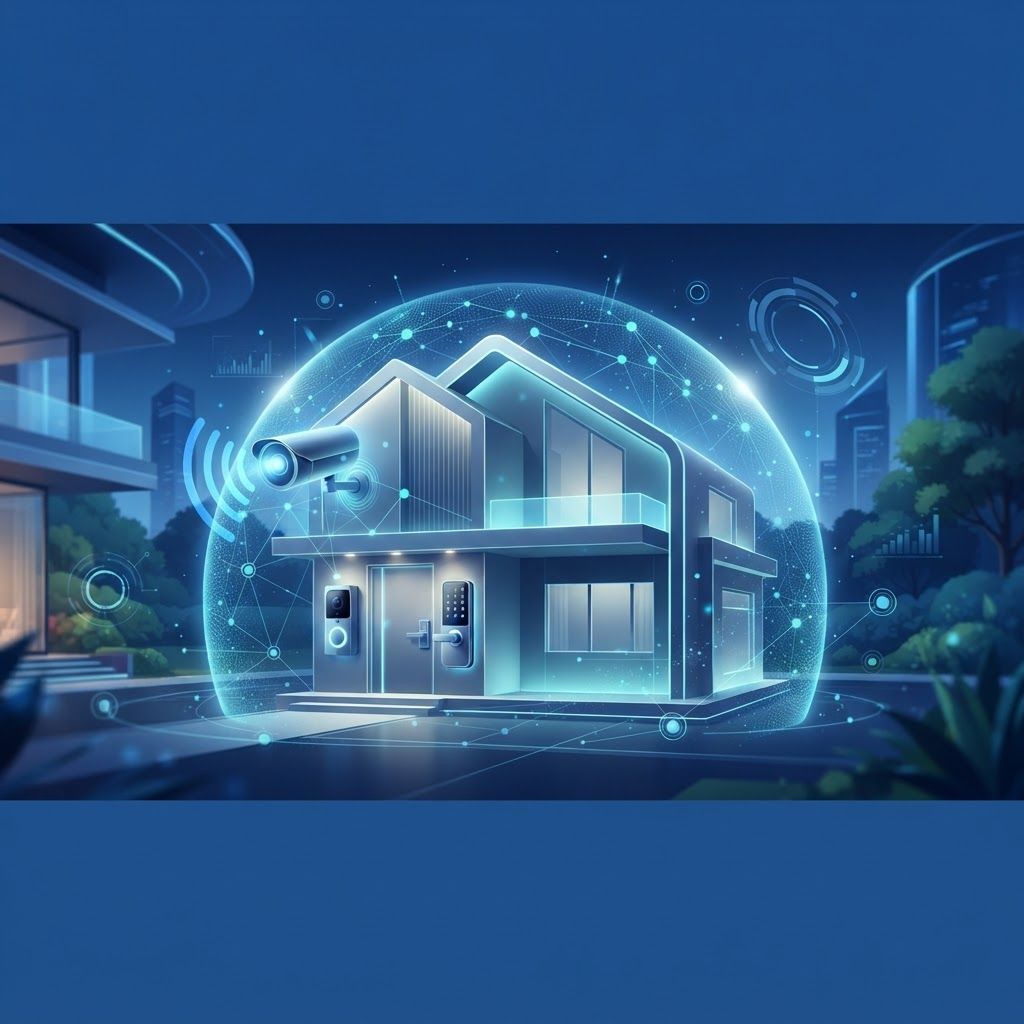
Home Security Has Changed Fundamentally
A home security system once meant a keypad by the door, contacts on a few windows and a siren. Today it is an integrated platform combining intrusion detection, video surveillance, access control, environmental monitoring and remote management through a single application. That evolution has made systems more useful day to day, not merely during a break-in.
Environmental monitoring is a good example. Smoke, carbon monoxide, water leak and low-temperature sensors integrated into a security system can alert a homeowner and a monitoring center to a burst pipe or a failed furnace while the family is away. In a climate where a winter heating failure can cause catastrophic freeze damage, that capability often delivers more practical value than intrusion detection alone.
Video has changed too. Modern cameras offer high resolution, infrared night vision, two-way audio and intelligent analytics that distinguish people and vehicles from animals and shadows, dramatically reducing the false alerts that caused earlier generations of users to disable notifications entirely.
Professional Monitoring Versus Self-Monitoring
The central decision most households face is whether to pay for professional monitoring. Self-monitored systems send alerts directly to a phone, with no recurring monitoring fee. They work well for households that are consistently attentive and comfortable calling authorities themselves, though they fail when the phone is silenced, out of coverage or simply unnoticed.
Professionally monitored systems route alarms to a staffed center that verifies the event and dispatches emergency services. This matters during sleep, travel and situations where the homeowner cannot respond. Many jurisdictions require alarm permits and impose fines for repeated false dispatches, so monitoring centers that use verification procedures reduce both nuisance and cost.
Connectivity deserves attention as well. Systems relying solely on home internet fail during outages, so cellular backup communication and battery backup for the control panel are essential features rather than upgrades. Any provider who omits them is offering incomplete protection.
Top 10 Best Home Security Companies in Braintree
1. Granite Guard Security Systems is a leading full-service provider offering professionally designed and installed systems with monitored intrusion, video, environmental sensors and smart home integration.
2. South Shore Alarm Company is a long-established local firm known for personal service, technicians who explain systems thoroughly and monitoring plans without long lock-in commitments.
3. Braintree Video Surveillance Services specializes in camera systems, including exterior coverage design, local and cloud recording options, and analytics tuned to reduce false alerts from passing traffic and wildlife.
4. Cornerstone Smart Home Security integrates security with lighting, locks, thermostats, garage doors and video doorbells so that a single application manages both convenience and protection.
5. Bluestone Commercial Security serves small businesses and multifamily properties with access control, credential management, monitored alarms and camera systems suited to shared entries.
6. Summit Fire and Life Safety concentrates on monitored smoke and carbon monoxide detection integrated with security, including interconnected detectors and heat sensors for garages and attics.
7. Harbor Point Security Consultants provides independent assessment, evaluating a property's vulnerabilities and recommending equipment without being tied to a single manufacturer or monitoring contract.
8. Atlas Access and Entry Systems focuses on smart locks, keypad entry, video intercoms and gate control, valuable for households managing service providers, deliveries and guests remotely.
9. Maple Court Home Security offers straightforward wireless systems with quick installation and flexible monitoring, popular with renters and homeowners who prefer minimal wiring.
10. Clearview Protection Services completes the list with strong local service response, prompt equipment repair and clear contract terms that clients consistently describe as free of hidden fees.
Designing Effective Coverage
Good system design starts with entry points. All exterior doors should have contacts, and ground-floor windows, particularly those hidden from street view by fencing or landscaping, deserve protection. Interior motion detection covers the paths an intruder would travel between rooms, providing a second layer if a perimeter sensor is defeated.
Camera placement follows a similar logic. Coverage of the front entry, driveway, rear door and any concealed approach captures the majority of relevant activity. Mounting height matters: too high produces useful overview but poor facial detail, while too low invites tampering. Lighting integration improves image quality significantly at night.
Environmental sensors belong in specific places: water sensors near water heaters, washing machines, dishwashers and sump pits; low-temperature sensors in basements and vulnerable rooms; carbon monoxide detection near sleeping areas and fuel-burning appliances.
Physical security should not be overlooked amid the electronics. Solid core exterior doors, reinforced strike plates with long screws, quality deadbolts, secured sliding door tracks and well-lit approaches deter intrusion before any sensor is triggered.
Evaluating Providers and Contracts
Read the agreement carefully. Long monitoring contracts with automatic renewal, steep early termination fees and equipment leases that leave nothing owned at the end are common industry practices. Understand whether equipment is purchased or leased, whether it will function if you change providers, and what the monitoring rate becomes after any promotional period.
Ask about installation quality. Professional installation ensures correct sensor placement, proper camera aiming, tested communication paths and verified battery backup. Ask about response procedures, including how the monitoring center verifies alarms and what contact sequence they follow.
Confirm local licensing requirements for alarm installation and check whether the municipality requires an alarm permit. Finally, ask about service response times for equipment failures, since a system that is not functioning provides no protection at all.
Final Thoughts
Home security today is about awareness as much as deterrence. A well-designed system tells you when a door opens, when water appears where it should not and when temperatures fall dangerously, whether you are upstairs or across the country. The companies above serve Braintree with strengths spanning full-service monitoring, video specialization, smart integration and independent consultation. Assess your property honestly, choose coverage that matches actual vulnerabilities, read the contract closely, and select the provider whose service reputation holds up long after installation day.
Want your brand featured in front of decision-makers? Publish a guest post or get a link insertion in our guides through AAMAX's guest post and link insertion service.
Helpful Links
 SponsoredAAMAX — Full-Service Digital Agency
Write for Us
Share your expertise with our readers. We welcome guest contributions from industry specialists.
Pitch your idea