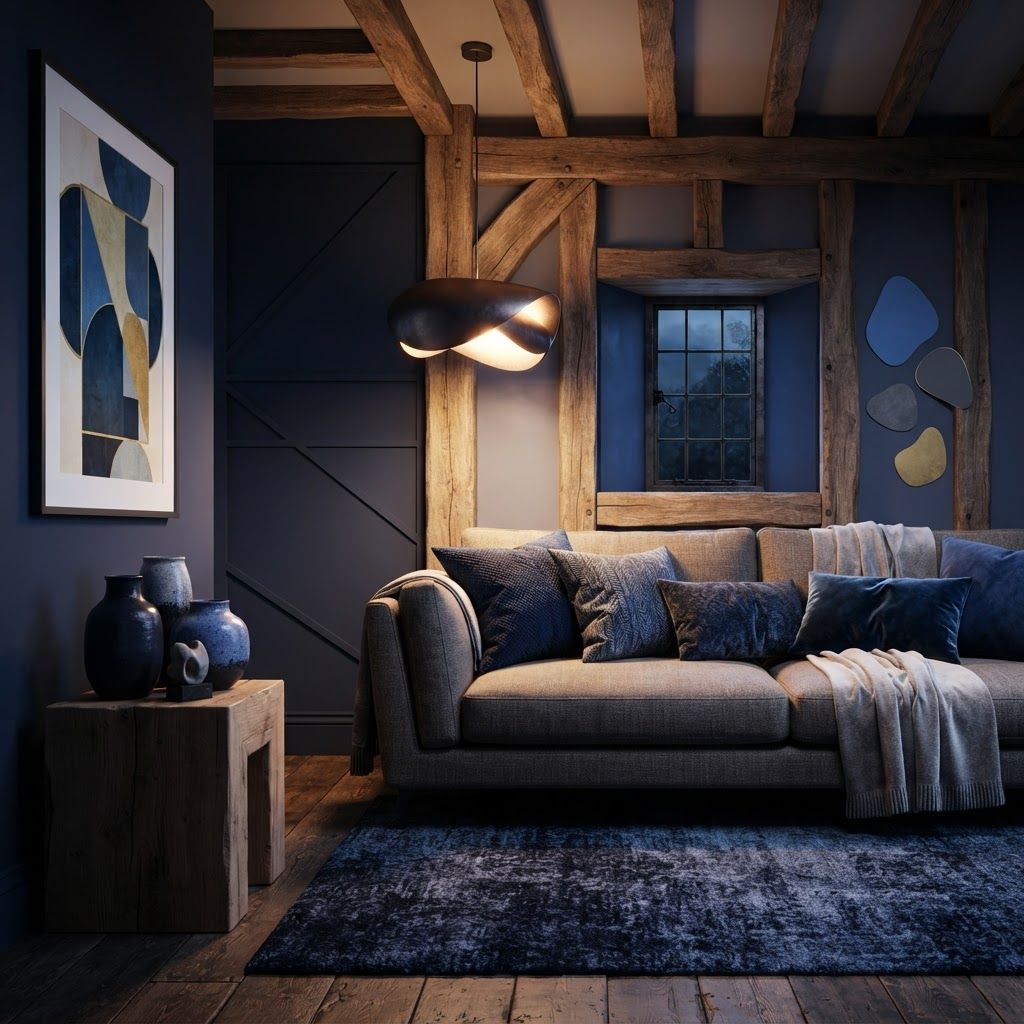
Decorating for Oxfordshire Architecture
Home decor in the Vale of White Horse is dictated to a surprising degree by the buildings themselves. Much of the district's older housing is built from local limestone, brick and timber, with small windows, low ceilings and irregular room shapes. These interiors handle light differently from modern homes: rooms can be dim at the rear, deeply shaded by thick walls, and warm-toned because of exposed stone and oak. Cool grey palettes that photograph well in new apartments often look flat and cold in a Faringdon cottage.
Conversely, the newer housing around Grove, Wantage and Didcot offers large glazed areas, open-plan living and consistent right angles, which suits contemporary furniture and allows bolder colour blocking. The design challenge there is warmth and character rather than light management, and it is usually solved with texture: wool, linen, timber, ceramics and layered lighting.
Barn and outbuilding conversions, common across the Vale, sit between the two. They combine period structure with modern volume, and typically reward a restrained architectural palette with a small number of substantial statement pieces rather than many small decorative objects.
How to Choose Decor Sources Wisely
Judge furniture on construction rather than appearance. For upholstery, look for kiln-dried hardwood frames, serpentine or webbed suspension and removable, washable covers. For case goods, solid timber or high-quality veneer over engineered board outperforms low-density particleboard, particularly in older properties where humidity fluctuates.
Measure carefully and account for access. Narrow village staircases and low door heads mean large sofas frequently cannot be delivered intact, so modular designs or those with removable legs and arms are practical necessities rather than luxuries. Always confirm delivery access before ordering.
Consider provenance and repairability. Brands offering replacement covers, spare parts and reupholstery extend the useful life of furniture significantly. For textiles, natural fibres suit period interiors and perform well against the district's temperature swings, while performance fabrics make sense in family homes and where pets are present.
Ten Notable Home Decor Brands and Retailers Serving the District
1. White Horse Interiors operates as a design-led furnishing studio covering Wantage and Grove, offering curated furniture, made-to-measure curtains and full room schemes with in-home consultation.
2. Abingdon Home and Living stocks contemporary furniture, lighting and accessories with a focus on compact pieces suited to townhouse and riverside apartment living.
3. Ock Valley Furniture Workshop is a maker rather than a reseller, producing bespoke oak and ash tables, benches, cabinets and shelving sized precisely to irregular period rooms.
4. Faringdon Country Interiors specialises in classic English country style: linen upholstery, painted furniture, ticking stripes and traditional florals appropriate to stone cottages and farmhouses.
5. Ridgeway Ceramics and Homeware focuses on handmade tableware, stoneware vases and glazed decorative pieces, drawing on the muted greens, chalk whites and earth tones of the downland landscape.
6. Grove Modern Living serves newer housing with contemporary modular sofas, storage systems and Scandinavian-influenced pieces, emphasising practicality for family households.
7. Vale Textile House supplies fabrics, curtains, blinds, cushions and upholstery services, including heavier interlined curtains that meaningfully improve thermal comfort in older Vale properties.
8. Thames Valley Lighting Design concentrates on layered lighting: pendants, wall lights, picture lighting and dimming controls, an underrated element in homes with small windows and deep rooms.
9. Harwell Contemporary Art and Prints offers original works and limited prints by regional artists, frequently featuring downland, river and rural themes that anchor a scheme in its setting.
10. Downland Reclaimed and Vintage deals in restored antique and mid-century furniture, architectural salvage and reclaimed timber pieces, valued for character and for sustainability credentials.
Interior Design Trends Relevant to the Vale
The clearest trend is a move away from uniform grey towards warmer, earth-derived palettes: clay, ochre, olive, mushroom and soft terracotta. These tones read far better against limestone, brick and oak than cool neutrals, which is why the shift has been particularly welcome in Oxfordshire's period housing stock.
Longevity is the second theme. Buyers are increasingly favouring fewer, better pieces with repairable construction over frequent low-cost replacement, supported by a strong secondary market in vintage and restored furniture. This aligns naturally with the district's active salvage and antiques trade.
Third, the home office has become a permanent design category rather than an improvised corner. With a substantial proportion of Vale residents working partly from home, demand has grown for integrated joinery, acoustic treatment, proper task lighting and cable management that does not look industrial in a domestic room.
Finally, biophilic detail continues to spread: indoor planting, natural stone surfaces, rattan and unpainted timber, all of which suit a district defined by open downland and river meadow.
Practical Advice for Building a Scheme
Test paint colours on the actual wall, in the actual room, at several times of day. Thick-walled Vale properties can shift a colour dramatically between morning and evening. Choose flooring for movement tolerance; solid boards over underfloor heating or on damp-prone ground floors need careful specification and acclimatisation.
Layer lighting in three tiers: ambient, task and accent, all on dimmers where possible. Use rugs to define zones in open-plan spaces and to soften acoustics in rooms with hard floors. Invest first in the items used daily, typically the sofa, bed and dining table, and add decorative layers gradually.
Conclusion
The strongest interiors in the Vale of White Horse respond to their buildings rather than to generic trends. Warm palettes, natural materials, carefully layered lighting and well-made furniture suited to the room's dimensions consistently outperform fashionable schemes imported wholesale. Buy from makers and retailers who understand these constraints, and the result is a home that feels settled in its Oxfordshire setting.
Want your brand featured in front of decision-makers? Publish a guest post or get a link insertion in our guides through AAMAX's guest post and link insertion service.
Helpful Links
 SponsoredAAMAX — Full-Service Digital Agency
Write for Us
Share your expertise with our readers. We welcome guest contributions from industry specialists.
Pitch your idea