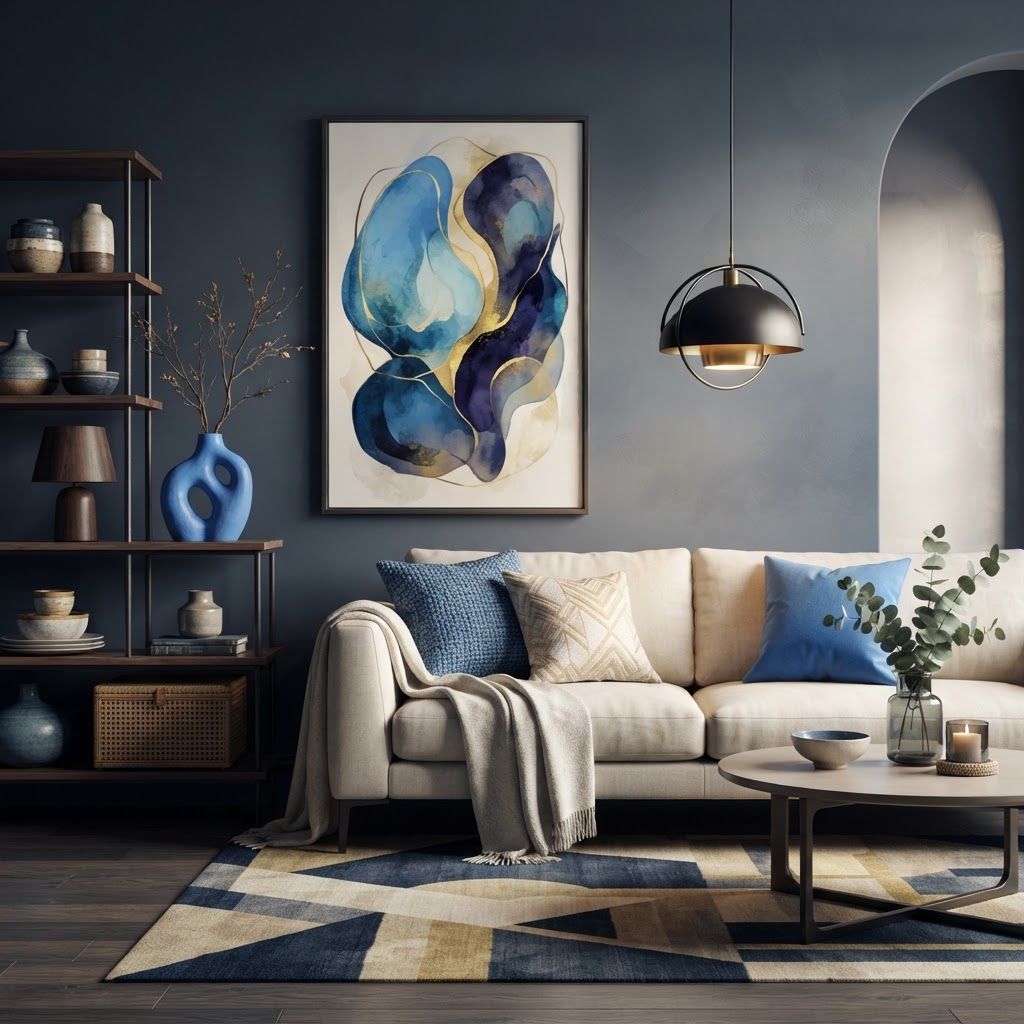
Camden as a Design Destination
Camden has a longer association with design and making than its reputation for music and markets suggests. The borough hosts furniture studios, ceramics workshops, textile designers, lighting makers and vintage dealers, concentrated around Camden Town, Kentish Town, King's Cross and the Bloomsbury fringe. The redevelopment of the King's Cross area in particular brought design-focused retail and studio space, while long-established market traders continue to supply reclaimed and antique pieces that mass retail cannot match.
This mix matters practically. Camden's housing stock is dominated by period interiors with high ceilings, original mouldings, chimney breasts and irregular room proportions, alongside a growing number of contemporary apartments with open-plan layouts and large glazing. Neither responds well to a wholesale flat-pack scheme. The borough's independent brands and makers offer pieces scaled and finished for exactly these spaces, which is why local sourcing produces better results than catalogue buying.
Ten Notable Home Decor Brands and Studios in Camden
Camden Interiors Studio combines a curated furniture and accessories range with an in-house design service. Their strength lies in specifying for period rooms, balancing contemporary upholstery against original architectural detail, and sourcing pieces at the scale high-ceilinged reception rooms require.
Kentish Town Ceramics is a workshop-based studio producing hand-thrown tableware, planters and decorative vessels in small batches. The appeal is genuine individuality, with glazes developed in-house and pieces that read as objects rather than products, ideal for adding texture to neutral interiors.
Bloomsbury Textile House designs and supplies fabrics, cushions, throws and curtains with an emphasis on natural fibres and archive-inspired patterns. Their made-to-measure curtain and blind service suits the tall, non-standard windows found throughout Camden's Georgian and Victorian housing.
Regent's Park Lighting Design specialises in decorative lighting, from pendants and wall lights to bespoke commissions. The studio focuses on layered schemes, offering pieces suitable for period-appropriate ceiling roses alongside contemporary fittings for open-plan apartments.
Camden Market Vintage Collective represents a group of dealers trading in mid-century furniture, industrial salvage, lighting and decorative antiques. Buying here demands patience and an eye, but it delivers character and provenance at prices that reproduction furniture rarely justifies.
Primrose Hill Home & Living operates as a premium homeware retailer with a tightly edited selection of furniture, tableware, glassware and soft furnishings. Their buying leans toward European design and natural materials, with an emphasis on longevity rather than seasonal turnover.
King's Cross Design Works is a contemporary furniture studio producing pieces in timber, steel and stone, including made-to-measure shelving, tables and storage. Bespoke capability is particularly useful in Camden flats where alcoves, chimney breasts and sloping ceilings defeat standard dimensions.
Swiss Cottage Rug Gallery deals in hand-knotted and flatweave rugs, including antique and contemporary pieces. Beyond retail, they offer cleaning, repair and restoration, and advise on sizing, which is the most common mistake in furnishing large period rooms.
Holborn Art & Frame supplies original prints, photography and artwork alongside a bespoke framing service. Their conservation framing options suit collectors, while the studio's advice on hanging arrangements helps clients treat walls as composed surfaces rather than afterthoughts.
Somers Town Makers Market functions as a platform for local craftspeople producing woodwork, ceramics, candles, glassware and small furniture. It offers accessible entry points for buyers who want handmade objects without commissioning bespoke work.
Designing for Camden Interiors
Period rooms reward respect for proportion. High ceilings can absorb tall bookcases, generous mirrors and substantial pendant lighting, whereas low, wide furniture often looks lost. Conversely, in converted flats where rooms have been subdivided, original mouldings may sit awkwardly, and simpler, lower-profile pieces work better. Measuring and drawing a layout before buying prevents expensive mistakes, particularly with sofas and dining tables.
Light is the second constraint. Many Camden rooms are north-facing or overshadowed by neighbouring buildings, producing cool, low natural light. Warm-toned timbers, textured textiles and layered artificial lighting compensate effectively, while very cool greys and high-gloss finishes can make such rooms feel colder. Testing paint and fabric samples in situ across the day is worth the delay.
Storage deserves early attention. Camden properties are typically short on built-in storage, and bespoke joinery in alcoves and around chimney breasts adds capacity without consuming floor area. Commissioning locally allows accurate templating against walls that are rarely square.
Trends Shaping Home Decor
Sustainability now influences purchasing decisions substantially. Demand has shifted toward solid timber over veneered chipboard, natural fibres over synthetics, reupholstery of good frames rather than replacement, and vintage over new. Camden is unusually well served for this, with an established second-hand and salvage market and makers who repair what they sell.
Personalisation is the second clear trend. Interiors composed entirely of recognisable retail products have fallen out of favour in favour of schemes mixing handmade ceramics, vintage finds, inherited pieces and one or two contemporary anchors. This approach also spreads cost over time rather than requiring a single large outlay.
Texture and craft have displaced high-gloss minimalism. Plaster finishes, unlacquered brass that patinates, linen, bouclé, rattan and unfinished timber all age visibly, and that visible ageing is now valued rather than avoided. In period Camden interiors, these materials sit far more comfortably against original fabric than uniform machine-made surfaces.
How to Buy Well
Prioritise the pieces you touch daily. A well-made sofa, a proper dining table and a good mattress justify investment, while decorative accessories can be acquired gradually. Buy lighting before painting, since fitting position affects colour perception, and buy rugs generously sized, as undersized rugs visually shrink a room.
When commissioning bespoke work, expect a lead time of several weeks and a deposit, and ask for drawings and material samples before production. For vintage purchases, inspect frames, joints and upholstery honestly, and factor restoration into the price. Local makers and dealers generally welcome these questions, and their willingness to answer them is a fair indicator of quality.
Final Thoughts
Camden's decor scene rewards buyers willing to look beyond national retail. The brands and studios above have built reputations on craftsmanship, curation and an understanding of how London's period interiors actually work. Assembling a room from well-chosen local pieces takes longer than ordering a matching set, but the result is a home with character that continues to feel considered years later.
Want your brand featured in front of decision-makers? Publish a guest post or get a link insertion in our guides through AAMAX's guest post and link insertion service.
Helpful Links
 SponsoredAAMAX — Full-Service Digital Agency
Write for Us
Share your expertise with our readers. We welcome guest contributions from industry specialists.
Pitch your idea