
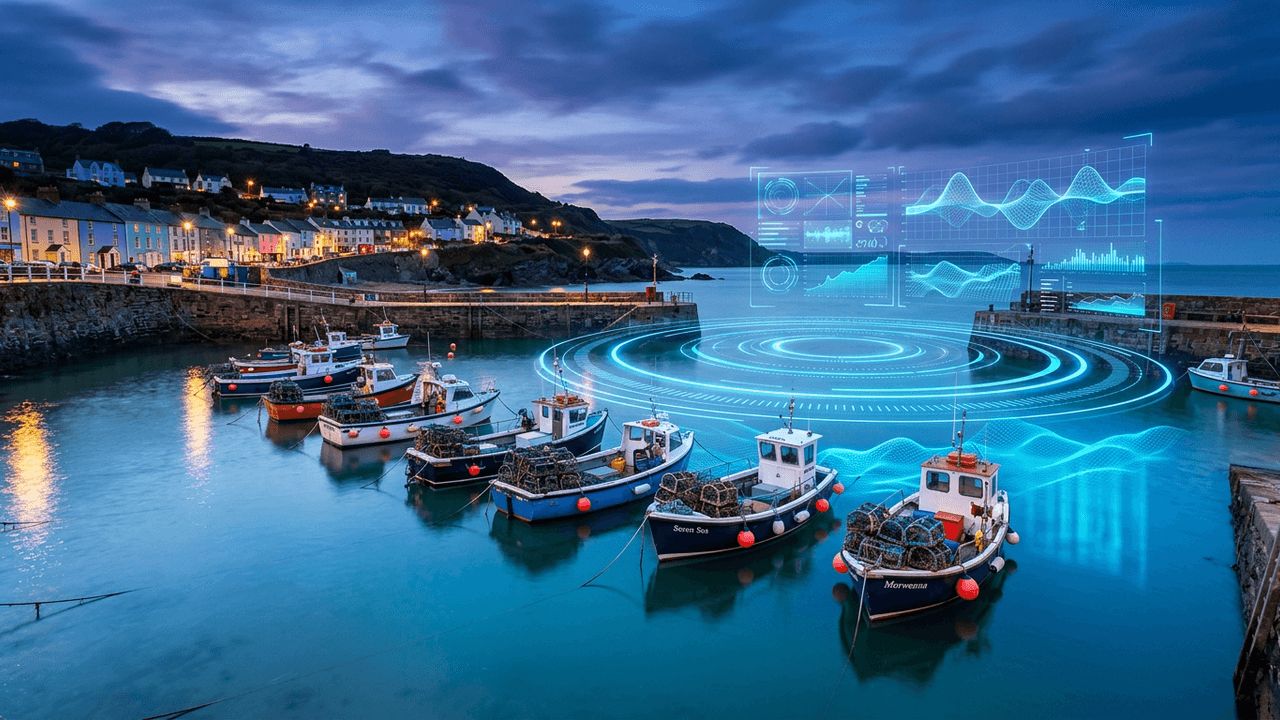
The Fishing Heritage of Cardigan Bay
Ceredigion's coastline stretches for around sixty miles along Cardigan Bay, one of the most important marine environments in the United Kingdom. Harbours at Aberystwyth, Aberaeron, New Quay and Cardigan have supported fishing communities for centuries. Herring once dominated the catch, but today the inshore fleet focuses primarily on high-value shellfish such as lobster, brown crab, spider crab, whelks and scallops, much of which is exported to continental Europe.
The bay is also designated as a Special Area of Conservation, notable for its bottlenose dolphins, grey seals and harbour porpoises. This makes sustainable practice central to the local fishing industry. The businesses and organisations listed below represent the most significant players in Ceredigion's fishing and seafood sector, selected for their contribution to quality, sustainability and the coastal economy.
1. Ceredigion Inshore Fishing Fleet
The backbone of the local industry is the inshore fleet of small, family-owned vessels operating from the county's harbours. Using pots and creels rather than heavy trawl gear, these boats target lobster and crab with relatively low environmental impact. Many skippers come from families that have fished these waters for generations.
2. Welsh Fishermen's Association
The Welsh Fishermen's Association represents fishermen across Wales, including Cardigan Bay. It works with government on fisheries management, quota issues and marine planning, ensuring that the voices of small-scale inshore fishers are heard in policy decisions.
3. Cardigan Bay Seafood Merchants and Fishmongers
A network of independent fishmongers and seafood merchants buys directly from boats landing in Ceredigion harbours, connecting the catch from the bay with restaurants, hotels and home cooks. These businesses shorten supply chains, guarantee freshness and ensure more of the value of Cardigan Bay seafood stays within Wales rather than being lost to distant processors.
4. Aberystwyth Harbour Fishing Community
Aberystwyth's harbour remains an active base for shellfish vessels. The town's fishing community supports local fishmongers and restaurants, and the harbour is increasingly a focus for seafood-related events that celebrate the catch and educate visitors.
5. New Quay Fishing Operations
New Quay is one of the most picturesque harbours in Wales and continues to support working fishing boats. Alongside traditional potting, the harbour is known for seafood outlets selling fresh crab and lobster, which attract visitors throughout the summer.
6. Aberaeron Seafood Businesses
Aberaeron's colourful harbour is home to restaurants and outlets that specialise in local seafood. The town's annual seafood festival showcases Cardigan Bay produce, connecting fishermen, chefs and consumers and highlighting the economic value of sustainable fishing.
7. Cardigan Bay Marine Wildlife Centre
Run by a conservation charity in New Quay, the marine wildlife centre monitors dolphins and other species in the bay. While not a commercial fishery, its research informs responsible marine management and helps ensure fishing and tourism coexist sustainably.
8. Teifi Estuary Coracle and Seine Fishing Tradition
The River Teifi near Cardigan is one of the few places in Britain where coracle fishing for sea trout and salmon has survived. Licensed netsmen preserve a craft that dates back centuries, adding cultural depth to the county's fishing story.
9. Natural Resources Wales Fisheries Management
Natural Resources Wales regulates inland and migratory fisheries, monitors fish stocks and works to protect river habitats. Its role is crucial for the health of salmon and sea trout populations in the Teifi, Rheidol and Ystwyth rivers.
10. Welsh Government Marine and Fisheries Division
The Welsh Government manages sea fisheries within Welsh waters, issuing licences, setting conservation measures and supporting the industry through funding programmes. Its decisions on scallop dredging zones, shellfish management and harbour investment shape the future of the Cardigan Bay fleet.
Key Trends in the Fishing Industry
Ceredigion's fishing sector faces both challenges and opportunities. Export markets for shellfish have become more complex, encouraging fishermen to develop domestic markets and sell directly to consumers. The growth of local seafood shops, online seafood boxes and harbourside outlets reflects this shift.
Sustainability is increasingly important to consumers. Potting for lobster and crab is regarded as one of the more selective fishing methods, and initiatives such as minimum landing sizes, v-notching of egg-bearing lobsters and seasonal closures help maintain healthy stocks. Data collection, including electronic monitoring and catch reporting, is also improving management.
Tourism provides additional income through boat trips, angling charters and seafood experiences. Food festivals and seafood-focused restaurants have helped raise the profile of Cardigan Bay produce, and there is growing interest in seaweed harvesting and shellfish aquaculture as future opportunities.
Choosing Sustainable Cardigan Bay Seafood
For consumers and restaurants, the best way to support the local fishing industry is to buy seafood landed in Ceredigion harbours. Ask fishmongers where and how their seafood was caught, choose seasonal species and consider less familiar options such as spider crab, which is plentiful but often exported. Supporting harbourside outlets also helps keep working harbours viable for future generations.
Conclusion
The fishing industry in Ceredigion is small in scale but rich in quality and heritage. From the inshore fleet working out of New Quay and Aberystwyth to the coracle netsmen of the Teifi, the county's fishing communities remain an essential part of its identity. With careful management and growing local demand, Cardigan Bay seafood has a bright and sustainable future.
Want your brand featured in front of decision-makers? Publish a guest post or get a link insertion in our guides through AAMAX's guest post and link insertion service.
Helpful Links
 SponsoredAAMAX — Full-Service Digital Agency
Write for Us
Share your expertise with our readers. We welcome guest contributions from industry specialists.
Pitch your idea