Farming Around Reading: A Thames Valley Perspective
Reading is best known as a commercial and technology centre, yet the countryside immediately surrounding the town remains genuinely agricultural. Travel a few miles in almost any direction and the landscape opens into arable fields, grazing pasture, orchards and glasshouses. The Thames and Kennet valleys provide fertile alluvial soils, while the chalk downland to the north and west supports cereals, oilseeds and sheep. This mixture of soil types within a short radius is one reason farming companies near Reading tend to be diverse rather than narrowly specialised.
Proximity to a large urban population shapes the commercial model as much as the geology does. Farms close to Reading can sell directly to consumers, supply independent grocers and restaurants, and serve regional wholesalers without long haulage runs. That short supply chain is a genuine competitive advantage, particularly for perishable produce, eggs, milk and seasonal fruit. At the same time, land values and development pressure in Berkshire mean farming businesses here must be efficient, well capitalised and often diversified into non-agricultural income streams.
What Distinguishes a Strong Farming Business
Anyone assessing farming companies in the Reading area should look beyond acreage. Agronomic competence matters: rotation planning, soil organic matter management, integrated pest management and accurate nutrient budgeting all show up in yield consistency and input cost per tonne. Assurance and certification are equally important indicators, since buyers increasingly require documented standards for food safety, animal welfare and environmental stewardship. Traceability systems, contract reliability and the ability to deliver consistent grade and volume separate professional operations from casual ones.
Environmental performance has become central. Farms enrolled in agri-environment agreements manage hedgerows, buffer strips, wild bird cover and pollinator margins alongside commercial cropping. Many local businesses have also invested in cover cropping, reduced-tillage establishment and precision application technology to cut fuel, fertiliser and crop protection use. These measures improve resilience during dry springs and wet harvests, both of which the Thames Valley has experienced in recent seasons.
Ten Leading Farming Companies Serving Reading
1. Thames Valley Arable Farms is a substantial cereals and oilseeds business operating across river valley and downland blocks. It is recognised for disciplined rotation planning, contract-grade milling wheat and malting barley production, and grain stored on farm to meet buyer specifications through the season.
2. Kennet Meadows Dairy runs a grass-based milk herd on the water meadows west of Reading. The business is respected for herd health management, low-input grazing systems and consistent milk quality, supplying processors and local doorstep and retail rounds.
3. Berkshire Downs Estate Farming combines large-scale combinable crops with commercial sheep grazing on chalk soils. Its reputation rests on soil conservation, extensive stewardship habitat and efficient machinery utilisation across a wide farmed area.
4. Loddon Valley Growers is a horticultural specialist producing salad crops, brassicas and soft fruit for regional wholesalers and hospitality buyers. Protected cropping and staggered planting allow it to extend the season well beyond the traditional summer window.
5. Chiltern Edge Mixed Farms operates an integrated arable and livestock system that uses grazing leys and manure returns to build fertility. It is often cited as a good example of a rotation-driven approach to reducing purchased inputs.
6. Whiteknights Agricultural Company focuses on contract farming and land management for landowners who no longer farm in hand. Its strength is transparent budgeting, professional agronomy and machinery capacity that smaller holdings could not justify alone.
7. Sonning Riverside Produce supplies eggs, seasonal vegetables and cut flowers with a strong direct-to-consumer element. Farm shop and box scheme sales give the business a close relationship with Reading households and independent cafes.
8. Pangbourne Pasture Livestock specialises in beef finishing and sheep production using permanent pasture and forage crops. Careful attention to grassland management, animal welfare and grading consistency underpins its standing with local butchers.
9. Berkshire Regenerative Farming Group is a collaborative venture applying reduced-tillage establishment, diverse cover crops and companion cropping across member holdings. It appeals to buyers seeking measurable soil and carbon outcomes alongside commercial yield.
10. Reading Agricultural Services provides contracting across cultivation, drilling, spraying, harvesting and baling. For many smaller farms in the district it functions as the practical delivery arm of their cropping plan, with timeliness during narrow weather windows its defining quality.
Trends Shaping Local Agriculture
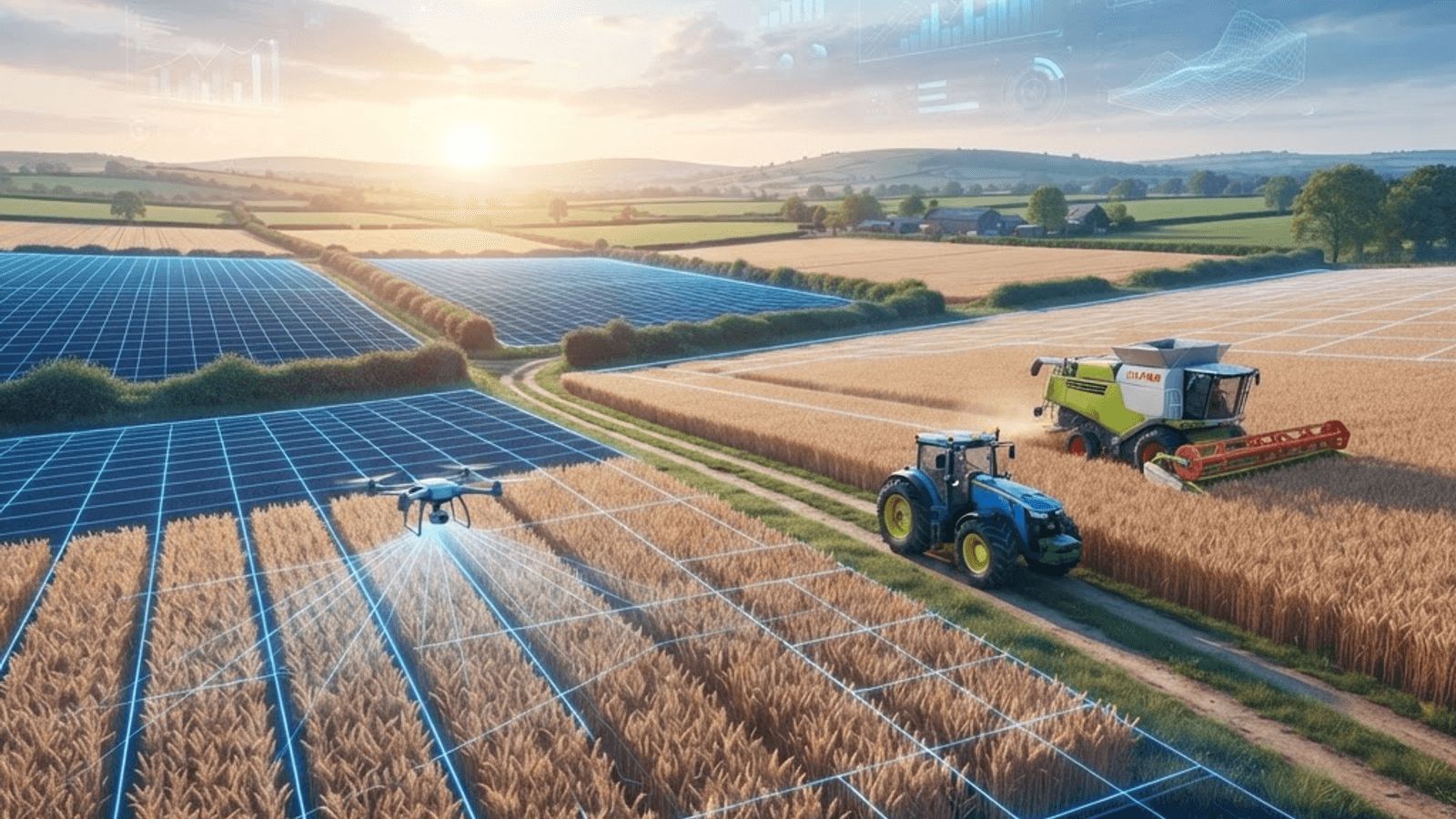
Three shifts stand out. First, the transition in agricultural support has moved payments toward environmental outcomes, prompting farms to treat habitat creation and soil health as income lines rather than costs. Second, technology adoption has accelerated: variable-rate application, satellite imagery, soil scanning and farm management software are now routine on larger holdings around Reading. Third, diversification continues, with grain stores converted to commercial units, renewable energy installations, equestrian facilities and agri-tourism smoothing income volatility.
Labour remains a live issue, particularly for horticultural businesses that need seasonal pickers and packers. Growers have responded with mechanisation, longer training pathways for a smaller core team, and cropping choices that reduce peak labour demand. Water management is another priority, as abstraction constraints and drier growing seasons push irrigated units toward reservoir storage and higher-efficiency delivery systems.
How to Choose a Farming Partner
Buyers, landowners and food businesses should ask targeted questions. What assurance schemes are held, and are audit records current? How is traceability handled from field to delivery? What contingency exists for weather-disrupted harvests or delivery windows? For land management arrangements, clarity on budgeting, cropping decisions, input procurement and profit sharing prevents later disputes. For produce supply, agreeing grade specifications, pack formats and delivery frequency in writing avoids friction during peak season.
It is also worth understanding the timescale of any agreement. Soil improvement, habitat establishment and herd genetics all reward continuity, so short contracts can undermine the very outcomes a buyer or landowner wants. The strongest farming companies near Reading tend to talk in terms of rotations and multi-year plans rather than single seasons.
Conclusion
Farming near Reading operates in an unusual position: commercially serious agriculture within reach of a major urban market and under real development pressure. The businesses that thrive combine agronomic discipline with commercial flexibility, environmental credibility and a willingness to invest in technology and soil. For food buyers, landowners and rural service providers in Berkshire, the companies described here represent the professional core of Thames Valley agriculture and a practical starting point for building supply or land management relationships.
Want your brand featured in front of decision-makers? Publish a guest post or get a link insertion in our guides through AAMAX's guest post and link insertion service.
Helpful Links
 SponsoredAAMAX — Full-Service Digital Agency
Write for Us
Share your expertise with our readers. We welcome guest contributions from industry specialists.
Pitch your idea