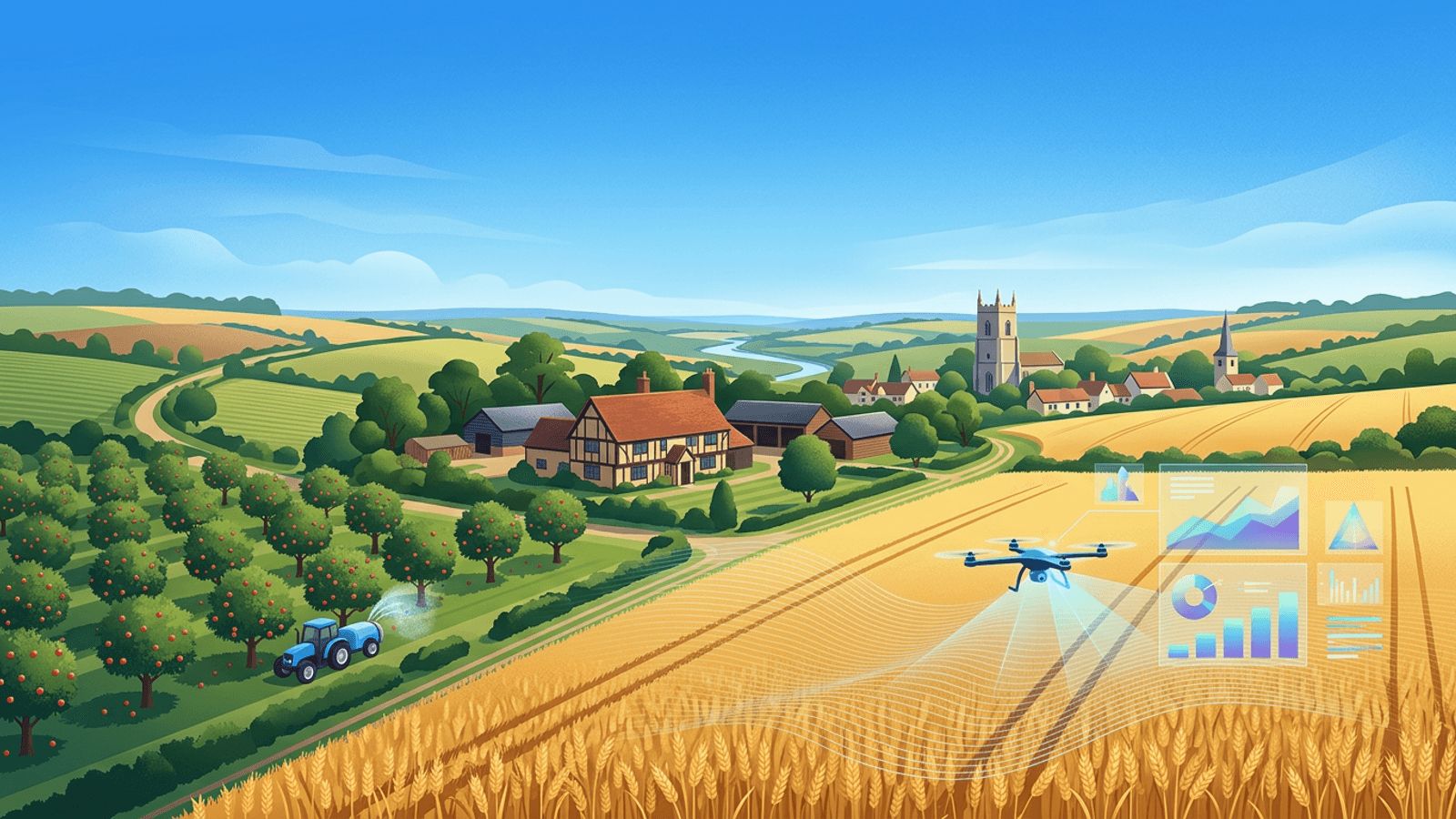
Mid Suffolk: A Farming Heartland
Mid Suffolk is one of England's most agricultural districts. Its heavy clay soils, gently rolling landscape and relatively dry climate make it ideal for arable crops such as wheat, barley, oilseed rape and sugar beet. Alongside arable farming, the district supports orchards, dairy herds, pig and poultry units and diverse farm businesses including farm shops, cafes and tourism enterprises.
Farming here is deeply connected to the local economy. Barley grown on Mid Suffolk farms is malted in Stowmarket, apples become cider near Debenham, and milk from local herds becomes artisan cheese. Agricultural service companies provide advice, seed and inputs that keep farms productive.
The Top 10 Farming Companies in Mid Suffolk
1. Aspall
Aspall is one of Suffolk's most famous agricultural names. The Chevallier family has farmed at Aspall Hall since 1702, and the business began making cyder in 1728. Known for pioneering organic farming in the mid-20th century, Aspall now forms part of Molson Coors while continuing to produce cyder and vinegar at its historic Mid Suffolk home.
2. Muntons
Muntons is a Stowmarket-based maltster working closely with barley growers across East Anglia. Through regenerative agriculture programmes developed with major brewing partners, it supports farmers in improving soil health and reducing carbon emissions. Its anaerobic digestion plant also supplies biofertiliser to local cereal farms.
3. Suffolk Farmhouse Cheeses
Suffolk Farmhouse Cheeses is a family-run business at Creeting St Mary producing handmade cheeses from its own herd of Guernsey and Jersey cows. By adding value to milk on the farm, it demonstrates how diversification can build resilient farm businesses.
4. Alder Carr Farm
Also at Creeting St Mary, Alder Carr Farm runs an award-winning farm shop, butchery and cafe, and produces its own ice cream. Farm shops connect consumers directly with local produce and provide an outlet for dozens of small Suffolk producers.
5. Fennings Farm
Fennings Farm at Stradbroke is a poultry operation that has expanded significantly. Poultry farming is an important part of Suffolk agriculture, supplying eggs and chicken to the UK food chain and providing rural employment.
6. C&K Meats
C&K Meats in Eye is a major producer and wholesaler of pork products. Its operations connect Suffolk's pig farming sector with retailers and manufacturers, adding value to livestock raised in the region.
7. Frontier Agriculture
Frontier Agriculture is one of the UK's leading crop production and grain marketing businesses. It provides agronomy advice, seed, fertiliser and crop protection to Mid Suffolk growers, and markets their grain to millers, maltsters and exporters.
8. Hutchinsons
Hutchinsons is an independent agronomy business with deep roots in eastern England. Its agronomists help farmers optimise crop health, reduce input use and adopt precision farming technologies, including soil mapping and variable-rate application.
9. Agrii
Agrii provides agronomy, seed and crop inputs across the UK. Its extensive field trials programme gives Suffolk farmers independent data on crop varieties and management approaches suited to local conditions.
10. Stonham Barns
Stonham Barns at Stonham Aspal is a rural retail and leisure destination hosting independent shops, a bistro, farm shop and deli. It showcases how farm diversification and rural enterprise can support local producers and bring visitors into the countryside.
Trends in Mid Suffolk Farming
Regenerative agriculture is transforming arable farming. Practices such as cover cropping, direct drilling, reduced tillage and diverse rotations are improving soil health, reducing fuel use and increasing resilience to drought. Many Mid Suffolk farmers are working with maltsters and grain buyers who reward sustainable practices.
Government environmental schemes are also reshaping farm incomes. Payments for hedgerow management, wildflower margins, water protection and carbon storage are becoming important revenue streams as traditional subsidies are phased out.
Diversification continues to grow. Farm shops, cafes, holiday lets, wedding venues, renewable energy and on-farm processing all help farms spread risk and connect with consumers.
Technology adoption is accelerating, with GPS-guided tractors, drones, soil sensors and farm management software helping farmers make better decisions and reduce inputs.
Challenges Facing Local Farmers
Farmers face rising input costs, volatile commodity prices, labour shortages and increasingly unpredictable weather. Water availability is a particular concern in East Anglia, one of the driest regions of the UK. Collaboration, investment in reservoirs and efficient irrigation, and closer relationships with buyers are helping farms navigate these challenges.
Supporting Local Agriculture
- Buy directly from farm shops and local producers.
- Choose Suffolk-grown and Suffolk-made products in shops and restaurants.
- Visit farm attractions, open days and country shows.
- Respect the countryside by following footpaths and closing gates.
Local Context: The Landscape of High Suffolk
The northern part of Mid Suffolk is often known as High Suffolk, a gently undulating clay plateau dotted with moated farmhouses, ancient hedgerows and medieval churches. Its heavy soils have historically favoured cereal growing, while the river valleys of the Gipping, Dove and Waveney offer lighter land and grazing. Farm sizes vary widely, from large arable estates to small family holdings, and many farms have been worked by the same families for generations. Villages such as Stradbroke, Mendlesham, Wetheringsett and Debenham remain strongly agricultural, with farm businesses providing employment, supporting local suppliers and maintaining the countryside that makes the district so attractive to residents and visitors. Agricultural shows and farm open days continue to play an important role in bringing rural and town communities together.
Conclusion
Farming defines Mid Suffolk's landscape, economy and culture. From Aspall's centuries-old orchards and Muntons' barley partnerships to artisan cheesemakers and innovative farm shops, the district's farming companies combine heritage with innovation, producing food and drink enjoyed across the UK and around the world.
Want your brand featured in front of decision-makers? Publish a guest post or get a link insertion in our guides through AAMAX's guest post and link insertion service.
Helpful Links
 SponsoredAAMAX — Full-Service Digital Agency
Write for Us
Share your expertise with our readers. We welcome guest contributions from industry specialists.
Pitch your idea