
Farming Around Maldon and the Dengie Peninsula
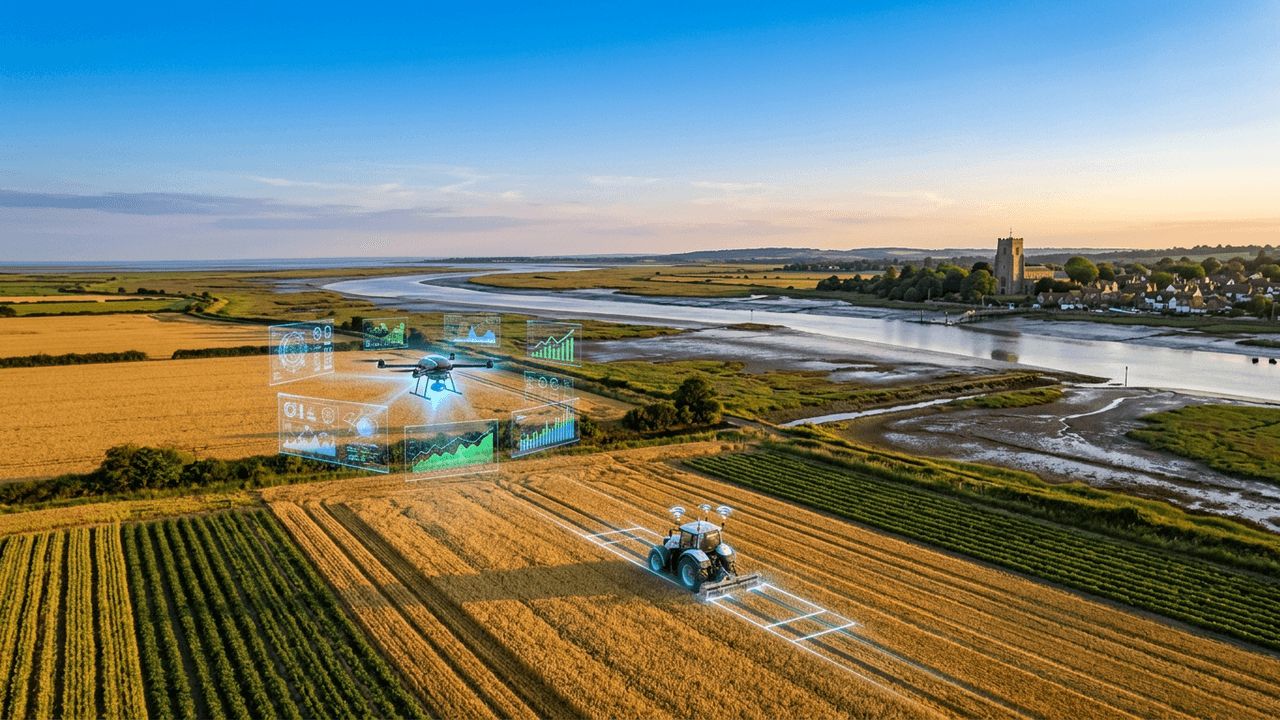
Step outside Maldon's town centre and you quickly find yourself among wide, open fields stretching toward the Blackwater and Crouch estuaries. The Maldon district, including the Dengie Peninsula, is one of the most important agricultural areas in Essex. Its relatively dry climate, flat terrain and fertile soils make it ideal for arable crops such as wheat, barley, oilseed rape and beans, while coastal grazing marshes support livestock and wildlife.
Farming here is a blend of long-established family estates, modern agribusinesses and diversified enterprises that combine food production with tourism, renewable energy and conservation. The following ten businesses represent the strength and variety of agriculture connected with the Maldon area.
The Top 10 Farming Companies Connected with Maldon
1. Lord Rayleigh's Farms
Based in nearby Hatfield Peverel, Lord Rayleigh's Farms is one of the best-known farming businesses in mid-Essex. It manages a substantial arable operation and has a long history in dairy farming. The business is recognised for combining traditional estate stewardship with modern farming techniques and environmental schemes.
2. Wilkin and Sons
Wilkin and Sons, famous for its Tiptree preserves, farms fruit on land just a short drive from Maldon. The company grows strawberries, raspberries, plums, quince and many other fruits, supplying its own jam production. It is a prime example of how Essex agriculture can be closely linked to high-value food manufacturing.
3. Strutt and Parker Farms
Strutt and Parker Farms operates arable and mixed farming enterprises in Essex and has a reputation for professional farm management. Its operations demonstrate large-scale efficiency combined with environmental stewardship, including hedgerow management and habitat creation.
4. Essex Arable Family Farms of the Dengie
The Dengie Peninsula is home to numerous family-run arable farms, some managed by the same families for generations. These farms grow cereals and break crops, often working collaboratively through machinery sharing and grain marketing groups to improve efficiency.
5. Frontier Agriculture Partner Growers
Many Maldon district farms work in partnership with Frontier Agriculture for agronomy advice, input supply and grain marketing. This collaboration helps local growers adopt precision farming techniques and access premium markets for milling wheat and malting barley.
6. Maldon Coastal Grazing Enterprises
The saltmarshes and grazing marshes along the Blackwater and Dengie coast support cattle and sheep enterprises. These farms play a vital role in maintaining coastal habitats, as grazing helps preserve the grassland conditions favoured by wading birds and wildfowl.
7. Pick-Your-Own and Farm Shop Businesses
Diversified farms around Maldon run pick-your-own fruit fields, pumpkin patches and farm shops. These enterprises connect consumers directly with local food, generate additional income for farmers and attract visitors from Chelmsford and beyond during summer and autumn.
8. Vineyards of the Crouch and Blackwater Valleys
Essex has emerged as one of England's most exciting wine-growing regions. The Crouch Valley in particular, close to Maldon, is home to several vineyards producing high-quality grapes for sparkling and still wines. Its warm, dry microclimate is well suited to varieties such as Pinot Noir and Chardonnay.
9. Renewable Energy Diversified Farms
Some Maldon district farms have diversified into solar, anaerobic digestion and biomass, generating renewable energy alongside crops. These projects provide stable income while supporting the UK's net zero ambitions.
10. Regenerative and Organic Growers
A growing number of farms near Maldon are adopting regenerative principles such as reduced tillage, cover cropping and integrating livestock into arable rotations. Organic growers supplying veg boxes and local markets add further diversity to the farming landscape.
What Makes Maldon Farming Distinctive
The district's low rainfall, among the lowest in the UK, shapes farming practices. Water management, drought-tolerant varieties and careful soil conservation are priorities for local farmers. At the same time, the proximity to London and major ports creates strong market access for produce.
The coastal environment adds another layer. Much of the farmland borders internationally important wildlife habitats, and many farmers participate in environmental land management schemes that reward them for protecting wildlife, improving water quality and reducing flood risk.
Trends Shaping Agriculture in the Maldon District
Precision agriculture is rapidly transforming field operations. GPS-guided tractors, variable-rate fertiliser application, drones and satellite imagery help farmers apply inputs exactly where they are needed, cutting costs and environmental impact.
Government support has shifted toward environmental outcomes, encouraging farmers to create wildflower margins, plant hedgerows and protect soils. Maldon farms are balancing food production with these public goods.
Diversification continues to grow, with farm shops, holiday accommodation, wedding venues and renewable energy providing resilience against volatile commodity prices and changing subsidies.
Conclusion
Farming is woven into the identity of the Maldon district. From expansive arable estates and fruit farms to coastal grazing and innovative vineyards, local agriculture is productive, adaptable and increasingly focused on sustainability. These farming businesses help feed the nation while caring for one of the most distinctive landscapes in the East of England.
Want your brand featured in front of decision-makers? Publish a guest post or get a link insertion in our guides through AAMAX's guest post and link insertion service.
Helpful Links
 SponsoredAAMAX — Full-Service Digital Agency
Write for Us
Share your expertise with our readers. We welcome guest contributions from industry specialists.
Pitch your idea