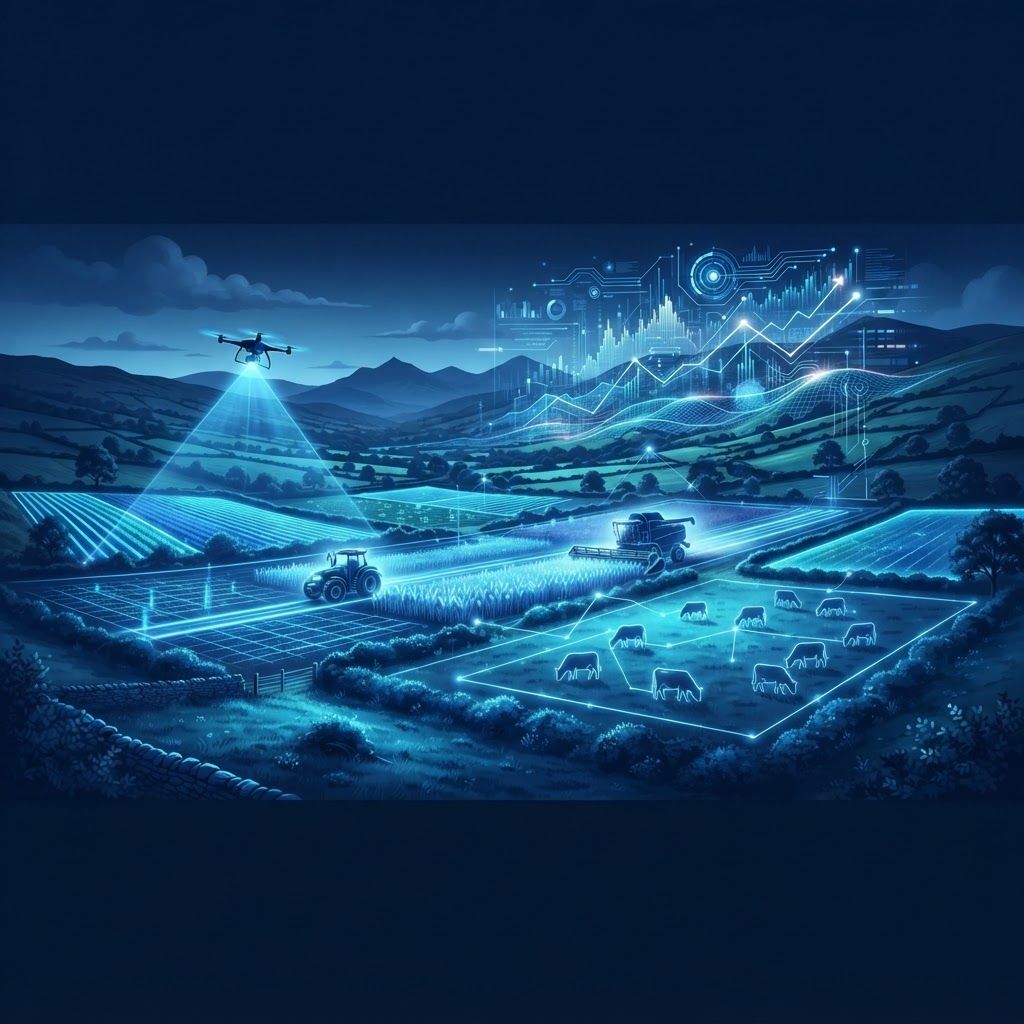
Farming in the Flintshire Landscape
Flintshire agriculture is shaped by a distinctive geography. The fertile lowlands near the Dee Estuary support arable cropping and intensive grassland, while the rising ground toward the Clwydian Range suits livestock grazing. This variety allows the county to sustain dairy, beef, sheep, arable and horticultural enterprises within a relatively compact area.
Most Flintshire farms remain family businesses, often farmed by the same families for generations. Increasingly, though, they operate with the professionalism of modern enterprises, using data driven decision making, precision equipment, environmental stewardship schemes and diversified income streams to remain viable in a challenging market.
What Characterises a Well Run Farming Business
Sound land and soil management is the foundation. Successful farms monitor soil structure, organic matter, nutrient status and drainage, understanding that soil health determines yield, resilience and long term asset value more than almost any other factor.
Animal health and welfare standards define livestock enterprises. Assurance scheme membership, careful veterinary planning, good housing and attentive stockmanship deliver both ethical outcomes and stronger productivity, since healthy animals perform better.
Business management completes the picture. Accurate cost of production knowledge, sensible diversification, succession planning and environmental scheme participation increasingly separate thriving farms from those simply surviving from one season to the next.
The Ten Leading Farming Companies in Flintshire
Dee Valley Dairy Farms operates a substantial dairy enterprise with a strong focus on grassland management and herd health. Investment in milking technology, cow comfort and detailed performance recording has produced consistently strong results.
Clwydian Livestock Company runs beef and sheep across upland and lowland grazing. Careful breeding selection suited to Welsh conditions, alongside participation in environmental stewardship, characterises its approach to sustainable livestock production.
Flintshire Arable Farming manages cereal and combinable crop production on the county lowland soils. Precision agriculture techniques including variable rate application, soil mapping and controlled traffic farming underpin both efficiency and soil protection.
Mold Mixed Farming Enterprises combines livestock and arable production, using rotation and integrated management to build soil fertility while spreading market risk across several income streams.
Estuary Horticulture and Growers produces vegetables and salad crops for regional markets. Short supply chains, careful harvest scheduling and strong relationships with local wholesalers support genuinely fresh local supply.
Holywell Poultry Farming operates egg and poultry production with high welfare standards and biosecurity discipline. Efficient feed management and reliable supply relationships give the business durable commercial strength.
Sandycroft Agricultural Contracting provides silage, harvesting, cultivation and slurry services to farms across the county. Modern equipment and skilled operators allow smaller farms to access capability they could never justify owning outright.
Connah Quay Organic Farming manages certified organic land producing livestock and crops without synthetic inputs. Rotation design, natural fertility building and premium market access define its approach.
North Wales Regenerative Farming Group brings together holdings practising cover cropping, reduced tillage, diverse leys and rotational grazing. Its work demonstrates measurable improvements in soil carbon, water retention and input reduction.
Queensferry Farm Diversification Enterprises completes the list, combining traditional agriculture with farm shop retail, holiday accommodation and renewable energy generation. This blended model illustrates how many Flintshire farms now secure long term resilience.
Trends Shaping Welsh Agriculture
Agricultural policy in Wales continues to evolve toward supporting sustainable land management outcomes rather than simple production support. Farms are adapting by measuring and improving environmental performance, including habitat creation, tree planting, water quality protection and carbon accounting.
Technology adoption is accelerating. Soil scanning, satellite imagery, livestock monitoring collars, automated feeding and farm management software give farmers detailed insight into performance, allowing more precise decisions with less waste and lower input costs.
Diversification and direct selling continue to expand. Farm shops, box schemes, camping, events, contracting and renewable energy provide income that is less exposed to commodity price swings, while strengthening the connection between local consumers and local food producers.
Practical Advice for Farm Businesses and Buyers
For farmers, understanding true cost of production per unit is the single most valuable management step. It clarifies which enterprises genuinely contribute profit and where investment or change will deliver the greatest return.
Environmental schemes deserve careful evaluation rather than automatic acceptance or rejection. Many payments align well with practices that also improve soil health, reduce input costs and enhance farm resilience against increasingly variable weather.
For buyers sourcing local produce, engage directly with farms and wholesalers who can document provenance. Welsh farming produces excellent food to high welfare standards, and provenance information adds genuine commercial value in retail and hospitality settings.
Final Thoughts
Farming companies in Flintshire demonstrate how traditional agriculture and modern practice can strengthen one another. Whether through precision arable management on estuary lowlands, careful livestock husbandry in the Clwydian foothills, or diversified enterprises blending food production with tourism and renewable energy, the county farms continue to shape both its landscape and its economy for the better.
Want your brand featured in front of decision-makers? Publish a guest post or get a link insertion in our guides through AAMAX's guest post and link insertion service.
Helpful Links
 SponsoredAAMAX — Full-Service Digital Agency
Write for Us
Share your expertise with our readers. We welcome guest contributions from industry specialists.
Pitch your idea