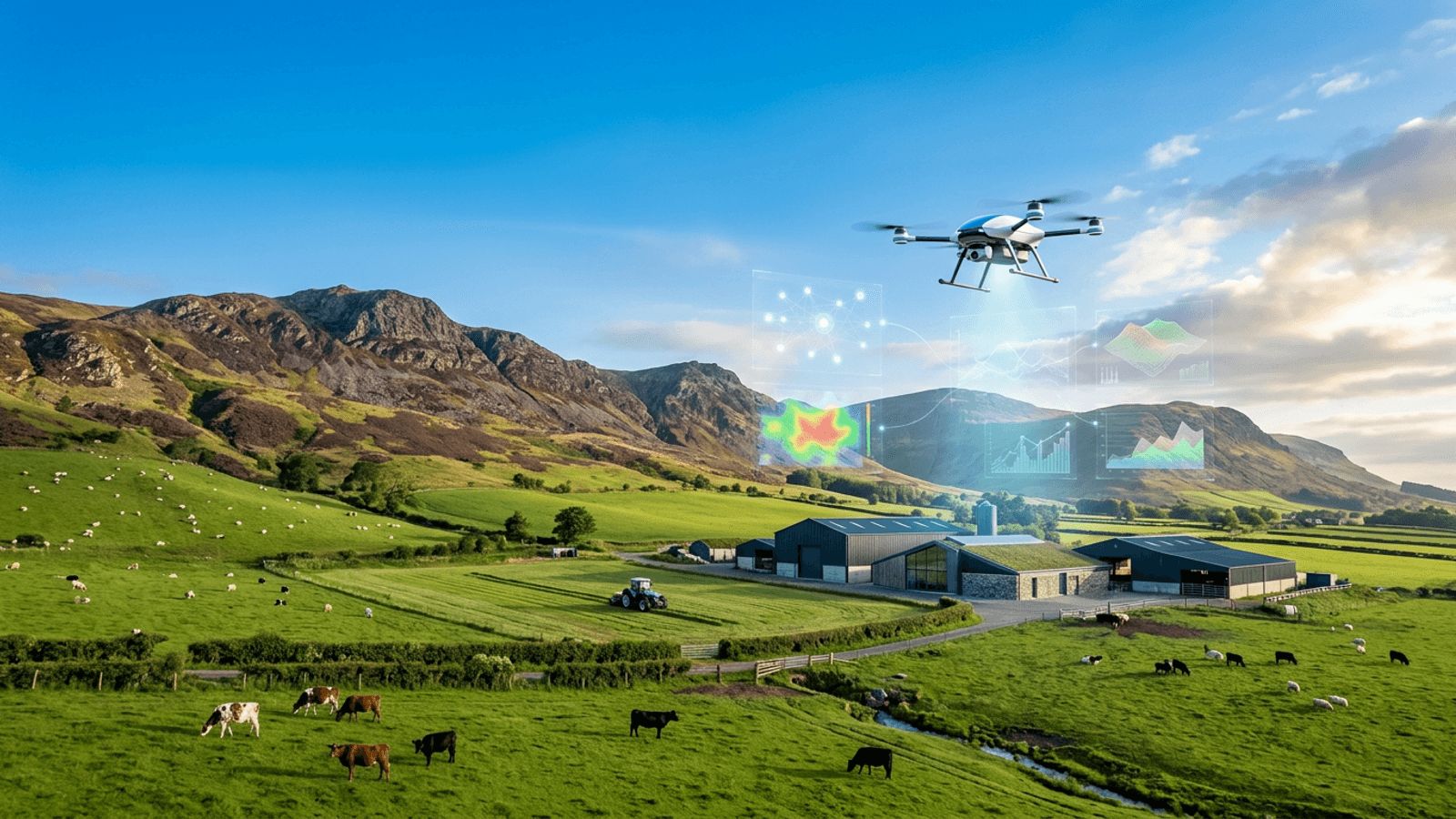
Farming in East Dunbartonshire
East Dunbartonshire is often thought of as a commuter area for Glasgow, but much of its land is rural. The countryside around Lennoxtown, Torrance, Milton of Campsie, Twechar and Baldernock is dominated by livestock grazing, dairy and mixed farming, framed by the Campsie Fells and the Kilpatrick Hills. Farmers here face the typical challenges of west of Scotland agriculture, including high rainfall, hill ground and tight margins, but they also benefit from being close to a large urban market.
Local farms work within a wider network of processors, cooperatives, feed suppliers and dairy buyers. Here are ten of the most important farming companies and agricultural businesses connected to the area.
Top 10 Farming Companies and Agricultural Businesses
1. Graham's The Family Dairy
Graham's is Scotland's largest independent dairy, based near Bridge of Allan. It sources milk from Scottish farms and produces milk, cream, butter and ice cream sold across the country. Its family ownership and commitment to Scottish farmers make it a well-respected name.
2. Arla Foods
Arla is a farmer-owned dairy cooperative, with many Scottish dairy farmers among its members. Its cooperative structure gives farmers a share in the business, and its sustainability programmes help members reduce emissions and improve animal welfare.
3. Scotbeef
Scotbeef is one of Scotland's leading meat processors, buying cattle and lamb from farms across the country. Its focus on quality assured Scotch beef and lamb supports livestock farmers in areas like the Campsie Fells.
4. ANM Group
ANM Group is a farmer-owned cooperative that runs major livestock auction marts and property services. It provides Scottish farmers with transparent sales channels for cattle and sheep, along with advice on land and farm property.
5. Harbro
Harbro is a leading Scottish animal feed manufacturer and country store operator. It supplies livestock farmers with nutrition products, minerals and technical advice, helping improve herd and flock performance.
6. Mackie's of Scotland
Mackie's is a family-run Aberdeenshire farm business famous for its ice cream, crisps and chocolate. It is also a pioneer of on-farm renewable energy, making it a leading example of diversified, forward-looking Scottish farming.
7. Lawrie and Symington
Lawrie and Symington runs one of Scotland's largest livestock markets at Lanark, a key trading venue for cattle and sheep from farms across central and western Scotland, including East Dunbartonshire.
8. McIntosh Donald
McIntosh Donald, part of the Dawn Meats group, is a major Scottish beef and lamb processor. It works closely with livestock producers on supply agreements and quality programmes.
9. SAC Consulting
SAC Consulting, part of Scotland's Rural College, provides farmers with business, environmental and technical advice. Its consultants help local farms with grant applications, soil management, livestock health and diversification plans.
10. Quality Meat Scotland
Quality Meat Scotland is the public body that promotes the Scotch beef, lamb and pork brands and runs assurance schemes. Its work gives Scottish farmers, including those in East Dunbartonshire, access to premium markets built on trusted provenance.
Industry Trends in Scottish Farming
Scottish agriculture is changing. Farm support is moving towards schemes that reward environmental outcomes, such as improving soil health, restoring peatland and planting hedgerows and woodland. Livestock farmers are adopting precision tools including electronic identification, grazing management software and drones to monitor stock and land.
Diversification is also growing. Farms near urban areas like Glasgow are opening farm shops, holiday accommodation, wedding venues and educational visits. With the West Highland Way beginning in Milngavie and walkers heading into the Campsie Fells, rural tourism offers real opportunities for local farms.
Supporting Local Farming
Residents can support East Dunbartonshire farmers by buying from farm shops and farmers' markets, choosing products carrying Scotch provenance labels, and respecting the Scottish Outdoor Access Code when walking through farmland. Businesses can support local agriculture by sourcing Scottish ingredients and building direct relationships with producers.
Frequently Asked Questions
What type of farming is most common in East Dunbartonshire?
Livestock farming dominates, particularly beef cattle and sheep grazing on the lower slopes of the Campsie Fells, along with some dairy and mixed farming on better ground. Grass is the main crop, harvested as silage and hay for winter feeding.
How do local farmers sell their livestock?
Many farmers sell through livestock auction marts, while others supply processors directly under contract or quality assurance schemes. A growing number also sell meat boxes directly to customers.
Can farms diversify into tourism?
Yes. Being close to Glasgow and popular walking routes gives local farms good opportunities for farm shops, holiday lets, glamping and educational visits, often supported by rural development advice and grant funding. Planning permission and business rates should be checked early in any diversification project.
Conclusion
Farming remains an important part of East Dunbartonshire's identity and economy. Through strong cooperatives, processors, advisers and innovative family businesses, local farmers are adapting to new environmental goals and market demands while continuing to produce high-quality Scottish food.
Want your brand featured in front of decision-makers? Publish a guest post or get a link insertion in our guides through AAMAX's guest post and link insertion service.
Helpful Links
 SponsoredAAMAX — Full-Service Digital Agency
Write for Us
Share your expertise with our readers. We welcome guest contributions from industry specialists.
Pitch your idea