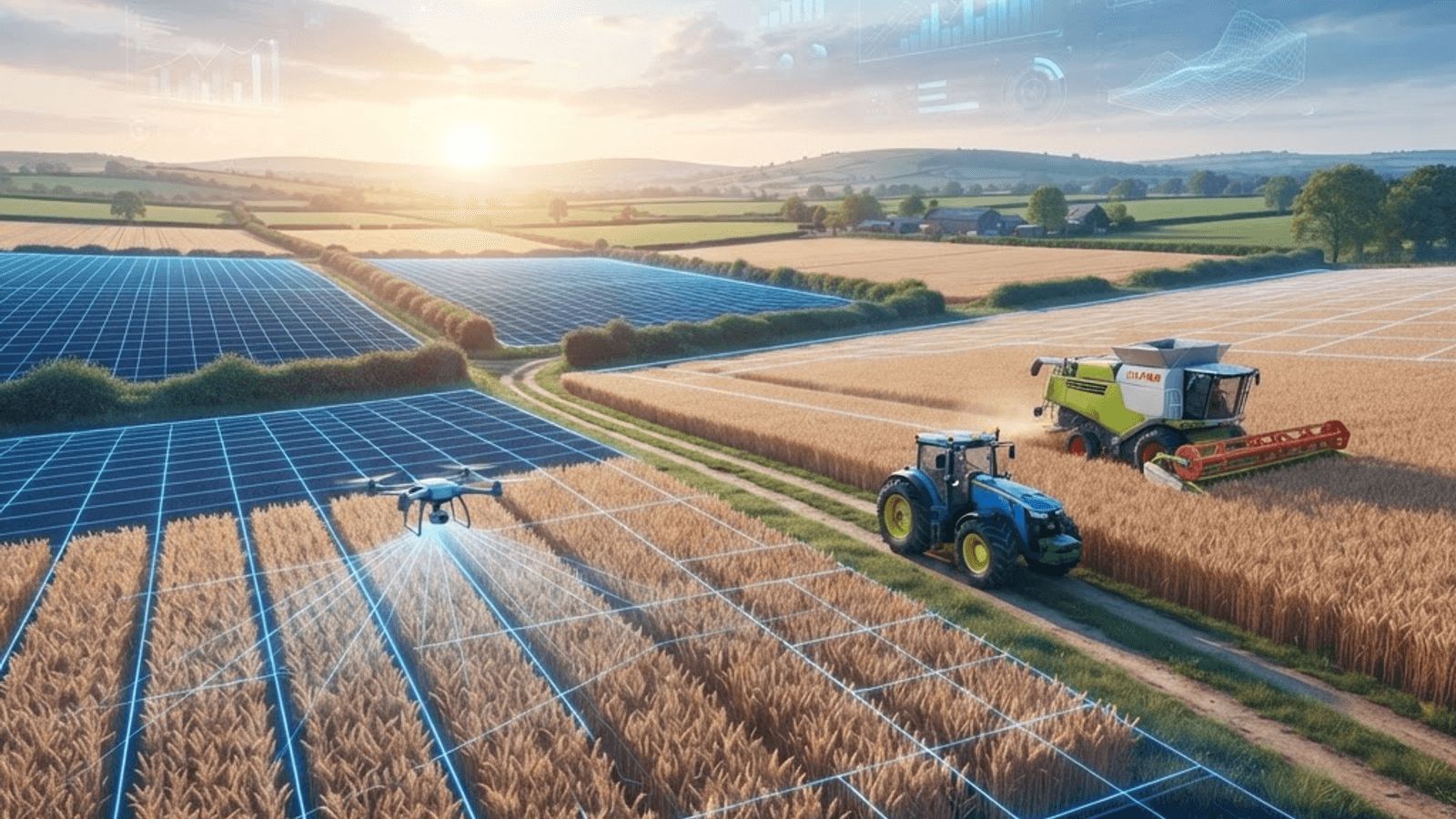
Farming Around Braintree
Braintree sits within some of the most productive arable land in the country. The gently rolling fields surrounding the town have been farmed for centuries, and agriculture remains a genuine economic force locally, supporting not only growers but also machinery dealers, agronomy consultants, grain merchants, contractors and food processors.
The local farming profile is dominated by combinable crops, particularly wheat, barley, oilseed rape and beans, reflecting the region's relatively low rainfall and heavy, fertile soils. Alongside these are livestock enterprises, horticulture and salad production, fruit growing, equine businesses and an increasing number of diversified farms combining food production with renewable energy, storage, leisure or direct retail.
What Marks Out a Well-Run Farming Business
Soil management sits at the centre of every successful arable operation. Businesses that monitor organic matter, manage compaction, use cover crops thoughtfully and rotate crops sensibly consistently outperform those chasing short-term yield. Soil health is the single largest determinant of long-term profitability.
Financial discipline is equally important. Modern farming operates on tight margins with volatile input costs, so accurate cost-of-production figures per hectare, careful machinery investment decisions and sensible marketing of grain are what separate resilient farms from struggling ones.
Environmental stewardship has moved from optional to central. Buffer strips, hedgerow management, integrated pest management and habitat creation now carry both regulatory and financial significance through environmental schemes, while also supporting yields through pollination and natural pest control.
Finally, the best farms invest in people and knowledge, engaging with agronomists, benchmarking against peers and trialling new practices on part of the farm before committing fully.
The Top 10 Farming Companies in Braintree
1. Braintree Arable Farms. A substantial combinable crop operation producing wheat, barley and oilseed rape, notable for precision application technology and on-farm grain storage.
2. Stane Farming Company. Mixed arable and livestock enterprise integrating grazing into rotations to build soil fertility and spread market risk.
3. Blackwater Valley Growers. Horticultural producer specialising in salad crops and vegetables, supplying regional wholesalers and retailers with short supply chains.
4. Notley Estate Farming. Estate-scale operation combining arable production with environmental stewardship, woodland management and let commercial buildings.
5. Rivermead Agricultural Contractors. Provides drilling, spraying, harvesting and baling services, giving smaller farms access to modern machinery without capital outlay.
6. Fairfield Livestock Farms. Beef and sheep producer focused on grass-fed systems, with direct sales and strong animal welfare credentials.
7. Cressing Fruit Growers. Orchard business producing apples and soft fruit, supplying farm shops, juice producers and local retailers.
8. Bocking Regenerative Farming. Practises minimum tillage, cover cropping and diverse rotations, with measurable improvements in soil organic matter.
9. Springwood Poultry and Eggs. Free-range egg production with on-site packing, supplying wholesalers, farm shops and food service customers.
10. Great Notley Diversified Farming. Combines arable cropping with renewable energy generation, storage letting and a farm retail outlet.
Technology and Trends in Agriculture
Precision agriculture has become mainstream. GPS guidance, variable-rate application, yield mapping and soil scanning allow inputs to be matched to field variation, cutting fertiliser and chemical use while maintaining output. The environmental and financial cases now align closely.
Regenerative practices are spreading rapidly. Reduced tillage, cover crops, longer rotations and livestock integration improve soil structure, water retention and resilience to both drought and heavy rainfall, which matters increasingly in a drier eastern region facing more erratic weather.
Carbon and natural capital markets are emerging as genuine income streams, with farms measuring soil carbon, tree cover and biodiversity to access payments alongside food production.
Diversification continues to grow, spanning solar and anaerobic digestion, farm shops, glamping, equestrian facilities and light industrial letting, all of which stabilise income against volatile commodity prices.
Labour and machinery costs are pushing interest in automation, from autonomous field robots to automated grain handling and irrigation control.
Working With Farming Businesses
For buyers sourcing local produce, engage early and plan volumes around growing seasons rather than expecting supermarket-style year-round availability. Farms can often supply exceptional quality when given adequate notice.
For suppliers and contractors, understand the seasonal calendar. Availability during drilling and harvest is minimal, and reliability during those windows earns lasting loyalty.
For landowners and new entrants, contract farming agreements, share farming and joint ventures offer routes into production without the capital burden of machinery ownership.
Local Context and Commercial Outlook
The countryside around Braintree is dominated by heavy, fertile soils and relatively low rainfall, a combination that suits combinable crops but leaves growers exposed to summer drought. Water management, soil structure and drought-tolerant variety selection are therefore recurring priorities for local farm businesses.
Agriculture also supports a substantial local supply chain, including machinery dealers, agronomy consultants, grain merchants, hauliers and contractors. Those businesses employ significant numbers of people and depend on farm profitability, which makes agricultural performance locally more economically important than field acreage alone suggests.
Looking ahead, income will increasingly combine food production with environmental payments, renewable energy and diversified enterprises. Farms measuring soil carbon, improving biodiversity and adopting precision technology are best placed to benefit, while continued investment in on-farm storage and direct marketing helps growers capture more value from what they produce.
Final Thoughts
Farming around Braintree combines highly productive land with businesses that are increasingly technologically sophisticated and environmentally focused. From large arable operations to horticultural growers, livestock producers and diversified estates, the area's agricultural sector remains a vital part of both the local economy and the regional food supply.
Want your brand featured in front of decision-makers? Publish a guest post or get a link insertion in our guides through AAMAX's guest post and link insertion service.
Helpful Links
 SponsoredAAMAX — Full-Service Digital Agency
Write for Us
Share your expertise with our readers. We welcome guest contributions from industry specialists.
Pitch your idea