The Thames Valley Electronics Cluster
Reading occupies a genuinely important position in UK electronics. The Thames Valley corridor stretching from Reading through Bracknell, Wokingham and toward Swindon hosts one of the densest concentrations of electronics design, semiconductor engineering and technology manufacturing in the country. The reasons are historic and self-reinforcing: early technology companies established here decades ago, the talent pool they created attracted more employers, and universities and further education providers in the region built programmes to feed that demand.
What is manufactured locally tends toward high-value, low-to-medium volume production. Contract electronics manufacturers assemble printed circuit boards for industrial, medical, aerospace and telecommunications customers. Design houses develop products that may be volume-manufactured elsewhere but are prototyped and validated here. Test and measurement equipment, embedded systems, RF and wireless hardware, and specialist power electronics all feature strongly.
How Electronics Manufacturing Actually Works
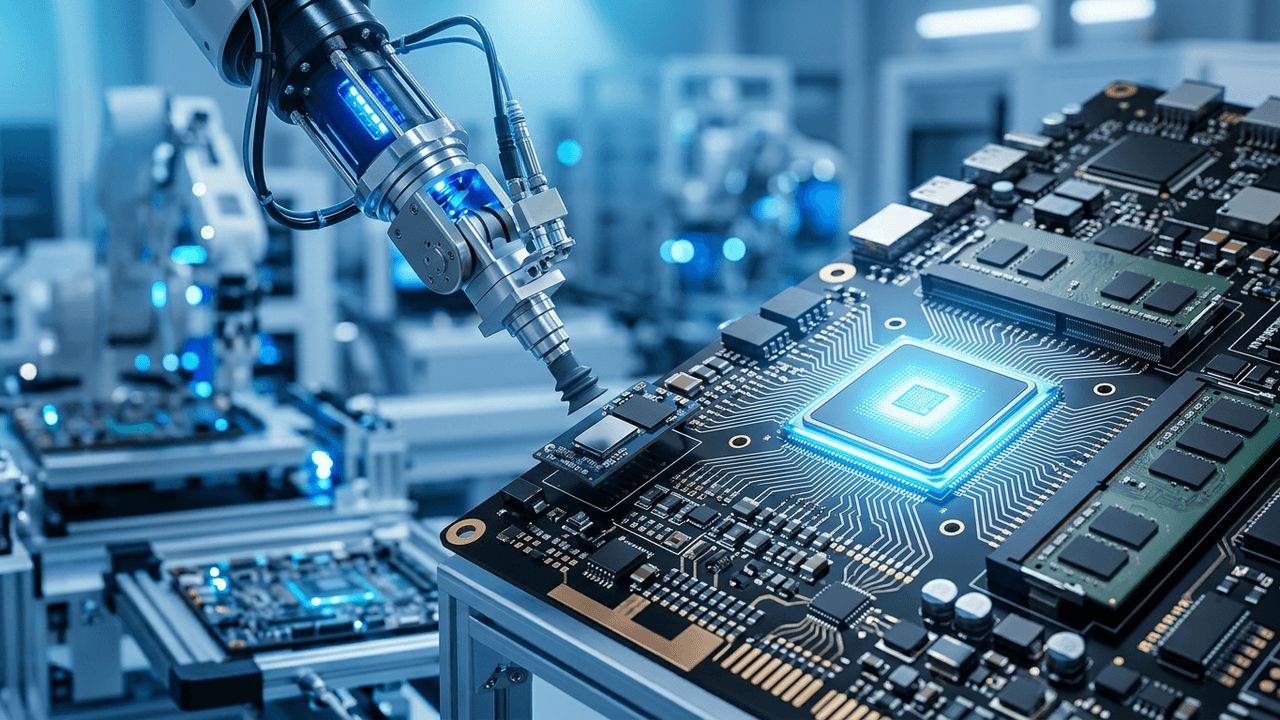
A modern electronics product passes through several distinct stages. Circuit design and PCB layout come first, followed by component sourcing which has become one of the most challenging aspects of the industry. Assembly involves surface mount technology lines placing components at high speed, reflow soldering, automated optical inspection and often X-ray inspection for hidden joints. Functional testing, environmental testing and compliance verification follow before final assembly, programming and packaging. Reading's ecosystem covers all of these stages, though rarely all within a single business.
The Top 10 Electronics Manufacturing Capabilities in Reading
1. Contract Electronics Manufacturers
Contract manufacturers in the Thames Valley provide full turnkey assembly including procurement, PCB assembly, test and box build. They serve customers who design products but do not want to own production capacity, and they compete on quality systems, traceability and engineering support rather than on unit price alone.
2. Semiconductor Design and Engineering Businesses
The region has deep semiconductor design expertise covering processor architecture, system on chip development, verification and physical design. While wafer fabrication happens elsewhere globally, the intellectual property created locally underpins an enormous volume of worldwide silicon production.
3. Embedded Systems and IoT Product Developers
Product development companies design connected devices combining microcontrollers, sensors, wireless connectivity and cloud software. Reading's mix of hardware and software talent makes it particularly well suited to this integrated work, and many local firms deliver complete product programmes from concept to production handover.
4. RF, Wireless and Antenna Specialists
Radio frequency engineering is a notable regional strength, reflecting the telecommunications heritage of the area. Specialists design and manufacture antennas, RF modules, filters and test systems, work that demands specialised measurement facilities and hard-won practical experience.
5. Test and Measurement Equipment Manufacturers
Manufacturers of instrumentation, test systems and calibration equipment serve laboratories and production lines across many industries. These are typically low-volume, high-precision products where engineering quality directly determines commercial reputation.
6. Power Electronics and Energy Conversion Manufacturers
Power electronics businesses produce converters, inverters, chargers and power supply units. Demand has grown strongly with electrification of transport and heating, and thermal management and efficiency are the dominant engineering challenges in this space.
7. Medical and Life Science Electronics Manufacturers
Manufacturers serving medical device customers operate under stringent quality management requirements with full design history documentation and validated processes. The regulatory overhead is substantial, which is why specialists in this niche command premium positioning.
8. Cable Assembly and Electromechanical Manufacturers
Cable harness and electromechanical assembly businesses supply looms, connector assemblies and enclosure builds. This work is labour-intensive and frequently sits alongside PCB assembly as part of complete product delivery.
9. Prototyping and Rapid Development Facilities
Prototyping specialists provide quick-turn PCB assembly, 3D printing, machining and small-batch build for development programmes. Their speed compresses product development cycles significantly and reduces the cost of design iteration.
10. Component Distributors and Supply Chain Specialists
Distributors and sourcing specialists in the region manage component availability, obsolescence, authentication and inventory. After the semiconductor shortages of recent years, this function has been elevated from procurement administration to genuine strategic importance.
Trends Shaping Electronics Manufacturing
Supply chain resilience remains the industry's central preoccupation, driving design for component flexibility, dual sourcing and larger strategic inventories. Reshoring interest has grown, particularly for defence, medical and critical infrastructure products where supply security justifies higher costs. Sustainability requirements including energy efficiency, repairability, restricted substances and end-of-life recovery are increasingly written into product specifications. Artificial intelligence at the edge is pushing more computational capability into embedded devices, changing thermal and power design assumptions. Finally, automation and machine vision inspection continue to raise quality standards while reducing the labour content of assembly.
Selecting an Electronics Manufacturing Partner
Match volume expectations honestly, because a manufacturer optimised for thousands of units will struggle with dozens and vice versa. Examine quality certification relevant to your market, including aerospace, automotive or medical standards where applicable. Ask detailed questions about component procurement, obsolescence monitoring and counterfeit avoidance, as these silently determine long-term product viability. Review test strategy, since inadequate testing produces field failures that cost far more than the testing would have. Visit the facility if you can, because production discipline is visible in person in ways it never is in a presentation. Finally, discuss engineering support explicitly, as design for manufacture input early in a project typically saves more than it costs.
Final Thoughts
Reading's electronics sector is one of the town's genuine industrial strengths, built on decades of accumulated engineering capability. It competes globally on design sophistication, quality and responsiveness rather than on volume cost. For anyone developing an electronic product, the breadth of local capability from silicon design through prototyping to regulated manufacture is a substantial advantage. Engage partners early, treat supply chain design as seriously as circuit design, and the local ecosystem will serve you well.
Want your brand featured in front of decision-makers? Publish a guest post or get a link insertion in our guides through AAMAX's guest post and link insertion service.
Helpful Links
 SponsoredAAMAX — Full-Service Digital Agency
Write for Us
Share your expertise with our readers. We welcome guest contributions from industry specialists.
Pitch your idea