An Electronics Cluster Built on Engineering Heritage
North West Leicestershire's electronics sector grew from the engineering base that supported mining, quarrying and heavy manufacturing. As those industries mechanised and then automated, local firms developed capability in control systems, instrumentation, monitoring equipment and the electronics required to make industrial plant run reliably in demanding environments. That foundation has proved durable, and today the district supports contract electronics manufacturers, product design houses, sensor specialists and embedded systems developers.
The location works well for the sector. Component distributors and specialist suppliers across the Midlands are within easy reach. East Midlands Airport provides air freight access for time-critical components, which matters considerably in an industry still recovering from semiconductor supply volatility. The universities of Leicester, Loughborough, Nottingham and Derby supply electronic and software engineering graduates.
What Electronics Manufacturers Actually Do
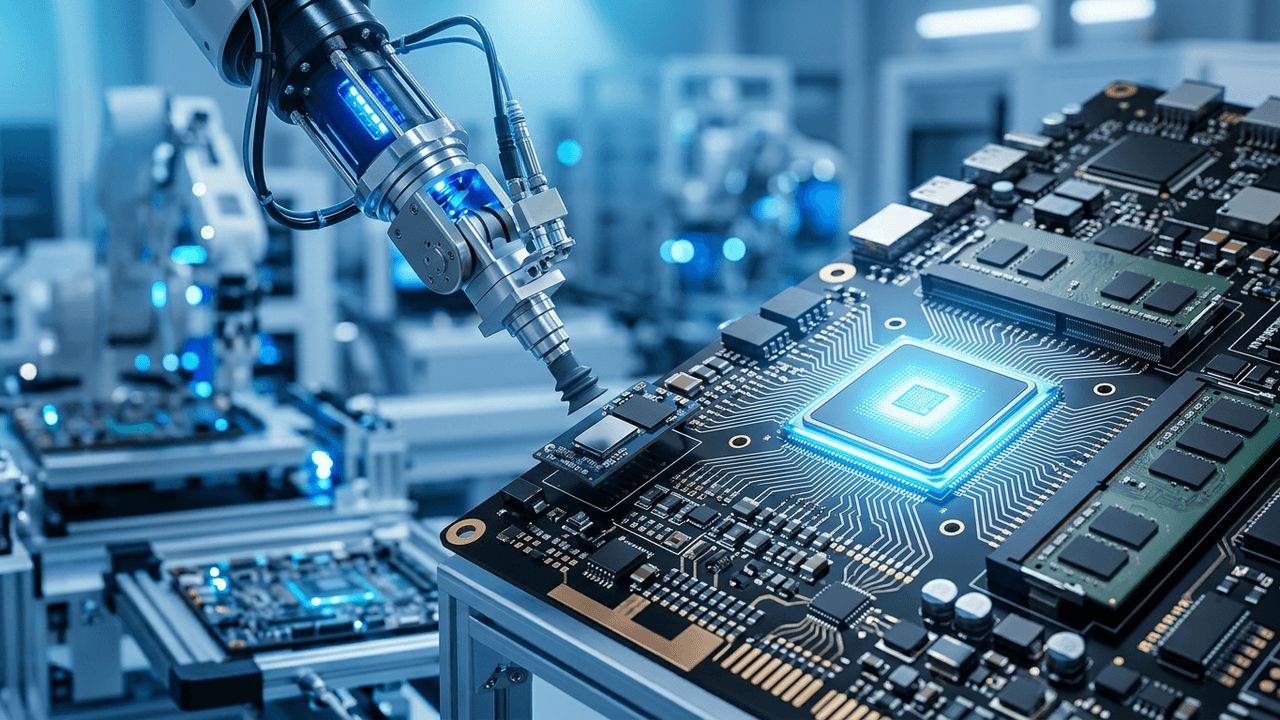
Contract electronics manufacturing covers a spectrum of services. At the simplest level, printed circuit board assembly places and solders components onto bare boards, using surface-mount technology for the majority of modern components and through-hole assembly for connectors and larger parts. Box build integrates assembled boards into enclosures with wiring harnesses, displays and mechanical components to produce finished products.
Beyond assembly, many providers offer design services: schematic capture, board layout, firmware development, thermal and signal integrity analysis, and design for manufacture review that identifies production problems before they occur. Testing capabilities range from automated optical inspection and X-ray inspection of hidden solder joints to in-circuit testing, functional testing against product specification and environmental stress screening.
The Top 10 Electronics Manufacturers in North West Leicestershire
1. Bardon Electronics Manufacturing operates surface-mount assembly lines with automated optical and X-ray inspection, serving industrial, instrumentation and transport customers with medium-volume production and full traceability.
2. Donington Control Systems designs and builds industrial control panels, programmable logic controller systems and human-machine interfaces for manufacturing, quarrying and materials handling applications.
3. Coalville Circuit Technologies focuses on prototype and low-volume assembly with rapid turnaround, supporting product developers who need working hardware quickly during iteration.
4. Ashby Embedded Systems combines hardware design with firmware and connectivity development, producing connected devices with wireless communication, cloud integration and secure over-the-air update capability.
5. National Forest Sensor Solutions develops and manufactures environmental and industrial sensors for air quality, vibration, temperature and level measurement, including ruggedised units for outdoor and quarry environments.
6. Measham Power Electronics specialises in power conversion, motor drives, battery management and charging electronics, an area of growing demand as electrification spreads through industry and transport.
7. Kegworth Aerospace Electronics serves aviation and defence customers with assemblies built to sector quality standards, including full component traceability and controlled process documentation.
8. Ibstock Cable and Harness Assembly manufactures wiring looms, cable assemblies and connector terminations for vehicle, industrial machinery and rail applications.
9. Whitwick Test and Compliance Services provides electromagnetic compatibility pre-compliance testing, environmental testing and certification support, helping products reach market without expensive late-stage failures.
10. Ivanhoe Electronic Design operates as a design consultancy, taking concepts through schematic, layout, prototype and transfer to volume manufacture, working closely with production partners throughout.
Supply Chain and Component Availability
Component availability has been the defining operational challenge for electronics manufacturers in recent years. Lead times on certain semiconductors extended dramatically, and while conditions have eased considerably, the experience has permanently changed practice. Manufacturers now design with second-source alternatives identified at the outset, maintain broader approved vendor lists, hold strategic buffer stock on critical parts and monitor obsolescence notices actively.
Counterfeit components entered the supply chain during shortages, and reputable manufacturers now apply rigorous incoming inspection and purchase only through authorised distribution channels. Buyers should ask explicitly about component sourcing policy, because a cheap quotation built on grey-market parts represents a serious reliability risk.
Compliance and Certification
Electronic products face multiple regulatory requirements. Electromagnetic compatibility rules govern both emissions and immunity. Electrical safety standards apply according to product category and voltage. Restrictions on hazardous substances limit the use of certain materials including lead, cadmium and specified flame retardants. Waste electrical equipment obligations require producers to fund end-of-life collection and recycling. Radio equipment incorporating wireless functionality carries additional requirements around spectrum use.
Manufacturers serving regulated sectors typically hold quality management certification to ISO 9001 as a baseline, with aerospace, medical or automotive standards where applicable. These are not bureaucratic formalities; they evidence documented processes, controlled change management and traceability that genuinely reduce defect rates.
Choosing a Contract Manufacturer
Match the manufacturer to your volume and complexity. A high-volume automated line is poorly suited to twenty prototype units, and a prototype house cannot economically produce fifty thousand. Visit the facility and look at process discipline, electrostatic discharge controls, inspection equipment and how work in progress is managed. Ask about test coverage, since a manufacturer that tests only visually will ship faults that functional testing would catch.
Discuss intellectual property protection explicitly, particularly around firmware and design files. Clarify who owns tooling, test fixtures and programming. Agree quality metrics, defect handling and warranty terms before production rather than after the first problem.
Final Thoughts
Electronics manufacturing in North West Leicestershire combines industrial pragmatism with genuine technical capability, serving sectors where reliability matters more than lowest cost. Whether you are developing a new product or moving production closer to home, engage a manufacturer early enough to benefit from design for manufacture input. The cost of that conversation is trivial against the cost of discovering a manufacturability problem after tooling.
Want your brand featured in front of decision-makers? Publish a guest post or get a link insertion in our guides through AAMAX's guest post and link insertion service.
Helpful Links
 SponsoredAAMAX — Full-Service Digital Agency
Write for Us
Share your expertise with our readers. We welcome guest contributions from industry specialists.
Pitch your idea