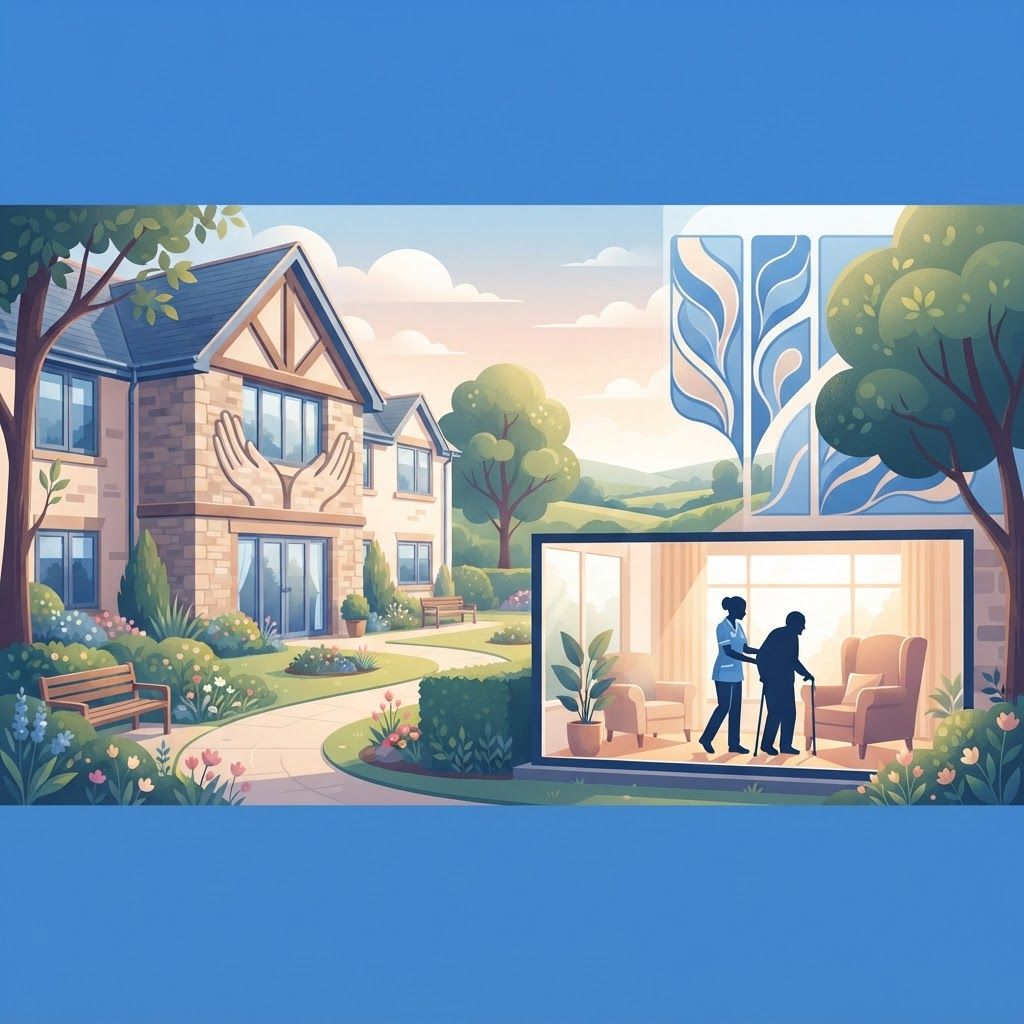
Understanding What Type of Care Is Actually Needed
Before comparing homes, it is essential to establish what level of care is required, because the categories are regulated differently and cost very differently. Residential care provides accommodation, meals, and support with personal care such as washing, dressing and medication prompting. Nursing care adds registered nurses on site around the clock, which is necessary for people with complex medical needs, significant wounds, or conditions requiring clinical intervention.
Dementia care may be delivered within either setting but requires specific staff training, environmental design and activity programming. Not every home advertising dementia care delivers it well, and the difference is visible during a visit. Respite care provides short stays, either to give family carers a break or to support recovery after a hospital admission, and is a useful way to test a home before committing.
In West Lancashire, provision spans Ormskirk, Skelmersdale, Burscough, Aughton, Tarleton and the surrounding villages, with a mix of large group operators and independent family-run homes. Rural locations often offer larger grounds and a calmer setting, while town homes offer easier visiting.
The Types of Provider Serving the District
Large national care groups including operators such as Barchester Healthcare, HC-One and Four Seasons Health Care run homes across the North West. Their strengths are structured governance, formal training programmes, established policies and financial resilience. Purpose-built homes from these groups typically feature en-suite rooms, assisted bathing facilities and dedicated dementia units.
Anchor and similar not-for-profit providers operate residential care and retirement housing with a reinvestment model rather than shareholder distribution, which some families find reassuring.
Methodist Homes and other charitable providers deliver care with a strong emphasis on dignity, community and wellbeing, often with well-developed chaplaincy and activity programmes.
Independent family-owned homes across West Lancashire are a significant part of local provision. Smaller resident numbers, long-serving staff and an owner present in the building frequently produce a more homely atmosphere and lower staff turnover, which is one of the strongest predictors of care quality.
Specialist dementia care homes design their environments deliberately, with clear sightlines, contrasting colours for doors and handrails, circular walking routes, memory boxes outside rooms and secure garden access. These features are not decorative; they measurably reduce distress and falls.
Nursing homes with registered nurse cover serve residents with complex needs including advanced Parkinson's disease, stroke rehabilitation, palliative care and conditions requiring clinical monitoring.
Retirement villages and extra care housing schemes offer self-contained apartments with on-site care available as needs change, allowing couples to stay together even when their care needs differ. This model has grown considerably and suits people who want independence with a safety net.
Live-in care providers offer an alternative to residential care entirely, placing a carer in the person's own home. For those with strong attachment to their home and garden, this can be preferable, and cost is broadly comparable to nursing home fees in many cases.
Domiciliary care agencies across the district provide visiting care from short daily calls to several visits a day, supporting people to remain at home for longer before residential care becomes necessary.
Hospices and palliative care providers serving the region deliver end of life care with specialist symptom management, and also support care homes through outreach and training.
How Funding Works
Funding is the area families find most opaque. Local authority support depends on a financial assessment, and in England there are defined capital thresholds above which individuals pay their own fees in full. Property is usually included in the assessment for permanent residential care, though there are important disregards, including where a spouse or certain relatives continue to live in the home.
NHS Continuing Healthcare is fully funded NHS care for people whose needs are primarily health-related rather than social. It is assessed through a formal process and is not means-tested. Eligibility is genuinely difficult to obtain but families should request an assessment where health needs are substantial, because the financial difference is considerable.
NHS-funded Nursing Care is a separate contribution paid directly to nursing homes towards the registered nursing element of care for eligible residents.
Deferred payment agreements allow local authorities to place a charge against a property so that fees are paid from the estate later rather than requiring an immediate sale. Independent financial advice from an adviser specialising in later life care is genuinely worthwhile before making irreversible decisions.
What to Assess on a Visit
Visit unannounced if possible, and visit twice, including once at a mealtime. Mealtimes reveal more about a home than any tour, showing staffing levels, food quality, whether residents receive help when they need it, and whether the atmosphere is social or silent.
Smell matters. A persistent odour indicates a continence care or cleaning problem. Equally, overwhelming air freshener can mask the same issue.
Watch staff interaction closely. Do staff use residents' names, make eye contact, crouch to speak at eye level and respond warmly? Do residents appear engaged, or are they seated around the edge of a lounge facing a television nobody is watching?
Ask direct questions: what is the staff turnover rate, what is the ratio of staff to residents on a night shift, how many staff have completed dementia training, what activities ran last week, and how are families kept informed. Ask to see the most recent Care Quality Commission report and discuss any issues raised in it.
Trends in Elderly Care
Person-centred care has moved from a policy phrase to a practical standard, with life history work, individual routines and meaningful activity replacing institutional schedules. Technology including falls sensors, digital care records and remote clinical monitoring is improving safety and reducing avoidable hospital admissions.
Workforce shortages remain the sector's central challenge, and homes that invest in pay, training and career progression consistently deliver better outcomes. Staff continuity is arguably the single most useful quality indicator a family can ask about.
For West Lancashire families, the practical advice is to start looking earlier than feels necessary, use respite stays to test a home, and weigh atmosphere and staff continuity at least as heavily as building quality.
Want your brand featured in front of decision-makers? Publish a guest post or get a link insertion in our guides through AAMAX's guest post and link insertion service.
Helpful Links
 SponsoredAAMAX — Full-Service Digital Agency
Write for Us
Share your expertise with our readers. We welcome guest contributions from industry specialists.
Pitch your idea