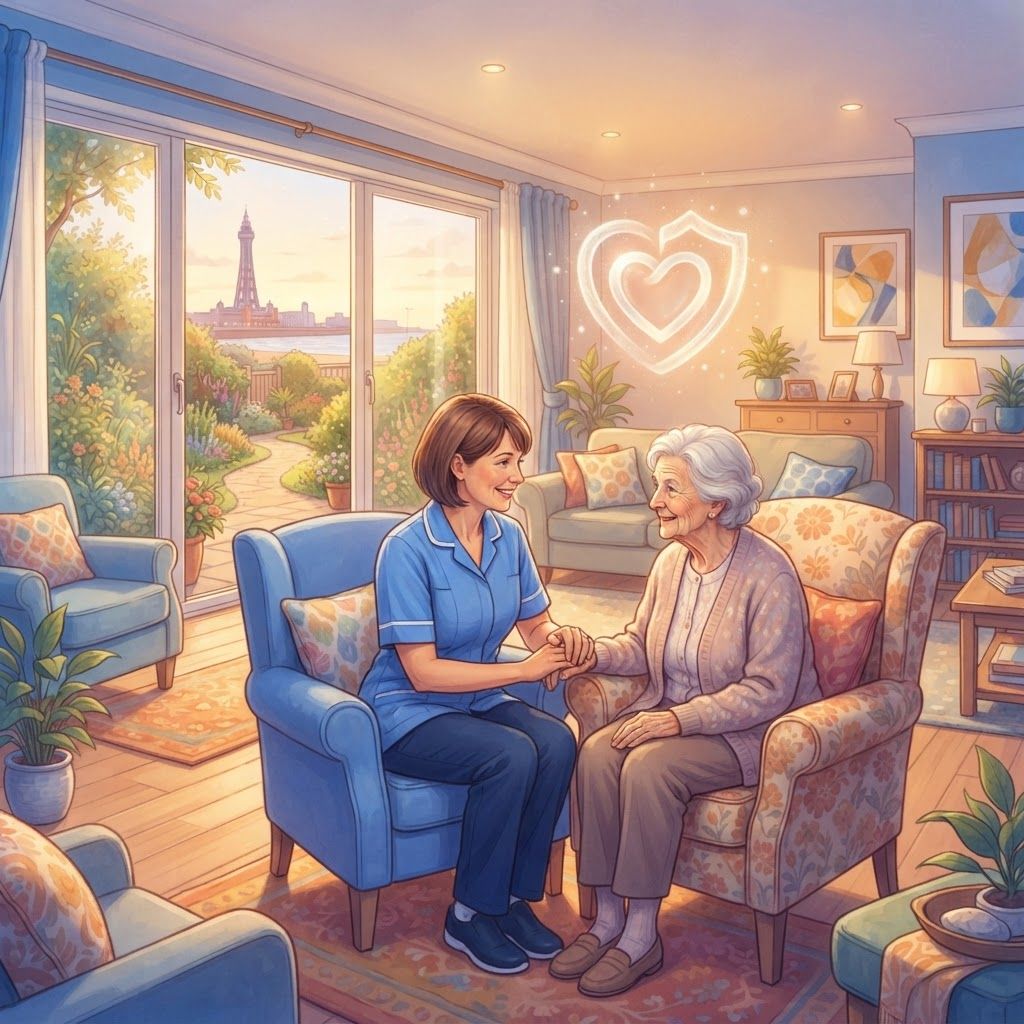
Care for Older People on the Fylde Coast
Blackpool and the surrounding Fylde coast have long been a retirement destination, and the resident population skews significantly older than the national average. This has produced one of the more developed elderly care sectors in the North West, with a substantial number of residential and nursing homes, specialist dementia units and community support services.
Scale brings variation. Provision ranges from outstanding to inadequate, and the difference is not reliably reflected in price. Families making this decision, often under time pressure following a hospital admission or a sudden decline, need to know what actually distinguishes good care from a well-decorated building.
Understanding the Types of Care
Residential care provides accommodation, meals, personal care and support with daily living for people who can no longer manage independently but do not need nursing input. Nursing care adds registered nurses on site around the clock for residents with medical needs, complex medication regimes or conditions requiring clinical monitoring.
Dementia care may be delivered within either setting but requires specific environmental design, staff training and approaches to communication and behaviour. Respite care offers short stays, giving family carers a break or supporting recovery after hospital. Day care provides activity and supervision without residency, helping people remain at home longer.
The Ten Leading Elderly Care Providers in Blackpool
1. Promenade Residential Care Home
Promenade Residential Care Home provides personal care in a homely setting with a strong emphasis on maintaining residents' routines, preferences and independence. Their activity programme is genuinely resident-led rather than imposed, and family involvement is actively encouraged rather than merely permitted.
2. Fylde Nursing Home
Fylde Nursing Home delivers twenty-four hour nursing care for residents with complex medical needs, including those requiring wound management, catheter care and end-of-life support. Clinical governance is robust and staffing ratios are maintained above minimum requirements.
3. Tower View Dementia Care
Tower View Dementia Care specialises in supporting people living with dementia, using purpose-designed environments with clear wayfinding, secure outdoor access and reminiscence spaces. Staff receive ongoing dementia-specific training, and their approach prioritises understanding behaviour rather than managing it.
4. Coastal Retirement Village
Coastal Retirement Village offers independent living apartments with care available as needs change, allowing couples to remain together even when their care requirements differ. This model avoids the disruption of moving again as circumstances evolve, which is a significant benefit.
5. Northshore Respite Care Centre
Northshore Respite Care Centre provides short-stay care for planned breaks and post-hospital recovery. Their reablement focus helps people regain independence after illness rather than simply providing supervision, and many residents return home successfully.
6. Clifton House Care Home
Clifton House Care Home combines residential and nursing provision on one site, meaning residents do not need to move if their needs increase. Continuity of place and relationships matters greatly to older people, and this flexibility is a genuine advantage.
7. Beacon Home Care Services
Beacon Home Care Services delivers domiciliary care in people's own homes, from short daily visits to live-in support. For many families this is the preferred option, and consistent carer allocation means clients see familiar faces rather than a rotating roster of strangers.
8. Ribble Day Care Centre
Ribble Day Care Centre offers structured daytime activity, meals and social contact for older people living at home. It addresses isolation directly while providing family carers with reliable respite, and it frequently delays the need for residential care by years.
9. Illumine Assisted Living
Illumine Assisted Living provides self-contained accommodation with on-site support staff, communal facilities and emergency call systems. It suits people who want independence and privacy alongside the security of help being available, occupying the middle ground between home and residential care.
10. Sandgrown End of Life Care
Sandgrown End of Life Care specialises in palliative support, working closely with hospice and community teams. Their staff are trained in symptom recognition, comfort care and supporting families through bereavement, and their emphasis on dignity and choice is consistently praised.
Trends in Elderly Care
Person-centred care has moved from a stated aspiration to an operational reality in better homes, meaning routines are built around residents' preferences rather than institutional convenience. Meal times, waking times and daily activity are increasingly individual rather than fixed.
Technology is being adopted thoughtfully, including fall detection, medication management systems, digital care records and video calling with distant family. Used well it improves safety and connection; used badly it substitutes for human contact, which is why implementation matters more than the technology itself.
Workforce challenges remain the sector's defining pressure. Recruitment and retention difficulties affect quality directly, and homes that invest in training, career progression and fair pay have measurably lower staff turnover, which residents notice immediately.
How to Choose a Care Home
Visit unannounced if possible, and visit more than once at different times including a mealtime. Arranged tours show a home at its best. An unscheduled visit shows you what it is like on an ordinary afternoon, which is what your relative will actually experience.
Observe interactions rather than facilities. Watch how staff speak to residents, whether people are engaged or sitting unattended, whether call bells are answered promptly and whether residents appear comfortable and appropriately dressed. Atmosphere tells you more than décor.
Read the most recent independent inspection report in full, not just the overall rating. The detail explains what is working and what is not, and a home rated as requiring improvement with a clear action plan may be a better prospect than one coasting on an older good rating.
Finally, involve the person moving in as fully as their capacity allows. Their preferences about location, room, routine and social environment should carry real weight. A decision made with someone rather than for them produces far better adjustment, and that sense of agency matters enormously at a point in life when so much else has been taken out of a person's hands.
Want your brand featured in front of decision-makers? Publish a guest post or get a link insertion in our guides through AAMAX's guest post and link insertion service.
Helpful Links
 SponsoredAAMAX — Full-Service Digital Agency
Write for Us
Share your expertise with our readers. We welcome guest contributions from industry specialists.
Pitch your idea