Why Care Provision Matters So Much Here
Ards and North Down has one of the older population profiles in Northern Ireland. Coastal retirement migration into Bangor, Donaghadee and Groomsport, combined with long-standing communities ageing in place across the peninsula, has produced sustained demand for residential and nursing care. The borough consequently has a large and varied care home sector, ranging from purpose-built modern nursing homes with dementia-specific units to smaller converted residential homes with a dozen beds and a distinctly domestic atmosphere.
Care in Northern Ireland is regulated by the Regulation and Quality Improvement Authority, which inspects homes and publishes reports. Those reports are the single most useful objective resource available to families, and reading recent inspections should be the first step in any search.
Understanding the Types of Care
Residential care provides accommodation, meals and personal care support with washing, dressing and medication prompting. Nursing care adds registered nurses on site around the clock, appropriate for people with complex medical needs, tube feeding, advanced frailty or end-of-life care. Dementia care can be provided in either setting but requires specific environmental design, staff training and activity programming. Choosing the wrong category is the most common and most disruptive error families make, because it can force a second move within months.
How These Providers Were Assessed
Assessment considered regulatory inspection outcomes, staffing levels and continuity, dementia care capability, quality of environment and outdoor space, activity and social programming, catering standards, nursing capability, and family communication.
1. Four Seasons Health Care Homes
Four Seasons operates several homes across the borough and is one of the largest providers in Northern Ireland. Its scale brings structured training programmes, formal clinical governance, dedicated dementia units in some locations and purpose-built facilities with wide corridors, assisted bathing and secure gardens. Families report that the strongest sites combine that infrastructure with stable local management, so it is worth assessing individual homes rather than the group as a whole.
2. Macklin Care Homes
Macklin has built a strong reputation in the greater Belfast and North Down area for high-specification purpose-built homes. Emphasis on hotel-standard interiors, dining quality, extensive activity programmes and en-suite accommodation places it towards the premium end of the market. Nursing and dementia provision is generally strong, and family feedback frequently highlights the standard of the physical environment and mealtimes.
3. Runwood Homes
Runwood operates residential and nursing homes in the borough with a focus on person-centred dementia care. Its approach includes life-story work, sensory environments and structured meaningful activity, which reflects current best practice in dementia support. Homes tend to be mid-sized, which many families find a good balance between resources and familiarity.
4. Kirk House, Bangor
Kirk House is a long-established Bangor care setting with strong local recognition and a reputation for continuity of staff. Homes of this type, embedded in the community for decades, often achieve something larger operators struggle with: carers who know residents' families, local churches and community groups visiting regularly, and a sense of the home as part of the town rather than an institution within it.
5. Ardkeen and Peninsula Care Homes
Homes serving Newtownards and the Ards Peninsula perform a vital function in allowing older people to remain within their own community. For a resident who has lived their whole life near Kircubbin or Portaferry, remaining close to family, familiar surroundings and their church or social network has measurable benefits for wellbeing and cognitive stability. These homes are typically smaller and highly valued locally.
6. Holywood Nursing and Residential Homes
Holywood's care provision serves an affluent and well-connected community, with homes offering high staff-to-resident ratios, attractive settings and strong nursing capability. Proximity to Belfast and to the Ulster Hospital is a practical advantage for residents with frequent medical appointments.
7. Comber and Killinchy Care Settings
Care homes around Comber and Killinchy benefit from rural settings with gardens and green outlooks, which contributes more to resident wellbeing than is often appreciated. These homes generally serve local families closely and place emphasis on maintaining links with village life, including outings and community involvement.
8. Specialist Dementia Care Units
Several providers in the borough operate dedicated dementia units with secure design, circular walking routes, visual cues for orientation, reminiscence spaces and specifically trained staff. For residents with advanced dementia, distress behaviours or wandering risk, these environments are substantially safer and calmer than general residential settings, and identifying them early avoids traumatic later transfers.
9. Domiciliary Care and Supported Living Providers
Residential care is not the only answer. A large network of domiciliary care agencies across Ards and North Down provides home visits from once daily to several times a day, alongside supported living and sheltered housing schemes with on-site wardens. For many older people, a well-organised package of home care with adaptations delays or entirely avoids the need for residential care, and this should always be explored before a permanent move.
10. Respite and Intermediate Care Provision
Short-stay respite beds and intermediate care at Bangor and Ards community hospitals allow recovery after illness or surgery and give family carers essential breaks. Using respite proactively rather than in crisis is one of the strongest predictors of sustainable long-term family caring, and it also allows families to trial a home before committing permanently.
How to Assess a Care Home Properly
Read the most recent inspection reports before visiting, and pay attention to repeated findings across successive inspections rather than one-off issues. Then visit unannounced if permitted, and go at mealtime. Nothing reveals more about a home than how lunch is served: whether residents are supported patiently, whether food looks appetising, whether staff sit with people who need help, and whether the atmosphere is calm or rushed.
Ask direct questions about staffing. What are the day and night ratios, how much agency staff is used, and what is the annual turnover figure. Stable staffing is the strongest single indicator of care quality, particularly for residents with dementia who depend on familiarity.
Look at what residents are actually doing at three in the afternoon. If everyone is sitting in a lounge facing a television, the activity programme exists on paper only. Good homes have visible engagement, small group activities, gardens in use and residents moving around.
Clarify funding early. Understand health and social care trust funding assessments, financial assessment thresholds, what top-up fees apply, and precisely what is and is not included in the weekly rate, including chiropody, hairdressing, escorts to appointments and continence products.
Where Care Is Heading
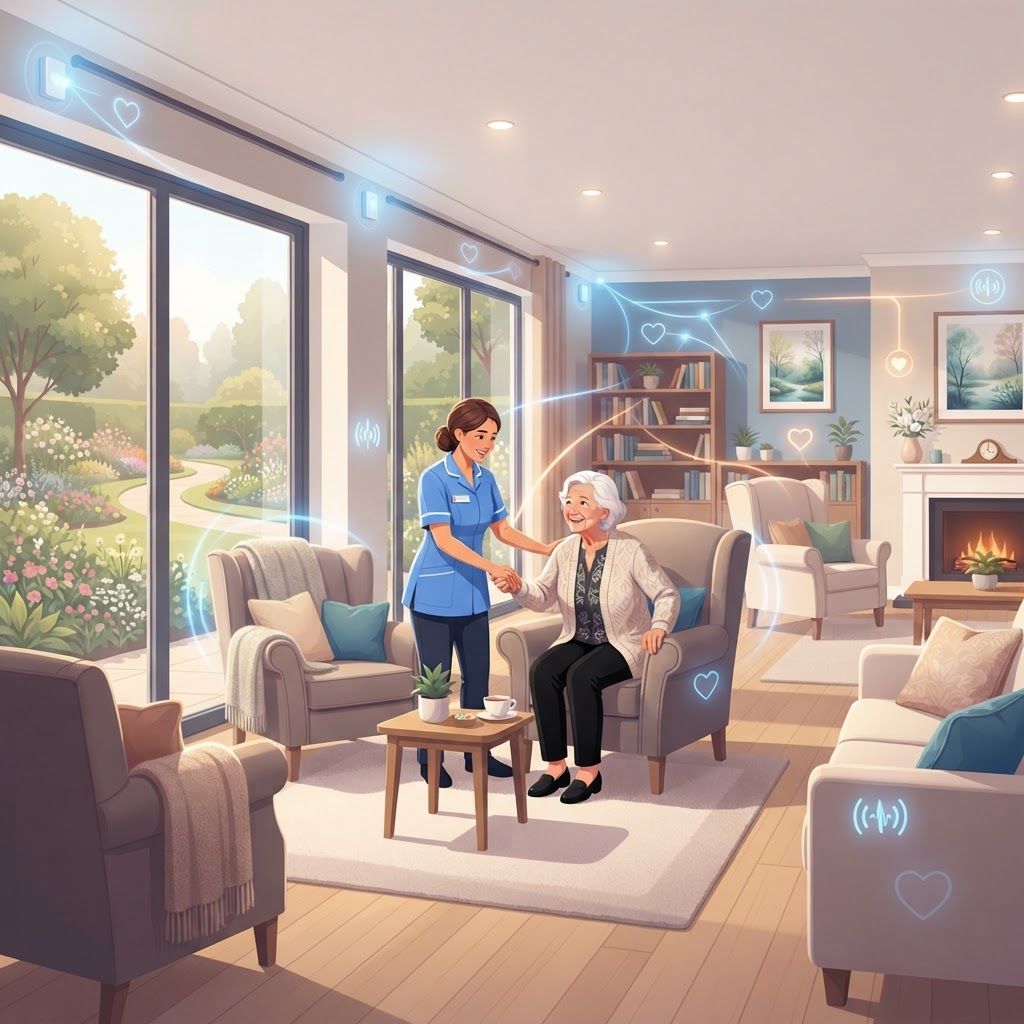
The sector faces real pressure from staffing shortages and cost inflation, but there are meaningful improvements too. Purpose-built dementia-appropriate design is becoming standard in new developments. Technology including falls sensors and digital care records is improving safety and family communication. And there is greater emphasis on keeping people at home longer through reablement and home adaptation, which for most families in the borough remains the preferred outcome.
Want your brand featured in front of decision-makers? Publish a guest post or get a link insertion in our guides through AAMAX's guest post and link insertion service.
Helpful Links
 SponsoredAAMAX — Full-Service Digital Agency
Write for Us
Share your expertise with our readers. We welcome guest contributions from industry specialists.
Pitch your idea