Why Plant Hire Dominates Construction in Islington
Construction in inner London is defined by constraint. Sites are small, storage space is almost non-existent, access is often through a single narrow entrance, and works frequently take place in occupied buildings surrounded by neighbours. In this environment, owning a large fleet of equipment makes little sense for most contractors. Hiring exactly what is needed, for precisely as long as it is needed, is both economically and practically superior.
Islington's construction workload skews toward refurbishment, basement conversions, loft extensions, rear extensions, interior fit-outs and infrastructure maintenance rather than large greenfield development. This produces demand for compact, manoeuvrable, low-noise and often electric equipment: mini excavators that fit through side gates, compact dumpers, scaffold towers, dust extraction units and battery-powered tools that can operate indoors without emissions.
The Top 10 Construction Equipment Rental Providers Serving Islington
1. HSS Hire — A long-established national tool and equipment hire brand with strong London coverage. HSS is known for a broad catalogue spanning access equipment, power tools, lifting gear, heating and drying units, and site safety products, with straightforward short-term hire suited to small contractors and competent homeowners alike.
2. Speedy Hire — One of the UK's largest hire providers, offering everything from hand tools to plant, surveying instruments and welfare units. Their strength is availability and account management for contractors running multiple concurrent projects, with structured delivery and collection scheduling.
3. Brandon Hire Station — Focused on tool hire with a strong presence across London. Well suited to trades needing reliable access to breakers, floor saws, dust extractors, sanders and specialist finishing equipment on a daily or weekly basis.
4. Sunbelt Rentals — Offers a very wide range including powered access, temporary power, lighting towers, pumps and specialist equipment. Their scale makes them a common choice for larger Islington commercial projects requiring coordinated multi-item hire and technical support.
5. GAP Group — Independent plant and tool hire with substantial excavator, dumper, welfare and lifting divisions. GAP is often competitive on plant hire and is used widely by groundworks and civil engineering contractors working on utilities and highway schemes.
6. Nixon Hire — Known particularly for site accommodation, welfare units, toilets and temporary fencing alongside plant. On constrained Islington sites, well-designed compact welfare units are essential for compliance and are a genuine logistical challenge to accommodate.
7. Powered access and scaffold tower specialists — Access is a major component of London construction cost. Providers focusing on scissor lifts, cherry pickers, low-level access platforms and aluminium towers offer equipment suited to narrow streets, low headroom basements and delicate floor finishes.
8. Compact and micro plant specialists — Several hire firms concentrate on micro excavators, mini skid steers, conveyor systems and compact demolition robots capable of passing through standard doorways. These are indispensable for Islington basement digs and rear garden works with no vehicle access.
9. Electric and low-emission plant providers — With increasing focus on air quality and low-emission zone requirements, hire companies stocking battery-electric excavators, dumpers, lighting towers and telehandlers are growing in importance, particularly for work near schools, hospitals and residential occupants.
10. Local independent hire depots — Smaller independent depots serving north London provide flexible terms, personal service and often faster turnaround for last-minute requirements. For small builders and homeowners, they frequently offer the most practical option for a weekend hire.
Equipment Most Commonly Hired in the Borough
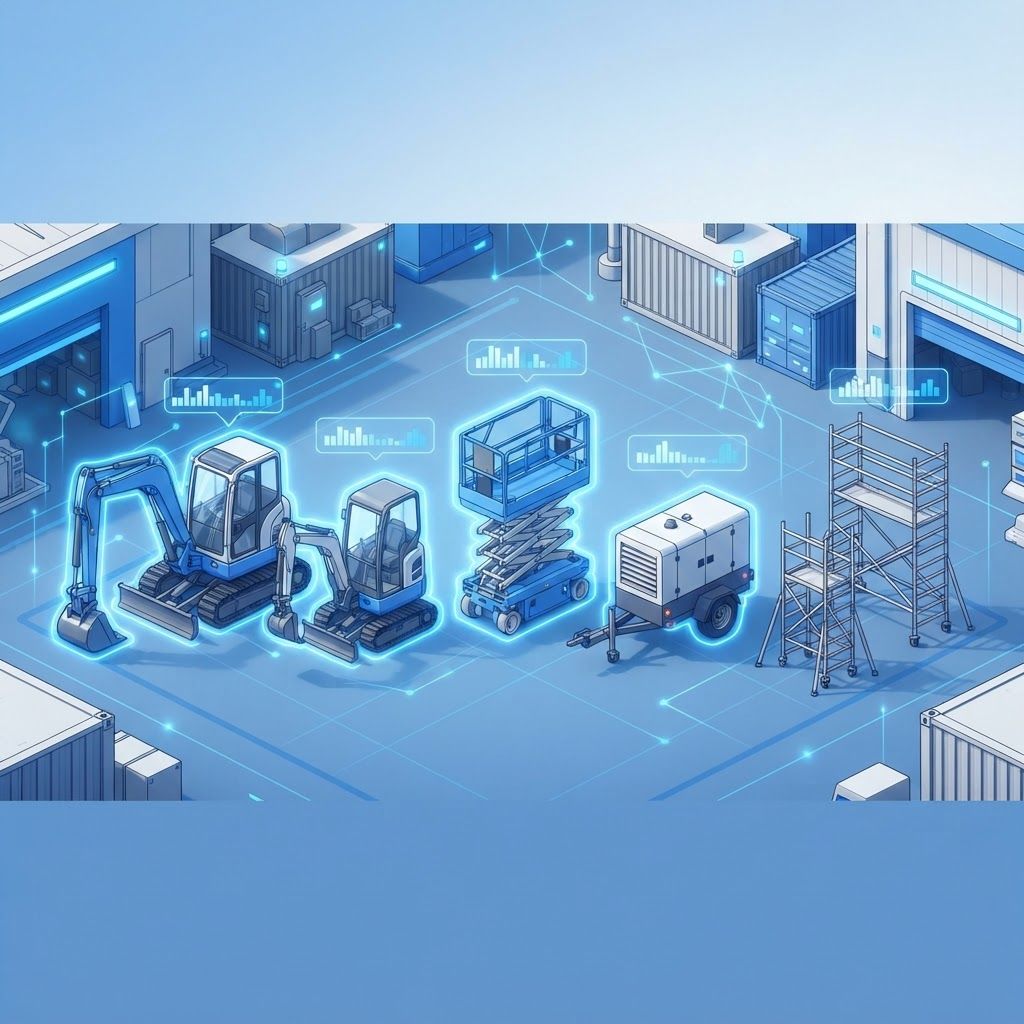
Mini and micro excavators lead demand, driven by basement and extension works. Compact tracked dumpers and conveyor belts move spoil where wheelbarrows would be impossibly slow. Concrete breakers, floor saws and crushers support demolition and alteration works.
Access equipment is heavily used: scaffold towers for internal decoration and services, scissor lifts for commercial fit-outs, and small cherry pickers for facade and gutter work. Dust extraction and air scrubbing units are increasingly hired as a compliance necessity rather than a nicety, given the health risks of silica dust.
Support equipment matters too: temporary lighting, generators where power is limited, submersible pumps for groundwater in basement works, heaters and dehumidifiers for drying screeds and plaster, and temporary fencing and hoarding to secure sites in busy streets.
Access, Permits and Practical Logistics
Delivering plant into Islington requires planning. Many streets have parking restrictions, controlled parking zones, width limits and resident permit schemes. Suspending bays or obtaining permits for skips, hoarding or scaffolding on the highway takes lead time and cost, and should be arranged well before equipment arrives.
Confirm delivery vehicle requirements when booking. A larger low-loader may be unable to reach the site, requiring smaller transport or self-collection. Check gate widths, ceiling heights, turning circles and floor loading capacity before committing to a machine, as an unsuitable delivery still incurs charges.
Low-emission and ultra-low-emission zone rules affect both plant and transport in London, and non-road mobile machinery is subject to emissions standards on certain sites. Reputable hire companies advise on compliant equipment rather than leaving contractors exposed.
Understanding Hire Terms and Costs
Hire is normally priced daily, weekly or monthly, with weekly rates offering considerably better value than multiple day hires. Rates typically exclude delivery, collection, fuel and consumables such as blades, discs and drill bits, so ask for a fully inclusive figure when comparing providers.
Damage liability is a critical clause. Most agreements make the hirer responsible for loss or damage, and many providers offer damage waiver cover for an additional percentage. Understand the excess and exclusions, particularly for theft from unsecured sites, which is a real risk in dense urban areas.
Off-hire procedure deserves attention. Charges usually continue until the equipment is formally off-hired and collected, and failing to notify the provider promptly is a common source of unnecessary cost. Keep written confirmation of off-hire references.
Safety, Training and Legal Responsibilities
Hiring equipment does not transfer legal responsibility for its safe use. Operators must be competent and, for many machines, formally trained and certificated. Powered access requires appropriate operator qualification, and excavators require recognised plant operator cards on commercial sites.
Lifting equipment must have valid thorough examination records, and hire companies should supply these on request. Inspect equipment on delivery, record any pre-existing damage photographically, and check that guards, emergency stops and safety devices are intact and functional.
Provide adequate personal protective equipment and consider noise and dust controls, particularly where works adjoin occupied dwellings. Islington's dense housing means complaints escalate quickly, and effective dust suppression and noise management protect both health and project relationships.
Trends in the Hire Market
Electrification is the clearest trend. Battery-electric compact plant eliminates exhaust emissions, dramatically reduces noise and allows indoor operation without ventilation concerns, making it particularly attractive for refurbishment work in occupied buildings.
Telematics and digital hire management are also expanding. Online portals showing live on-hire equipment, utilisation data and one-click off-hire reduce administrative waste and unnecessary charges. For contractors managing several small Islington sites simultaneously, this visibility has real financial value.
Conclusion
Construction equipment rental underpins almost every project in Islington, from a single-room refurbishment to a full basement excavation. The best providers combine broad availability, compact and low-emission options, honest inclusive pricing and genuine advice on access and compliance. Plan deliveries and permits early, verify operator competence, document equipment condition, and off-hire promptly to keep costs under control.
Want your brand featured in front of decision-makers? Publish a guest post or get a link insertion in our guides through AAMAX's guest post and link insertion service.
Helpful Links
 SponsoredAAMAX — Full-Service Digital Agency
Write for Us
Share your expertise with our readers. We welcome guest contributions from industry specialists.
Pitch your idea