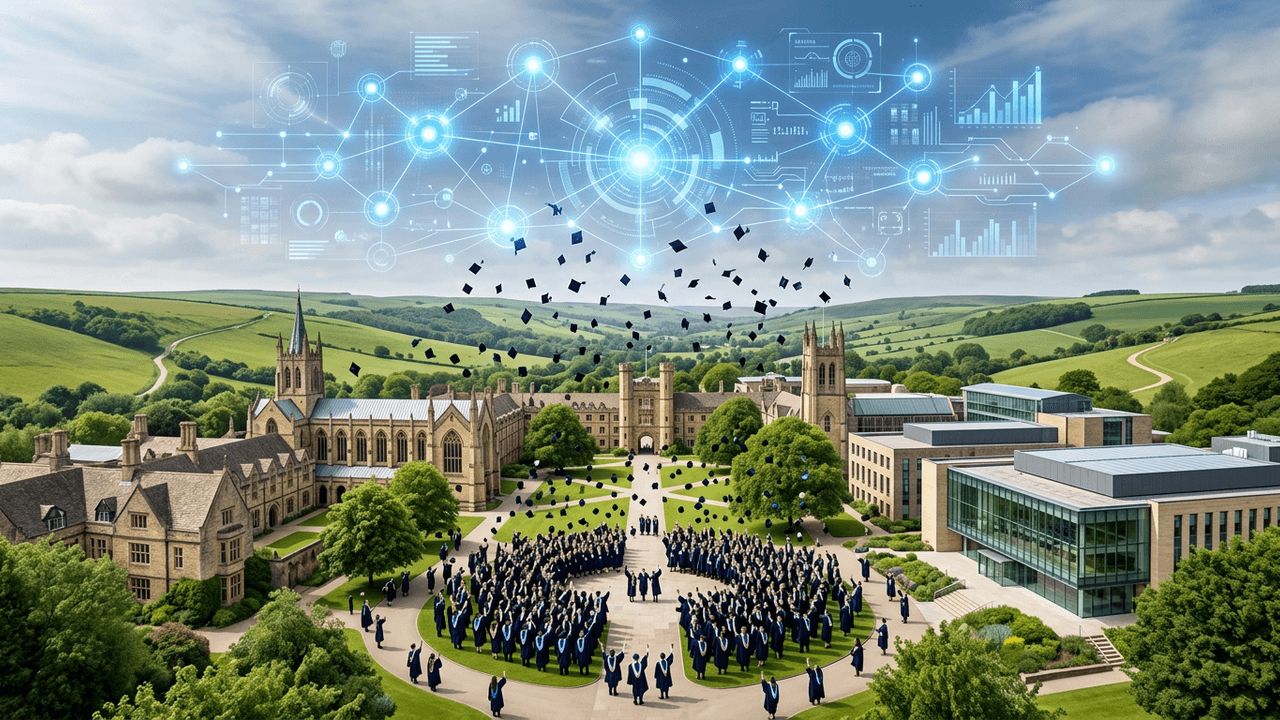
Further Education in North Lincolnshire
The post-sixteen landscape in North Lincolnshire is shaped directly by the local economy. Steel manufacturing, port and logistics operations, chemical and process industries, offshore wind and renewable energy, healthcare and food production all require technical skills, and the district colleges have built their curricula accordingly. Alongside these vocational strengths sits substantial academic provision for students heading to university.
Students in the district therefore choose between distinct routes: academic A levels at a sixth form college or school sixth form, technical qualifications and T levels, apprenticeships combining paid work with study, or access and adult courses for those returning to education later. Each leads somewhere worthwhile, and the right choice depends far more on the individual than on any ranking.
How to Choose a College
Begin with the destination rather than the course. If you intend to study medicine or law, A level provision and university progression records matter most. If you want to work in engineering, port operations or construction, employer links, workshop facilities and apprenticeship conversion rates matter more.
Assess teaching quality through inspection reports and student outcomes, but also visit and speak to current students. Look at facilities relevant to your subject, industry-recognised qualifications offered, work placement arrangements, tutorial and pastoral support, travel time and transport costs, and financial support such as bursaries and free meals eligibility.
The Top 10 Colleges and Post-Sixteen Providers
1. North Lindsey College, Scunthorpe
North Lindsey College is the principal further education institution in the district and the natural first consideration for most local students. Its breadth is its greatest strength, spanning engineering, construction, health and social care, business, computing, creative arts, hospitality and access to higher education, supported by substantial workshop and laboratory facilities and long-standing employer partnerships across the Humber industrial base.
2. John Leggott College, Scunthorpe
John Leggott College is a well-established sixth form college with a strong academic focus and an extensive A level offer. It is particularly valued by students aiming for competitive university courses, with structured university application support, enrichment programmes and a mature, campus-style environment that eases the transition from school.
3. University Campus North Lincolnshire
Delivering higher education locally in partnership with universities, this provision allows students to study degree and higher technical qualifications without relocating. For adult learners, those with caring responsibilities and students wanting to remain in employment, the ability to study at degree level close to home is transformative.
4. School Sixth Forms in Brigg and Epworth
Sixth forms attached to schools such as those in Brigg and Epworth offer a smaller, more familiar environment with continuity of staff and pastoral relationships. Class sizes are often smaller than in large colleges, and many students who value close academic supervision perform better in this setting.
5. Grimsby Institute and TEC Partnership
Just beyond the district boundary but widely used by North Lincolnshire students, the TEC Partnership provides extensive vocational and higher technical education, including strong provision in engineering, maritime studies, digital and creative subjects. Its specialist facilities complement local options for students with particular career targets.
6. Apprenticeship Training Providers Serving the Humber
Independent training providers deliver apprenticeship frameworks alongside employers in engineering, logistics, business administration, warehousing and care. For students who learn best through work, an apprenticeship offers paid employment, formal qualification and immediate industry experience, and the Humber employment base makes availability comparatively strong here.
7. Engineering and Advanced Manufacturing Training Centres
Specialist engineering training providers work closely with the steel industry, process plants and offshore wind operators. Provision typically includes welding, fabrication, mechanical and electrical maintenance, instrumentation and process operations, delivered on industry-standard equipment with strong progression into employment.
8. Health and Social Care Training Providers
With significant local employment in hospitals, care homes and community services, health and social care training is a major sector. Providers deliver qualifications from entry level through to advanced practice, combining classroom study with supervised placements, and progression into nursing and allied health degrees is a well-trodden route.
9. Adult Education and Community Learning Services
Adult and community learning provision across North Lincolnshire supports essential skills in English, mathematics and digital literacy, alongside vocational short courses and leisure learning. Flexible timetables, local venues and supportive teaching make these programmes a genuine second chance for many residents.
10. Specialist Provision for Learners with Additional Needs
Specialist post-sixteen provision supports young people with special educational needs and disabilities through supported internships, independent living skills, therapeutic input and pathways into supported employment. Individualised planning and close partnership with families are the defining features of the strongest providers.
Trends in Further Education
Technical qualifications have been substantially reformed, with T levels offering a demanding mix of classroom learning and extended industry placement. Higher technical qualifications are also expanding, providing a route to advanced skills without a traditional three-year degree.
The green skills agenda is particularly relevant to North Lincolnshire, given offshore wind development in the North Sea, hydrogen and carbon capture proposals along the Humber, and the decarbonisation of heavy industry. Colleges are investing in training for these emerging roles. Digital skills provision continues to grow across every subject area, and flexible and online delivery models are expanding access for adult learners balancing work and family commitments.
Practical Advice for Applicants
Apply early, as popular courses fill and some require interviews or portfolios. Attend open events and ask to see the actual workshops and studios you would use. Check entry requirements carefully, including English and mathematics conditions. Investigate financial support, including bursaries, travel assistance and equipment funding. If considering an apprenticeship, apply to multiple employers, since these are competitive recruitment processes rather than guaranteed places.
Final Thoughts
North Lincolnshire post-sixteen provision is genuinely strong, anchored by North Lindsey College breadth and John Leggott College academic focus, and extended by local higher education, specialist training centres and adult learning services. The district industrial and energy economy gives students something many places lack: clear, well-paid destinations for technical skills. Choose the route that fits how you learn and where you want to end up, and the local options will support you well.
Want your brand featured in front of decision-makers? Publish a guest post or get a link insertion in our guides through AAMAX's guest post and link insertion service.
Helpful Links
 SponsoredAAMAX — Full-Service Digital Agency
Write for Us
Share your expertise with our readers. We welcome guest contributions from industry specialists.
Pitch your idea