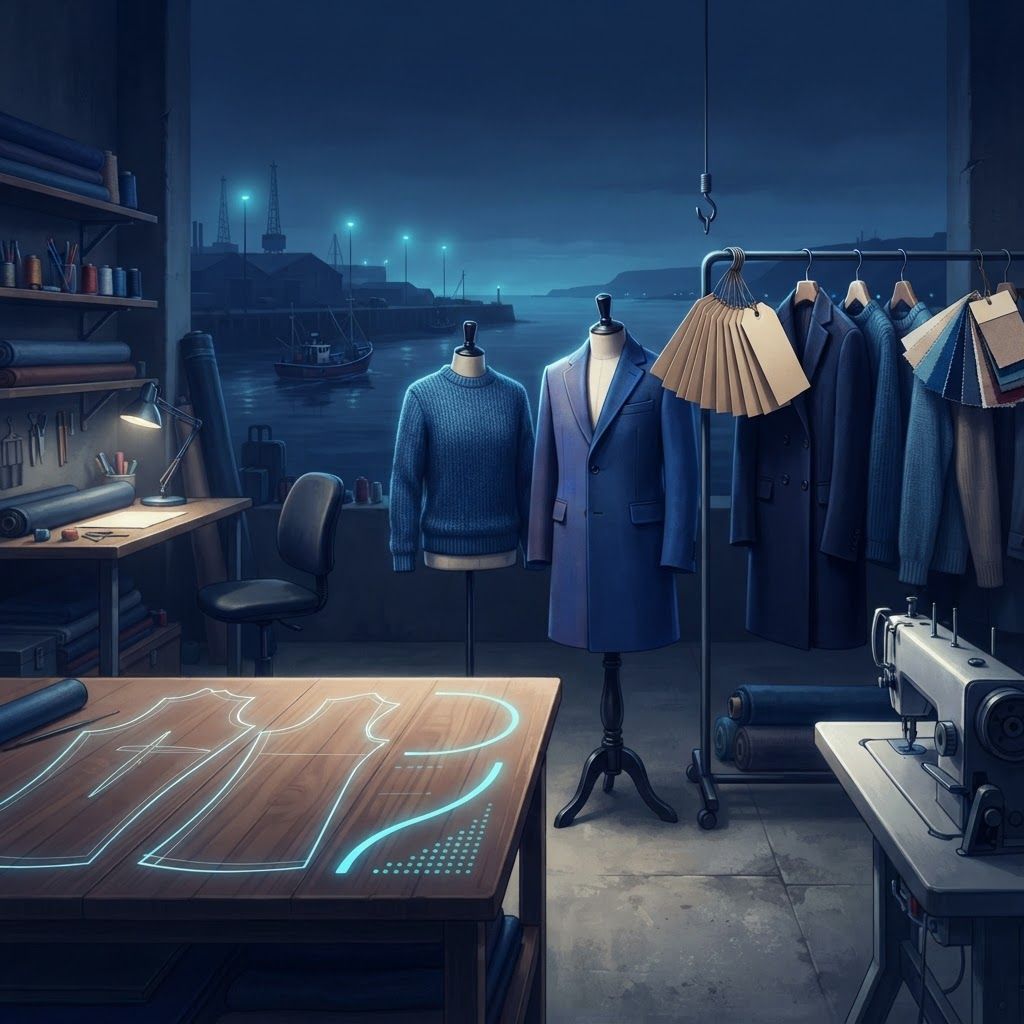
Clothing Shaped by Coast and Industry
North East Lincolnshire has a clothing identity rooted in genuine function. Grimsby's fishing industry, once among the largest in the world, demanded garments that performed in cold, wet, physically punishing conditions. That heritage of practical maritime clothing runs through the area's relationship with apparel and has shaped what local brands make and what local consumers value.
Today the picture is broader. Cleethorpes brings a seaside leisure market with its own casual and holiday clothing demand. The Humber's growing renewable energy and port logistics sectors need modern technical workwear. A generation of independent designers and small-batch producers has emerged, often selling online to national audiences while manufacturing locally. Together these create a clothing landscape that is more varied and more interesting than the area's size suggests.
The Categories of Clothing Brand
1. Maritime and technical workwear brands produce waterproof outerwear, insulated layers and durable working clothing built for genuine exposure, drawing directly on fishing industry heritage.
2. Industrial workwear and PPE brands serve the port, chemical processing, offshore wind and logistics sectors with compliant high-visibility, flame-retardant and protective clothing.
3. Coastal and casual lifestyle brands translate seaside identity into everyday clothing, typically with relaxed silhouettes, weather-appropriate fabrics and understated design.
4. Independent designer labels produce small-batch collections with distinctive point of view, often founded by graduates who chose to build locally rather than relocate to London.
5. Sustainable and slow fashion brands focus on organic and recycled materials, transparent supply chains and durability, frequently operating on pre-order to eliminate overproduction.
6. Sportswear and teamwear producers supply local clubs, gyms and schools with custom kit, combining garment supply with printing and embroidery.
7. Heritage and reproduction clothing makers recreate traditional garments including guernseys, smocks and fisherman's knits, appealing to buyers who value craft and provenance.
8. Children's and schoolwear brands supply local families and schools, competing on durability and value in a demanding practical category.
9. Print-on-demand and custom apparel businesses serve events, businesses and community groups with low-minimum personalised clothing.
10. Vintage and reworked clothing sellers curate second-hand pieces and remake garments, a segment growing strongly on both sustainability and individuality grounds.
What Defines Quality in Local Clothing
The area's workwear heritage has instilled a practical understanding of garment quality that applies well beyond technical clothing.
Fabric weight and composition determine durability, warmth and how a garment ages. Heavier weights generally last longer and hold shape better, while fibre blends affect breathability, stretch recovery and care requirements. Natural fibres age differently from synthetics, and neither is universally better.
Construction detail separates garments that last from those that do not. Reinforced stress points, bar tacks at pocket corners, taped or flat-felled seams, generous seam allowances permitting alteration and properly finished edges all indicate manufacturing care.
Hardware quality matters disproportionately, since a failed zip or button ruins an otherwise sound garment. Metal zips, robust sliders and securely attached buttons with reinforcement signal serious construction.
Technical performance in outerwear depends on measurable properties including hydrostatic head for waterproofing, breathability ratings and seam sealing. Genuine technical brands publish these figures, and vague claims of water resistance without specification usually indicate limited performance.
Fit and grading quality determines whether a garment works across body types. Brands investing in proper pattern grading rather than simply scaling a single block produce clothing that fits genuinely across their size range.
Trends Shaping the Local Clothing Scene
Sustainability has become a defining commitment rather than a marketing angle for many local independents. Organic cotton, recycled polyester, deadstock fabric use, plastic-free packaging and repair services all feature increasingly, supported by consumers who value durability over volume.
Made-in-Britain positioning has genuine commercial value, and brands manufacturing locally emphasise this openly, appealing to buyers concerned about labour conditions, carbon footprint and supporting domestic skills.
Direct-to-consumer selling has enabled small brands to reach national and international customers without wholesale intermediaries, fundamentally changing what is viable for a small producer in a coastal town.
Repair, alteration and resale services have grown as brands take responsibility for garment lifespan, offering repairs, spare buttons and take-back schemes that extend product life meaningfully.
Genderless and inclusive sizing has expanded, with brands moving away from rigid categorisation toward fit-based sizing that serves more customers.
Offshore wind sector growth along the Humber has created substantial demand for high-specification technical workwear, supporting brands able to meet demanding safety and performance standards.
How to Buy Clothing Well
Calculate cost per wear rather than purchase price. A well-constructed coat worn for ten years costs far less annually than a cheap one replaced every season, and it performs better throughout.
Check fabric composition and care requirements before buying. Garments requiring dry cleaning carry ongoing cost, and understanding fibre content helps predict how something will wear and whether it suits your climate and activity.
Buy for actual conditions. Coastal weather in North East Lincolnshire is genuinely demanding, with wind, driving rain and sea air, and clothing chosen for appearance alone tends to disappoint in practice.
Support pre-order and made-to-order models where you can plan ahead. These eliminate overproduction waste and often provide better value, since brands are not pricing in unsold inventory risk.
Consider alteration. A well-made garment adjusted to fit properly looks and feels better than an expensive one that fits approximately, and local alteration services are inexpensive relative to the improvement.
Supporting Local Clothing Producers
Buying directly from small brands returns substantially more value to the producer than wholesale purchases, and for small operations that difference determines viability.
Providing honest feedback helps small brands refine fit, construction and range far more than silence. Independent producers genuinely act on customer input in ways large manufacturers cannot.
Caring for garments properly extends their life significantly. Washing less frequently at lower temperatures, air drying, prompt repair of small damage and correct storage all substantially outlast careless treatment.
Final Thoughts
North East Lincolnshire's clothing brands draw on a genuine heritage of functional maritime and industrial apparel while supporting a contemporary independent design scene selling nationally. The area's strengths lie in technical workwear where performance is measurable and matters, and in small-batch sustainable production where transparency and durability are the selling points. Buyers get the best value by assessing construction detail and fabric specification rather than price, calculating cost per wear honestly, and supporting producers who stand behind garment longevity with repair and take-back services.
Want your brand featured in front of decision-makers? Publish a guest post or get a link insertion in our guides through AAMAX's guest post and link insertion service.
Helpful Links
 SponsoredAAMAX — Full-Service Digital Agency
Write for Us
Share your expertise with our readers. We welcome guest contributions from industry specialists.
Pitch your idea