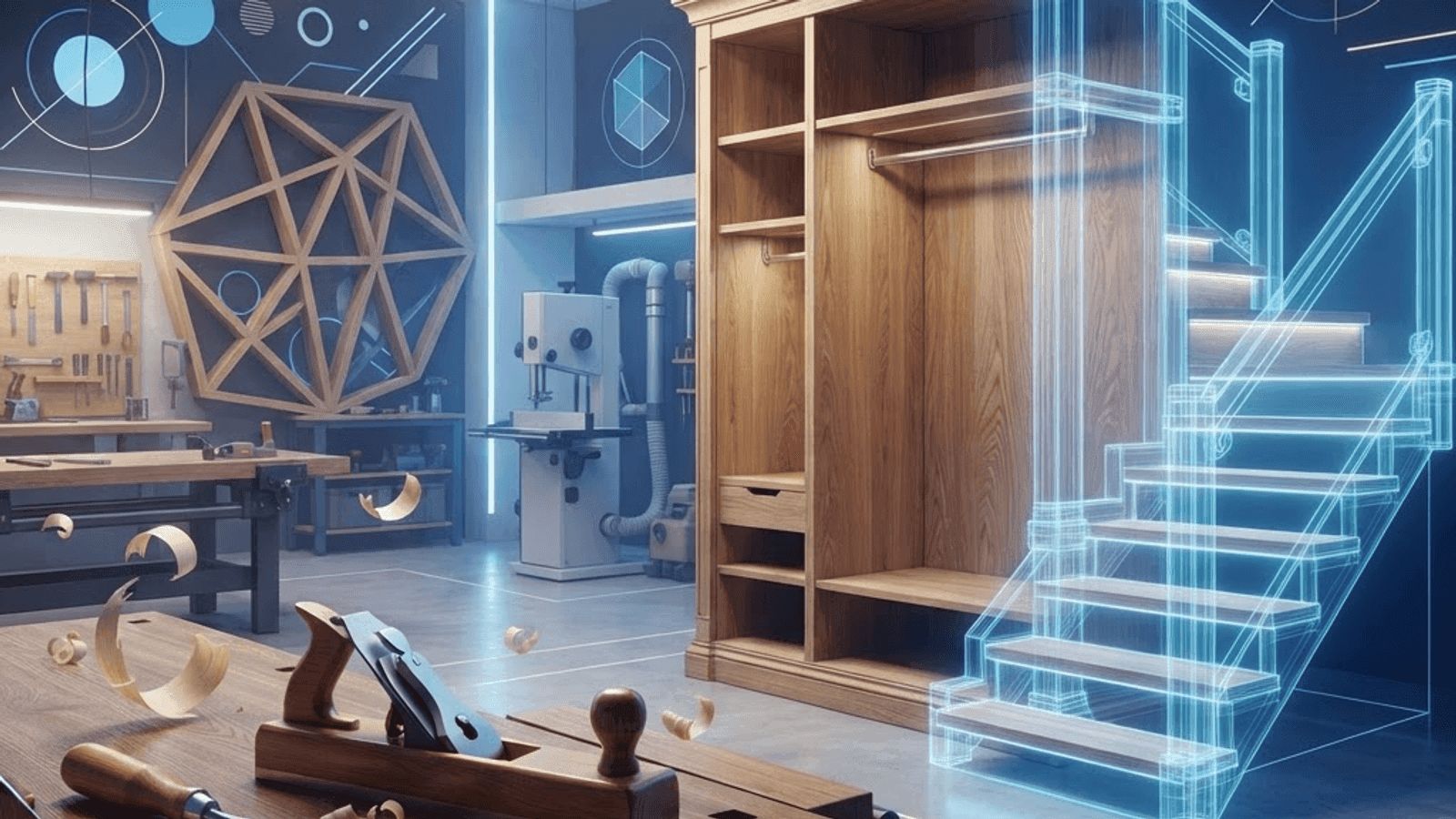
Carpentry and Joinery Explained
The two terms are often used interchangeably but describe different disciplines. Carpentry is generally site-based structural work: roof timbers, floor joists, stud partitions, staircases and door hanging. Joinery is workshop-based manufacture of components such as windows, doors, staircases, fitted furniture and bespoke cabinetry, which are then installed on site. Many Worthing businesses offer both, and the strongest combine workshop precision with practical site experience.
Timber remains central to construction despite the growth of steel and engineered systems. It performs well structurally relative to its weight, it can be worked and adjusted on site, and it is the only major structural material that is genuinely renewable. In a town with a large stock of period properties, timber is also the material most in need of skilled repair, since decades of neglected windows, doors, staircases and roof structures can usually be restored rather than replaced by someone who knows how.
What Distinguishes Skilled Carpentry
Precision and appropriate material selection are the visible markers. Joints that close fully without filler, doors that swing freely with consistent gaps, skirtings that meet at clean mitres and staircases that neither creak nor flex all indicate competence. Less visibly, a good carpenter understands timber movement, allowing for seasonal expansion in fitted work and selecting moisture content appropriate to the intended environment.
Structural carpentry demands additional knowledge. Joist sizing and spacing, notching and drilling limits, correct strutting, support of loads around openings and proper fixing of wall plates and roof structures all follow defined rules, and disregarding them produces deflection, cracking or worse. On coastal properties, corrosion-resistant fixings and preservative treatment matter considerably more than inland.
For period work, sympathetic repair is a discipline in itself. Splicing new timber into a decayed sash window frame, matching an original moulding profile or repairing a rotten door bottom preserves character and is usually cheaper than wholesale replacement, as well as being permitted in conservation areas where replacement may not be.
The Top 10 Carpentry Services in Worthing
1. Worthing Carpentry and Joinery operates a workshop alongside a site team, covering structural carpentry, staircases, doors and bespoke fitted furniture. Its ability to manufacture and install under one roof avoids the coordination problems of using separate suppliers.
2. Coastal Bespoke Joinery focuses on made-to-measure cabinetry, alcove units, wardrobes, bookcases and media walls, working in hardwoods, veneers and painted finishes with careful attention to scribing against uneven period walls.
3. Sussex Sash Window Restoration specialises in traditional box sash repair, including cord and weight renewal, draught proofing, splice repairs and slimline double glazing retrofits that preserve original frames.
4. Broadwater Structural Carpentry handles first fix work on extensions and conversions, including floor structures, roof carpentry, dormer construction and stud partitioning, working closely with structural engineers on load-bearing details.
5. Durrington Kitchen Fitting concentrates on kitchen installation, combining cabinetry, worktop templating and fitting, and the coordination with plumbing and electrical trades that a kitchen requires.
6. Marine Parade Staircases designs and builds bespoke staircases in timber, glass and steel combinations, including the geometric and regulatory requirements of rise, going, headroom and balustrade spacing.
7. Goring Heritage Joinery serves conservation and listed properties with hand-made doors, mouldings, panelling and window frames matched to surviving originals, using traditional jointing techniques.
8. West Sussex Garden Rooms builds timber-framed garden offices and studios, fully insulated and wired, meeting the growing demand for dedicated home working space in properties with limited internal room.
9. South Coast Commercial Joinery produces reception desks, counters, shopfittings and office furniture for commercial fitout projects, manufactured to site survey dimensions.
10. Lancing Carpentry Works completes the list with general carpentry including doors, flooring, decking, fencing and second fix finishing, well regarded for reliability on smaller domestic jobs.
Trends in Carpentry and Timber Use
Engineered timber products continue to displace solid sections in structural applications. Laminated veneer lumber and glued laminated beams offer greater spans and dimensional stability, while I-joists provide long clear spans with easy service routing. These products allow more open layouts without steel, which is both cheaper and lower in embodied carbon.
Sustainability is also influencing material choices. Certified timber from responsibly managed forests is increasingly specified, and reclaimed timber is popular for feature work. Timber's carbon storage properties have brought renewed attention to timber frame and cross-laminated construction for larger projects.
In fitted furniture, the trend is towards integrated storage designed for specific spaces, replacing freestanding furniture in smaller homes. Digital measurement and computer-controlled machining have improved precision, though hand skills remain essential for the scribing and adjustment that older buildings always require.
Choosing and Working With a Carpenter
Ask to see completed work rather than relying solely on photographs, since the quality of a mitre or a door reveal is difficult to judge from an image. Confirm whether the quotation includes materials, ironmongery, finishing and making good. For fitted furniture, establish who is responsible for painting, as this is frequently excluded and can add meaningfully to cost.
Timing matters too. Joinery should be installed after plastering has dried and before final decoration, and fitting new internal doors into a freshly plastered house before it has dried out can cause swelling and binding. A carpenter who raises these sequencing points unprompted is one worth booking.
Final Thoughts
Carpentry combines structural responsibility with visible craftsmanship, and Worthing supports skilled practitioners across both. From sash window restoration and heritage joinery to garden rooms, staircases and modern fitted storage, the town's carpenters offer genuine depth. Selecting one whose specialism matches the work, and agreeing scope and finishing responsibilities clearly, produces results that will still look right in twenty years.
Want your brand featured in front of decision-makers? Publish a guest post or get a link insertion in our guides through AAMAX's guest post and link insertion service.
Helpful Links
 SponsoredAAMAX — Full-Service Digital Agency
Write for Us
Share your expertise with our readers. We welcome guest contributions from industry specialists.
Pitch your idea