How Bus Travel Works in Islington
Islington sits at the heart of North London's bus network, with major corridors running along Upper Street, Holloway Road, Essex Road, City Road and Seven Sisters Road. The borough's bus provision is unusually strong because its rail geography leaves gaps: several residential pockets in Barnsbury, Canonbury and Mildmay are a long walk from a tube station, and buses fill those gaps effectively. Frequency on core routes is high throughout the day, and the borough is well served by night buses radiating from central London, which matters given Islington's active evening economy.
It is important to understand the structure of London bus operation. Routes are specified, branded and fare-set by the city's transport authority, but the services themselves are delivered by private operating companies under competitively tendered contracts. Passengers see a single unified network with one fare system and one livery, while behind that sit several substantial operators responsible for garages, vehicles and drivers. Alongside this contracted network sit commercial coach operators and private hire bus companies serving schools, groups and events.
Ten Bus and Coach Operators Serving the Borough
1. Metroline is one of the most significant operators in North London and runs a large share of routes passing through Islington, including major Holloway Road and Archway corridors. It operates substantial garage capacity in the area and has invested heavily in electric double-deck vehicles. Passengers generally encounter its buses on high-frequency trunk routes where reliability performance is closely monitored.
2. Arriva London is another major contracted operator with a strong presence across the borough's eastern and northern routes. It has a long operating history in North and East London and runs a mixed fleet of hybrid and fully electric vehicles. Its network reach makes it a frequent presence on cross-borough journeys toward Hackney, Haringey and Enfield.
3. Stagecoach London operates routes connecting Islington with the City, East London and beyond, including services along the City Road and Old Street corridors. Its scale allows consistent service delivery on busy commuter routes, and it has progressively electrified vehicles serving inner London where air quality requirements are strictest.
4. Go-Ahead London runs a broad portfolio of central and inner London routes, several of which serve Angel and the southern part of the borough. It has been an early adopter of zero-emission technology in London and is recognised for driver training standards and accessibility compliance across its fleet.
5. Tower Transit and its successor operations have served routes linking Islington westward toward Camden and beyond. Contracted operators in this space are valued for maintaining service on complex cross-city corridors where traffic conditions vary dramatically through the day.
6. National Express is the principal long-distance coach operator accessible to Islington residents, primarily through nearby Victoria Coach Station and stops around King's Cross. It provides an economical alternative to rail for journeys to airports, regional cities and university towns, and is widely used for Stansted and Luton airport transfers.
7. Megabus offers budget intercity coach travel from central London pick-up points within easy reach of the borough. Its dynamic pricing model rewards early booking, and it remains one of the cheapest ways to reach cities such as Birmingham, Manchester, Bristol and Edinburgh from North London.
8. Islington Coach Hire serves the private group market, providing coaches and minibuses for corporate events, weddings, sports fixtures and cultural trips. Local hire operators are valued for understanding the borough's loading restrictions and access constraints, which matter greatly when arranging pick-ups on narrow residential streets.
9. Angel Minibus Services focuses on smaller-capacity vehicles for airport groups, community organisations and short local charters. Minibus operators fill the gap between taxis and full coaches, and are widely used by Islington's many community groups, faith organisations and clubs.
10. Highbury School Transport specialises in school and educational travel, running contracted home-to-school services and trip transport for the borough's schools. Providers in this segment operate under enhanced safeguarding requirements, with vetted drivers, escort provision where required and route risk assessments.
Industry Trends in London Bus Operation
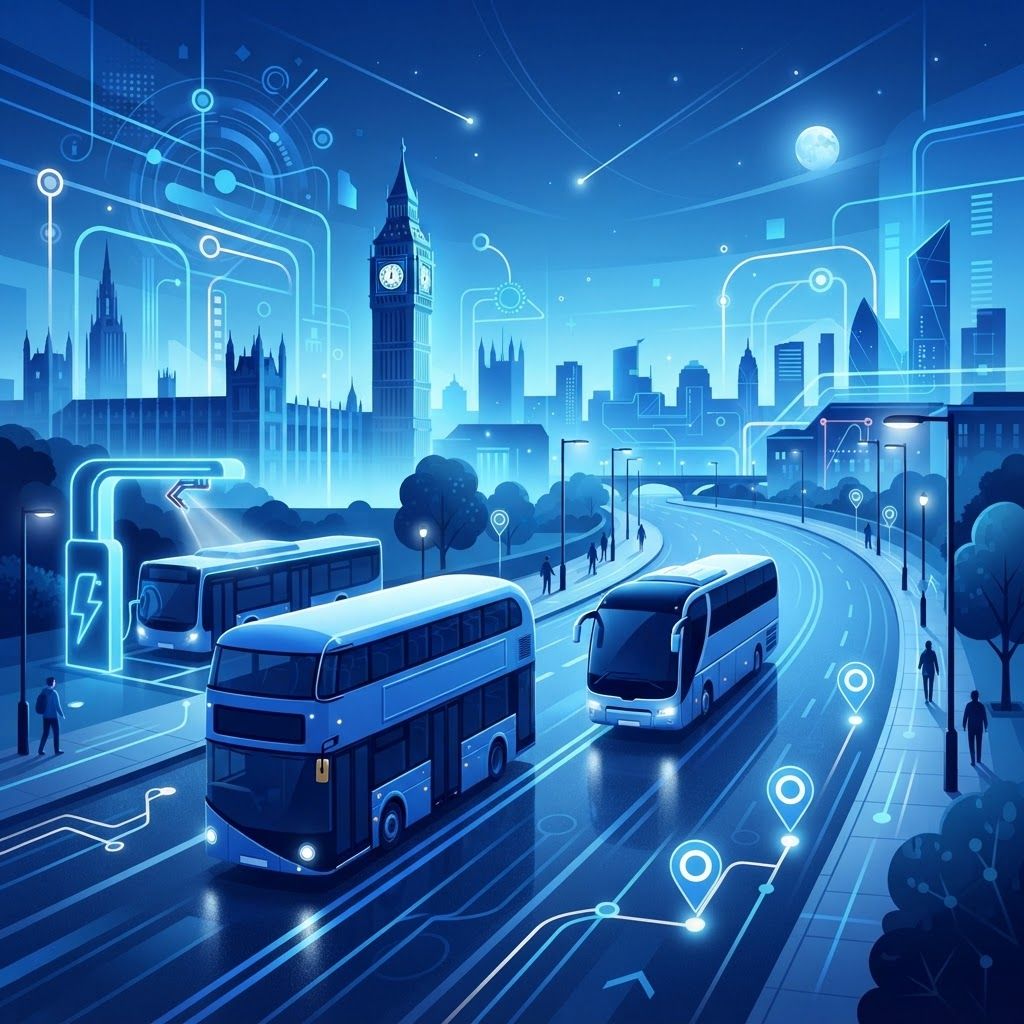
Electrification is transforming the sector. London has one of the largest zero-emission bus fleets in Europe, and inner boroughs including Islington have been prioritised because of air quality and noise considerations. The practical effect for passengers is quieter vehicles, smoother acceleration and improved interior standards including USB charging and better wheelchair space design.
Bus priority infrastructure is the second major trend. Islington has invested in bus lanes, bus gates and signal priority as part of wider traffic management, and low traffic neighbourhood schemes have reduced through-traffic on residential streets while concentrating vehicles on main corridors. This generally improves bus journey time reliability, though it has been a subject of active local debate.
Fare policy also shapes behaviour. Contactless capping and the hopper arrangement that allows unlimited bus changes within a set period have made multi-leg bus journeys far more attractive relative to a single tube trip, particularly for shorter cross-borough movements where buses are often quicker door to door.
Practical Advice for Passengers and Group Hirers
For everyday travel, contactless bank cards or mobile payment are the simplest option, and cash is not accepted on London buses. All contracted buses are low floor and wheelchair accessible with dedicated space and audio-visual announcements, and drivers are trained to deploy ramps on request. Real-time arrival information is available at most stops and via digital services, which is particularly useful during roadworks or event disruption.
If hiring privately, confirm that the operator holds an appropriate public service vehicle operator licence and that drivers hold the correct professional qualification. For school or youth work, ask specifically about background checks and safeguarding policy. Clarify capacity, luggage space, accessibility provision and whether the quoted price includes driver hours, congestion and emission zone charges, and parking — these extras are the most common source of unexpected cost.
Final Thoughts
Bus travel in Islington is among the most comprehensive anywhere in the country, delivered by large professional operators working within a unified network and supported by a healthy private hire and coach sector. For residents, the network's density means most journeys within North London are practical without a car. For groups and organisations, local coach and minibus specialists offer the flexibility that scheduled services cannot. Understanding who operates what, and how fares and accessibility provision work, makes the network considerably easier to use well.
Want your brand featured in front of decision-makers? Publish a guest post or get a link insertion in our guides through AAMAX's guest post and link insertion service.
Helpful Links
- Top 10 Best Appliance Repair Services in Southend-on-Sea
- Top 10 Best Event Management Companies in Huntingdonshire
- Top 10 Best IT Services Companies in Bath and North East Somerset
- Top 10 Best Home Renovation Companies in Bath and North East Somerset
- Top 10 Best Employment Lawyers in South Cambridgeshire
 SponsoredAAMAX — Full-Service Digital Agency
Write for Us
Share your expertise with our readers. We welcome guest contributions from industry specialists.
Pitch your idea