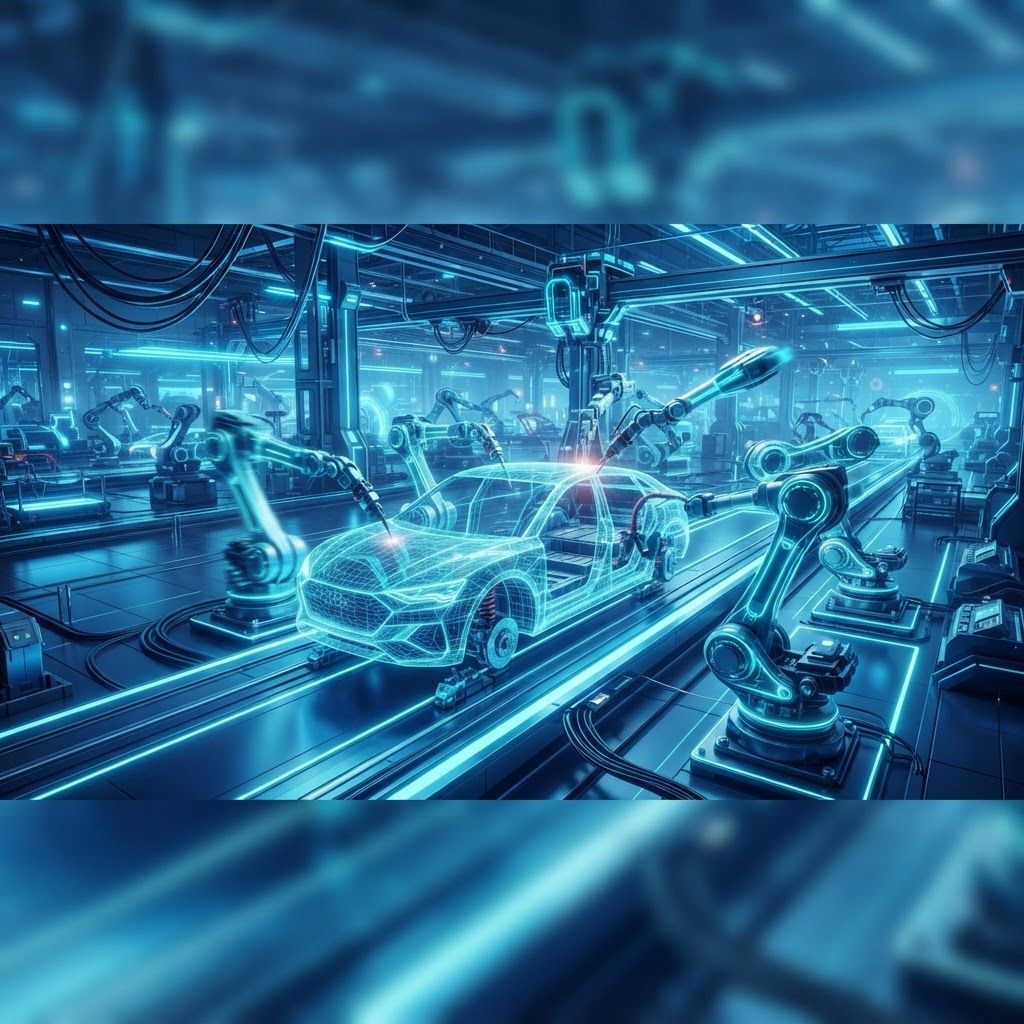
Automotive Manufacturing in a Kent Context
When people think of British automotive manufacturing they picture the large assembly plants of the Midlands and the North East. Tonbridge and Malling offers something different and, for many buyers, more useful: a network of specialist engineering firms producing components, subassemblies, conversions and low-volume vehicles. These are businesses that thrive on technical difficulty and short runs rather than on producing identical parts by the million.
The borough's position is a significant asset. The M20 and M26 provide direct access to the Channel Tunnel and the Port of Dover, which matters when supplying European customers or importing specialist materials. London and its motorsport and premium vehicle ecosystem lie within easy reach. Industrial premises around Aylesford, Snodland, Larkfield and Kings Hill offer the workshop space and power supply that engineering work demands.
What Makes a Strong Automotive Manufacturer
The automotive sector imposes some of the most rigorous quality expectations in manufacturing, and the indicators are well established. IATF 16949 certification signals a quality management system built specifically for automotive supply chains, with requirements around defect prevention, variation reduction and continual improvement that go well beyond generic standards. ISO 9001 is a reasonable baseline for firms supplying aftermarket or specialist markets.
Look for production part approval process capability, statistical process control, measurement systems analysis and full material traceability. Ask about first article inspection procedures and how the company handles engineering change. For safety-critical components, documentation is not bureaucracy but the evidence base that protects everyone.
Technical capability should be matched to your part. Precision machining, sheet metal forming, welding and fabrication, casting, injection moulding, surface treatment and assembly are distinct disciplines, and few firms excel at all of them. Understanding which processes are in-house and which are subcontracted tells you where control and risk actually sit.
Ten Leading Automotive Manufacturers Serving the Borough
Medway Automotive Engineering produces precision machined components for powertrain, suspension and braking applications, working to tight tolerances with full dimensional reporting and material certification.
Aylesford Vehicle Conversions specialises in converting base vehicles into specialist configurations, including welfare vehicles, mobile workshops, refrigerated units and utility bodies, handling structural modification, electrical integration and type approval documentation.
Kings Hill Motorsport Fabrication builds roll cages, chassis components, exhaust systems and bespoke parts for competition and track vehicles, combining tubular fabrication with computer-aided design and stress analysis.
Tonbridge Auto Components manufactures aftermarket and replacement parts including brackets, mountings, hoses and trim components, supplying distributors and workshops across the South East.
Weald Electric Vehicle Systems focuses on electrification, producing battery enclosures, high-voltage harnesses, charging hardware and conversion kits for commercial and classic vehicle electrification projects.
Snodland Metal Pressings operates press tooling and sheet metal forming lines producing panels, brackets and structural pressings, with in-house tool making that allows rapid modification during development.
Malling Trim and Interiors manufactures vehicle interior components including upholstery, seating, headlining and moulded trim, serving both restoration specialists and commercial vehicle builders.
North Downs Transmission Engineering remanufactures and builds gearboxes, differentials and driveline components, offering both overhaul services and bespoke ratio builds for specialist applications.
Borough Green Automotive Plastics produces injection moulded and vacuum formed plastic components for vehicle interiors and under-bonnet applications, with tooling design and material selection expertise.
Larkfield Commercial Vehicle Bodies builds bodies for light and medium commercial vehicles, including box bodies, tippers, dropsides and specialist equipment mounting, with chassis engineering and weight distribution calculation.
Trends Driving Change in Automotive Manufacturing
Electrification is the defining transformation of the industry and it reaches far beyond the vehicles themselves. Component suppliers whose products served internal combustion engines face an obvious strategic challenge, while opportunities have opened in battery enclosures, thermal management, high-voltage connection systems, lightweight structures and power electronics cooling. The specialist firms in Tonbridge and Malling are generally well placed to pivot because their business models are built on adaptability rather than on amortising huge tooling investments.
Lightweighting remains a constant pressure regardless of powertrain. Aluminium, high-strength steels and composite materials all demand different joining and forming expertise, and manufacturers that have invested in those capabilities access higher-value work.
Commercial vehicle conversion is a genuine growth area locally. The expansion of last-mile delivery, mobile services and specialist utility fleets creates steady demand for converters who can turn a standard chassis into a purpose-built working vehicle with proper approval documentation.
Digital manufacturing is also advancing. Additive manufacturing now produces functional jigs, fixtures and low-volume production parts, while digital measurement and in-process inspection improve both quality and throughput.
Choosing the Right Manufacturing Partner
Begin with a clear technical specification including drawings with properly applied geometric dimensioning and tolerancing, material grade, surface finish requirements and any testing or approval needed. Ambiguity here is the root of most quality disputes.
Discuss volume and lifecycle candidly. A firm geared to prototype and low volume will struggle with sustained high volume, while a high-volume producer may not want a hundred-off order. Ask to see the quality system in action, including calibration records and inspection reports, rather than accepting a certificate at face value.
Consider capacity and resilience. What happens if a key machine fails? Is there a second source for critical processes? For regulated applications, confirm that the manufacturer understands the approval regime your product must satisfy, whether that is whole vehicle type approval, individual vehicle approval or a component-level standard.
Final Thoughts
Automotive manufacturing in Tonbridge and Malling is defined by specialism, precision and flexibility. The companies profiled here cover machining, fabrication, conversion, electrification, trim, plastics and commercial bodybuilding. For anyone developing a vehicle product, a low-volume programme or a specialist conversion, this cluster offers engineering depth and responsiveness that larger, more distant suppliers rarely match.
Want your brand featured in front of decision-makers? Publish a guest post or get a link insertion in our guides through AAMAX's guest post and link insertion service.
Helpful Links
 SponsoredAAMAX — Full-Service Digital Agency
Write for Us
Share your expertise with our readers. We welcome guest contributions from industry specialists.
Pitch your idea